
Recently, TPEM's first born electric concept, Avinya broke cover. The model promises a minimum range of 500 kilometres and advanced technology features, aimed at buyers in India and outside. TPEM, the newly formed entity may also consider a separate dedicated sales channel for the EVs with a distinctive corporate identity once the volumes reach a critical mass and throughput is large enough for the dealers to be profitable, said Chandra. Elaborating further on the hiring strategy he said, "We will hire from everywhere-wherever the talent of the required competency is available."

Size matters on the road. Small is not dominating India's car market any more. The share of cars priced up to Rs 5 lakh in the passenger vehicle market has fallen to 10.5 per cent in the first 11 months of 2021-22, compared with 26 per cent in 2018-19 (FY19), the lowest in four years, according to data from industry sources. Even the share of those in the price range between Rs 5 lakh and Rs 7.5 lakh has dropped to 32.4 per cent in the same period, from 34.9 per cent.

Speaking at the forum, Suzuki Motor Corporation (SMC) representative director and president Toshihiro Suzuki said, "Suzuki's future mission is to achieve carbon neutrality with small cars. "We will continue active investment in India to realise Self-reliant India (Atma-nirbhar Bharat)." Under the MoU, the company's wholly-owned arm Suzuki Motor Gujarat Pvt Ltd (SMG) will invest Rs 7,300 crore for the construction of a plant for BEV batteries at a land neighboring to SMG's existing plant by 2026.
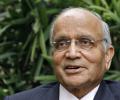
Company managements need to "curtail the kind of expenditures on themselves personally" with the COVID-19 pandemic highlighting the need to build internal resources with a frugal style of functioning, Maruti Suzuki India chairman R C Bhargava said on Tuesday. Addressing shareholders in the company's annual general meeting held virtually, he also termed as "a good development for the whole of industry" recent shareholder actions that did not approve expenditures by management on themselves, without specifying details. In the wake of the pandemic, building internal resources has to become a priority of industry and companies.

Priced at Rs 754,689, this is the sixth model from the company's portfolio after Alto, WagonR, Swift, Baleno and Dzire to be BS-VI compliant.
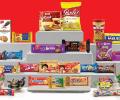
Indian consumers are likely to get respite from rising prices just before the festival season. Some consumer companies, including automakers, have indicated that they are planning to pause price hikes just before demand picks up in August, while keeping a close eye on volatile raw material prices.

The company is voluntarily undertaking a recall for WagonR (1 litre) manufactured between November 15, 2018, and October 15, 2019, and Baleno (petrol) manufactured between January 8, 2019, and November 4, 2019, MSI said in a regulatory filing.

The economy segment of India's car market is unlikely to revive soon term as inflation and prices prompt buyers to defer purchases. The share of entry-level cars in the passenger vehicle market dropped to the lowest in seven years at the end of the Financial Year 2021-22 (FY22). A recovery in the segment will be largely driven by the overall economic growth, improvement in income levels, and easing of semiconductor shortage, say carmakers and analysts.

In four days, Sensex has fallen by 5,815.25 points. From the 30-share pack, 22 companies closed the day lower, led by Bajaj Finance, Maruti Suzuki India, Axis Bank, M&M, Tech Mahindra and ONGC, plunging up to 10.24 per cent.

Brushing aside concerns raised by proxy advisory firm IiAS on Suzuki's investment in the EV project, Maruti Suzuki chairman RC Bhargava on Thursday asserted that there was nothing in it against the interest of the company and its shareholders as it is part of an earlier arrangement. Countering the criticism from the proxy advisory firm, Bhargava noted that all models produced at Suzuki Motor Gujarat (SMG), including EVs, would be ultimately sold by Maruti Suzuki India (MSI) in the marketplace. IiAS has raised serious questions regarding the decision of the Suzuki Motor Corporation (SMC) to invest directly in the EV project instead of MSI doing it.

The country's largest carmaker Maruti Suzuki India (MSI) on Wednesday reported a consolidated net profit of Rs 475 crore for the first quarter ended June 30. The auto major had posted a consolidated net loss of Rs 268 crore in the April-June quarter of 2020-21. It noted that during the first quarter its sales and production were adversely impacted due to the second wave of the COVID-19 pandemic.

Auto majors, including Maruti Suzuki India, Hyundai and Tata Motors, on Sunday reported high double-digit growth in their domestic passenger vehicle sales in July riding on stabilisation of macro-economic factors and better consumer sentiments. Similarly, Honda, Nissan, MG Motor and Skoda also reported healthy growth in their sales last month leveraging on improved market mood amid prevailing lower coronavirus infection rate, despite supply constraints of semi-conductors. The country's largest carmaker Maruti Suzuki India's (MSI) domestic sales increased by 39 per cent to 1,41,238 units last month as against 1,01,307 units in July 2020, the company said in a statement.
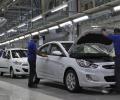
Leading carmakers Maruti Suzuki, Hyundai and Tata Motors reported robust dispatches to dealers in May on the back of strong demand for passenger vehicles across regions, even as the global semiconductor shortage continued to impact production. Mahindra & Mahindra, Kia India, Toyota Kirloskar Motor, Honda Cars and Skoda also witnessed strong demand for their models last month. The month of May also witnessed Tata Motors race ahead of Hyundai in terms of domestic wholesales.

The new model, which is based on the company's fifth generation HEARTECT platform, comes with a BS-VI compliant one-litre petrol engine with a claimed fuel efficiency of 21.7 km per litre.
India's largest carmaker, Maruti Suzuki India (MSIL), is focused on getting 50 per cent of its customers' car-financing transactions executed through its Smart Finance platform by next year. Shashank Srivastava, executive director-sales, MSIL, said this will help the company turn its website into a single-window channel through which customers can select their models, find dealers, and arrange financing. He said there is a likelihood that 100 per cent of its customers availing of financing will take it through Smart Finance. To date, the company has disbursed Rs 6,500-crore loans via Smart Finance to around 100,000 customers, accounting for 28 per cent of all finance-based car-purchase transactions for the company.

With 15 models and a market share of close to 50 per cent, it rules the Indian market, selling almost 1.5 million units every year, rolling out one model every ten seconds.

Tata Motors, India's third largest passenger vehicle maker, took pole position in the competitive sport utility vehicle (SUV) market in October, reveals the data from industry sources. Riding high on the Punch - the sub-compact SUV offering launched on October 18 - the Tata group flagship sold a record 23,381 units in October, higher than 20,022 units sold by archrival Mahindra & Mahindra, 18,538 units sold by Hyundai Motor India, and 15,931 units sold by Kia Motors India. Utility vehicles - that include SUVs and multipurpose vehicles - accounted for almost one in every two passenger vehicles sold in India in the first seven months of the current financial year, according to the Society of Indian Automobile Manufacturers.

In May, Satpal Singh, who runs a dairy business with three buffaloes in Jewar, near Noida, was worried about the steep spike in input costs. Singh said dry fodder rates, which cost Rs 1,500-2000 per tractor trolley last year, were quoting at Rs 4,500-5,000. The price of other cattle feed ingredients (that include mustard meal and similar mixes) had also gone up from Rs 2,000 per quintal to Rs 3,100-3,200 per quintal.

The country's largest carmaker Maruti Suzuki India (MSI) aims to sell 4-6 lakh CNG units in the current fiscal year depending upon supply situation of essential components, as per a senior company official. The company sold about 2.3 lakh CNG units in 2021-22. MSI currently sells nine of its 15 models with CNG powertrain and is looking to drive in more models with such technology in the coming days.
The country's leading automakers Maruti Suzuki and Hyundai Motor reported a decline in dispatches to dealers in March as shortage of electronic components impacted production. On the other hand, Tata Motors, Skoda and Kia India posted their highest ever monthly wholesales last month. Toyota Kirloskar Motor said its dispatches in March were the highest in the last five years while Mahindra & Mahindra also reported a robust increase in its passenger vehicle dispatches in March.

Good sowing of kharif crops, better minimum support prices, and fewer Covid-19 cases (in villages) will help the rural growth story to continue, says Maruti.

Automobile exports from India recovered in the first quarter with all vehicle segments, including passenger vehicles and two-wheelers, witnessing growth following an improvement in the pandemic situation across various international markets. As per the latest SIAM data, total vehicle exports during the April-June quarter this fiscal stood at 14,19,430 units as compared with 436,500 units in the same period of 2020-21 which saw massive disruptions due to the COVID lockdowns across the country, hampering sales as well overseas shipments. SIAM director general Rajesh Menon told PTI that while two-wheeler shipments were better than previous three years, passenger vehicles, three-wheelers and commercial vehicles export numbers were yet to catch up with numbers in the first quarter of 2018-19 fiscal.
The country's largest carmaker Maruti Suzuki India (MSI) is planning to invest around Rs 18,000 crore on a new manufacturing facility in Haryana, as per a top company official. The new plant would replace the company's Gurugram-based facility and is expected to have an installed production capacity of 7.5-10 lakh units per annum. While confirming the Rs 18,000 crore investment plan, MSI chairman RC Bhargava told PTI that the company had always planned to shift the Gurugram facility to a nearby location.

The country's largest carmaker Maruti Suzuki India is neither shifting investments nor jobs from Haryana to Gujarat by shifting production of its compact sedan Dzire, company chairman RC Bhargava said on Tuesday. The company is maximising the efficiency of production at its two plants at Haryana and the parent Suzuki's Gujarat plant, keeping in mind the demand of its multiple models.

Former managing director of Maruti Suzuki India, Jagdish Khattar, passed away on Monday morning following a cardiac arrest, according to people close to him. Khattar (79), a former bureaucrat, was considered as one of the most high profile leaders of the Indian automotive industry, laying the foundation for Maruti's future growth after the government began its disinvestment in 2002 and gradually exited from its joint venture with Suzuki Motor Corporation (SMC). He had joined the then Maruti Udyog Ltd in July 1993 as director (marketing) and went on to become executive director (marketing) in the next six years.
Leading automakers Maruti Suzuki India, Hyundai Motor, Kia Motors and Tata Motors reported sales growth in the domestic market in November, aided by robust offtakes amid the festival season. While Maruti Suzuki India reported marginal growth, Hyundai logged in its highest ever monthly sales in November. Others like Honda Cars India, Toyota Kirloskar Motor, Mahindra & Mahindra and MG Motor India also reported sales growth in November as compared with the same month last year.

The new year will see a line of hatchbacks (including compact SUVs) hit the Indian roads. Rajesh Karkera/Rediff.com offers a peek.

The country's largest carmaker Maruti Suzuki India (MSI) on Thursday reported 2.04 per cent increase in its consolidated net profit for the second quarter at Rs 1,419.6 crore on the back of higher sales. The auto major had posted a net profit of Rs 1,391.1 crore in the July-September quarter of the previous fiscal.

Maruti Suzuki India (MSI) will keep consolidating its existing product line-up, including hatchbacks, while bolstering presence in the fast growing SUV segment to power its way back to 50 per cent market share in the domestic passenger vehicle market, as per a senior company official. The country's largest carmaker, which has seen its market share drop to 43.38 per cent in FY22 from 47.7 per cent in FY21, aims to bring in multiple SUV products with focus on new technologies like hybrid powertrains in order to enhance fuel efficiency, making them comparable or better than diesel-powered models that are currently being sold in the market, especially by its Korean rivals. With no intention of making a comeback in the diesel segment, MSI is also focusing on increasing its play in the CNG segment to bring in additional volumes.

Market leader Maruti Suzuki India's passenger vehicles sales declined by 2.34 per cent last month at 133,702 units. Hero MotoCorp reported total two-wheeler sales of 480,196 units last month, down 20.05 per cent.
All three employees are recovering fast towards normalcy and as per the safety protocol, essential information was shared with the district health authorities, it added.

The company had sold 1,58,076 units in March last year, Maruti Suzuki India said in a statement. Domestic sales declined by 46.4 per cent at 79,080 units last month as against 1,47,613 units in March 2019, it added.

Ahead of the peak festive season, India's passenger vehicle makers are staring at a cumulative order backlog of nearly 500,000 units as chip shortage continues to cripple production. The crisis is forcing companies to change their production plans frequently and take a call on the variants they can manufacture based on the availability of semiconductors. The booking numbers are not a true reflection of demand, said manufacturers.
MSI will inspect certain WagonR models for a possible issue of fuel hose fouling with metal clamp.
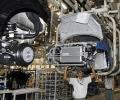
Hyundai Motor and Toyota Kirloskar Motor have announced the suspension of manufacturing operations at their respective plants amid coronavirus outbreak. On Sunday, various automakers like Maruti Suzuki India, Honda Cars, Mahindra & Mahindra and Fiat announced a temporary halt in manufacturing operations at their respective facilities.
Leading carmakers Maruti Suzuki and Hyundai witnessed a double-digit drop in sales in October on account of the global semiconductor shortage impacting production. Kia India, Honda Cars and MG Motor also saw a fall in dispatches last month as compared with October 2020. However, companies like Tata Motors, Mahindra, Nissan and Skoda managed to post positive numbers last month despite the supply chain challenges.

'Some of the launches may get deferred due to the semiconductor shortage, which is unlikely to get resolved before the second half of 2022.'

MSI sells a range of models from entry-level hatchback Alto to S-CROSS, priced between Rs 2.99 lakh and Rs 12.39 (ex-showroom prices Delhi) lakh, respectively.

The muted expectation of dealers come at a time when vehicle manufacturers such as Maruti Suzuki, Hyundai Motor, Mahindra & Mahindra and others reported a double-digit fall in wholesale dispatches to dealerships in July and August.

The company cut production of its mini cars comprising Alto, and S-Presso by 98.32 per cent at 401 units as against 23,874 units in the year-ago month.
 © 2026 Rediff.com - Investor Information - Advertise with us - Disclaimer - Privacy Policy - Sitemap - Feedback - About us - Terms of use - Grievances