
Excerpt from Dr Mahinder Watsa's book, It's Normal.

Former Delhi police commissioner Neeraj Kumar is one of the few Indian police officers to speak to Dawood Ibrahim at length after the fugitive gangster fled India. A gripping excerpt from his new book, Dial D For Don: Inside Stories Of CBI Missions.

'News is rife that Pakistan will attack the next day. They have no idea that this is where they will take on the might of 1 Armoured Division of Pakistan in a three-day bloody battle that will be remembered in military history as the Battle of Asal Uttar.' Rachna Bisht Rawat salutes the brave men turned the tide of the '65 war.

Naseerrudin Shah speaks about his first wife Purveen and her pregnancy and how he neglected her and his first child Heeba excerpted from the autobiography And Then One Day: A Memoir.

Beautiful glimpses into Dilip Kumar's life with Saira Banu.

Sylvia Dyer's life began nearly 90 years ago in a forgotten, untamed land. She spent her childhood on a plantation on the Bihar-Nepal border in pre-Independent India, lived through the '65 war as the wife of a decorated army officer and saw an era grow and fade in front of her eyes.

Aishwarya Rai confirmed in her September 27, 2002, interview to The Times Of India: 'Salman and I broke up last March, but he isn't able to come to terms with it.'
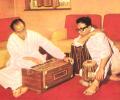
'When it came to S D Burman, a Guide song was completely different from a Tere Mere Sapne song which was completely different from a Sharmilee song. Except for their quality, there is nothing to link them together.' 'Lata was his ultimate voice. He felt there was nobody like Lata. "Give me a harmonium, give me Lata and I will make music," he said.'


'She adds value to life in many commendable ways. Apart from her many contributions to our consumer products business and Godrej Properties, she dedicates her energies and resources to charity, to philanthropic causes and most of all how she has managed her time as a wife, mother and entrepreneur brilliantly,' says Adi Godrej.
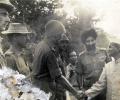
Lieutenant Colonel Desmond Hayde was awarded the Mahavir Chakra, the second highest honour in battle, for winning an epic battle in Pakistan. In a brilliant and gruesome assault, what he and his men achieved that September 50 years ago had never been seen before.

Shatranj Ke Khilari was Satyajit Ray's first Hindi film. The Master set the Premchand story against the backdrop of the First War of Independence in 1857. Bijoya Ray, his wife, reveals fascinating glimpses behind the making of the epic in this exclusive excerpt from her memoir.

'How can Hindus protest efforts to ban an edition of the Gita in parts of Russia, and force a publisher to withdraw an academic critique of Hinduism, all in the same breath? It makes the Hindu community seem petty, self-serving, and hypocritical. Episodes like this allow Hinduism to be "owned" by the most conservative, intolerant, extremist voices. These people do not speak for me, and they certainly don't represent the form of Hinduism I practice and love," Princeton University's Hindu chaplain Vineet Chander tells Rediff.com's Arthur J Pais.

Neeraj Pandey, who has written and directed the films A Wednesday and Special 26, has written a novel called Ghalib Danger.

The book Effective People by Dr TV Rao features inspiring examples of success icons from across the world.

'Hrishi-da often voiced his disenchantment with Bachchan's Angry Young Man persona -- the 'maara-maari', the growth of sidelocks; he even said directors were killing Amitabh the actor and turning him into a stuntman. Yet, as Jaya Bhaduri jovially pointed out, the seeds of that seething persona can be found in Anand and Namak Haraam.'

How things have changed for Dev Patel!

'The book was NOT banned. There were NO book burnings. There were NO riots. The author was NOT sent death-threats. On the contrary, the plaintiffs pursued due process. The case is a textbook example of how to proceed with civilised, democratic dissent,' says Rajeev Srinivasan.

'There is no evidence that it was Nehru who ordered this surveillance (on Netaji's kin). It was a very low-level Bengal-based operation.' 'Netaji's grandnephew Sugata Bose has written in his book on the leader that the existing evidence that Subhas Bose died in that plane crash is overwhelming. No historian looking at that evidence can come to a different conclusion.' 'Contrary to popular belief, there were very little differences among the three (Netaji, Nehru and Gandhi). Netaji was of the opinion that some amount of violence was necessary to bring independence for India.' Historian Rudrangshu Mukherjee says that the controversy over the alleged spying on the kin of Netaji is a damp squib.

Salim-Javed's speciality was conjuring the kind of violence that played on your mind rather than the sort that played out only in front of your eyes.

It is rare for communal riots to spread to rural areas. The UP riot is the first time after the September 1969 Gujarat riots that a rural area have been affected. Electoral politics which divide society in majority/minority, going on since the early 1990s, is a major contributing factor to this heightened tension between communities, says Colonel (retd) Anil Athale in the first of a two part series.
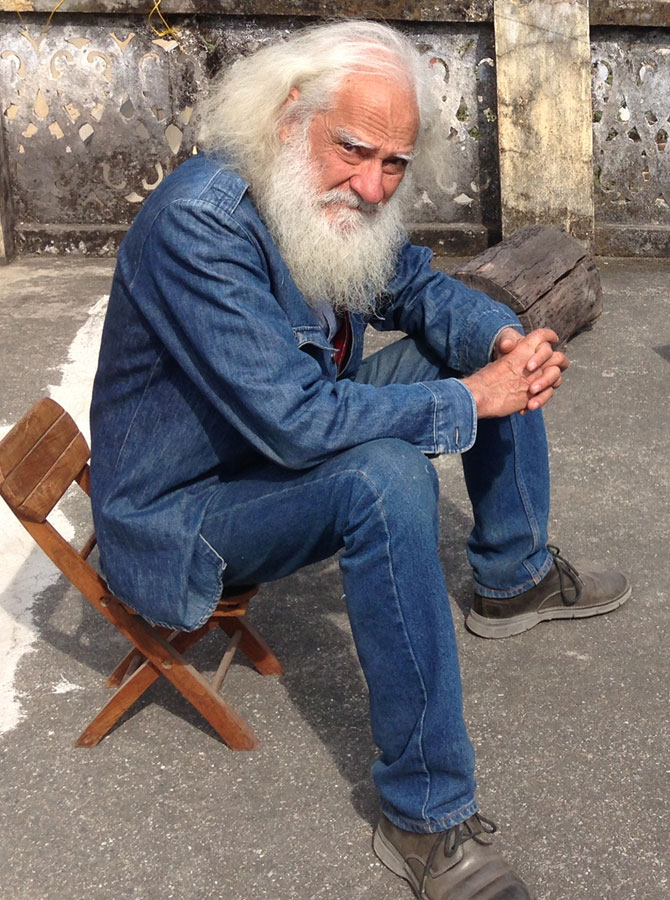
'Not allowing people to speak or listen is the biggest act of anti-nationalism,' says Arvind Krishna Mehrotra, one of India's finest poets.
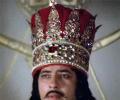
Shatranj Ke Khilari was Satyajit Ray's first Hindi film. The Master set the Premchand story against the backdrop of the First War of Independence in 1857. Bijoya Ray, his wife, reveals fascinating glimpses behind the making of the epic in this exclusive excerpt from her memoir.

'If policy-makers hold the lives of animals to be more significant than the welfare of a human populace, I can't believe that they're likely to do anything progressive for India.'


Samuel Stokes made India his home and participated in the freedom struggle. He was the only American to be imprisoned for sedition; the British CID maintained a special file on him.
In the final part of his interview with Sheela Bhatt/Rediff.com, journalist Rajdeep Sardesai says the Congress lost the election in 2011, the year of Anna Hazare.

'We were firing at Patton tanks that were moving towards India.' 'Fighter aircraft are the biggest menace for tanks because they come at great speed, attack from a height and their rockets are lethal.' 'The Hunter travels at 400, 420 knots. One knot is 1.6 times a km, so it was at a speed of 700, 800 km/hr.' 'You come at great speed and when you see the tanks, you pull up because attacks are always done in a dive.' 'You go up to 3,000 to 4,000 feet and then dive on to the target and let off your rockets...'

'I am a very personal writer. I write direct to the reader. I don't hold back,' says India's most loved writer, Ruskin Bond.

'If the State does want to come after you, in India, it can do pretty much anything. And often it isn't as though the orders are coming from the President or prime minister, no, the systems have been built in a way -- or we have allowed them to be built in a way -- that almost encourages crushing of liberties.'

In this extract from Vikram Seth's latest work, Two Lives, he narrates how his dentist-grand-uncle lost his arm
