Modi and Shah can't afford to lose any of the 24 per cent Dalit vote of 2014, says Shekhar Gupta.

'A fierce crusader against communalism, George joined hands with majoritarian forces, never to revisit or re-assess his saffron association.' 'He was a Union minister in 1998-2004, a time when people like Graham Staines were lynched in Orissa.' 'On the Gujarat pogrom of 2002, George went on to kind of justify the slashing of pregnant women, by saying in the Lok Sabha that this was nothing new for India.' 'Thus, he was in sharp contrast to what he had himself stood for in the heyday of his political career in the 1970s and 1980s, says Mohammad Sajjad.

Let us see the problem for what it actually is: Illegal Immigration plain and simple, confined to the northeast with a definite communal slant that poses a national security risk and one that needs to be dealt with firmly and promptly by stringent identification (and deportation), says Vivek Gumaste.
'The BJP has sent out a message that its allies are at its mercy.' 'The allies cannot pressurise or bargain with the BJP any more,' says Mohammad Sajjad.
'In Bihar, the Dalits are not a consolidated socio-political constituency,' says Mohammad Sajjad.

Mohammad Sajjad profiles Professor Riazur Rahman Sherwani, 94, versatile mind, intrepid intellectual.
Cracks in the Mahagathbandhan in Bihar is frittering away the ground gained in social justice and contributing to increasing polarisation in the state, says Mohammad Sajjad.
Articulate segments of Muzaffarpur have been at the the forefront of all anti-establishment mobilisation, which makes their silence over the atrocities in a shelter home in the town puzzling. Could it be that if those accused of horrific crimes belong to dominant castes and if the victims belong to the vulnerable groups, then the middle classes become mute, asks Mohammad Sajjad.

'We have nothing to gain by helping any other country to become a threat to India,' former Sri Lanka president Mahinda Rajapaksa, who is on the comeback trail, tells Rediff.com in an exclusive interview.

'Unsurprisingly, the joint statement issued after Modi's visit contains a paragraph on terrorism.' 'It is on the usual lines that India would have with, say, Croatia.' 'The surprising part is that it shies away from getting into specifics,' points out Ambassador M K Bhadrakumar.
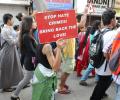
'The prime minister has merely paid lip service condemning these crimes instead of launching a massive crackdown against such brutalities,' argues Professor Mohammad Sajjad.

Mohammad Sajjad salutes the memory of Mushirul Hasan -- historian, thinker, academic, institution builder, -- who passed into the ages this week.

'Did the government learn any lesson from the disasters of 2008, 1987, 1975?' 'Certainly not!' 'They are making people believe that the 2017 flood was unexpected, so no preventive effort towards reducing the loss of human lives was to be expected from the government,' says Mohammad Sajjad.

'No other terror organisation has valued popular consensus as the Islamic State does -- instead of repressing people, IS wants to gain their support. This is a major innovation in terrorism,' says terrorism expert and author Dr Loretta Napoleoni in an interview to Archana Masih and Syed Firdaus Ashraf/Rediff.com.

'They must take the bull of conservatism within their own ranks by its horns as much as they need to speak out against the fallacies of the non-Hindutva (or 'Muslim-friendly') political forces as well,' argues Mohammad Sajjad.

Nitish Kumar has lost his credibility. He is now only a weak ally of the BJP. And he may no longer have a shot at a national role.
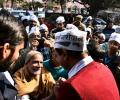
Aam Aadmi Party chief spokesperson Yogendra Yadav tells Somesh Jha how Delhi has moved beyond Shahi Imam-type politics. Yadav also takes a dig at Finance Minister Arun Jaitley, and says the AAP had formulated its policies on the streets, unlike the Bharatiya Janata Party.
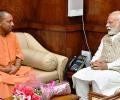
'The top-most functionaries and destiny-makers of the nation have thrown away the pretensions of statesmanship.' 'They seem to have made a categorical announcement that the next general election will be fought on the solo plank of Hindutva, rather than on good governance, economic development, and employment to youth', says Mohammad Sajjad.
AMU has once again been pulled into a crossfire of crass political opportunism. In these post-truth times, that the university also had political stirrings not subscribing to the Muslim League is chosen to be forgotten, says Mohammad Sajjad.

'Nitish is now a helpless junior ally of Hindutva.' 'He just cannot think of reining in the hoodlums raging, marauding and killing in the mohallas,' argues Mohammad Sajjad.

'In the name of pluralism-secularism, the kind of politics that was pursued revealed to many that it was basically a favour to Muslim conservatism and communalism -- a politics of minority-ism, rather than of secularism.' 'This is how significant sections of Hindus have been made to loathe the very idea of Indian secularism by now,' says Mohammad Sajjad.
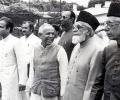
Today as one sees the Owaisi brothers of Hyderabad seeking to lay claim as the custodian of the Muslim vote and the upholders of the community's interests, it is Shahabuddin who springs to mind for having been there, done that, says Saisuresh Sivaswamy.

Why are far right Hindu organisations growing in strength? Why is there a rising subscription to Neo-Wahabism, the Saudi Arabian version of contemporary Islam?

'Forming cults around Lalus, Nitishes, Mulayams, Mayawatis and Mamatas will do as much harm to the Republic as the bhakti of the Hindus for Modi will do,' says Mohammad Sajjad.
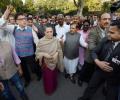
Why are the 'secular' parties silent about the lynchings on our streets? Are they so busy forging political alliances that they ignore the numerous distortions of Constitutional values?
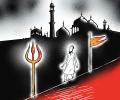
'Indian nationhood is indeed at the cusp of alarming redefinition -- hate-filled, and exclusionary.' 'Nations are not built this way, instead these are the ways of liquidating nations.' 'We must pre-empt it.' 'Can we?' asks Mohammad Sajjad.

The 'secularists'are more adept at the politics of intense and alarmingly exaggerated fear-mongering, as this kind of politics provides easy votes of Muslims without making them answerable for the concrete issues of poverty, unemployment, lawlessness, and of basic needs like roads, electricity, etc, which is exactly how Nitish Kumar was defeated in the elections, says Mohammad Sajjad.

The man behind Aligarh Muslim University 200 years on.
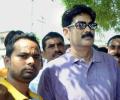
'At least 6,000 people attended a meal at Shahabuddin's residence in a feast to celebrate his bail. As if the community has no other priorities of channelising such funds for better purposes!,' says Mohammad Sajjad.

The Hindutva brigade's silence on the rape may possibly be explained that this incident is an intra-Hindu affair for them. What is even more intriguing is that vocal gender activists have preferred to almost ignore the incident. Why? Is it because homosexual rape does not involve the woman either as victim or as aggressor, asks Mohammad Sajjad.

The Al-Qaeda and its patrons seems to have outsourced, for the time being, the achieving of that larger, civilisationally retrograde goal of establishing an Islamic Caliphate in the Middle-East, to the ISIS. The symptoms are all similar; the difference lies only in the expressions, says Dr Anirban Ganguly.

'Secularism is associated either with corruption, malgovernance or minority votes.' 'That allows the BJP to construct its own majority vote.' 'It will remain a feature of electoral contests, but it is not the only reason for the BJP's success.'

Hamid Anasari's was not talking of reservation for the whole religious community to which he too happens to belong. Yet, sections of media chose to put words into his mouth and then subject him to the criticism he never deserved. This does not augur well for our media or democracy, says Mohammad Sajjad.

'The civil war in Islam has just got worse and the existential crisis facing it more threatening.'

India's Muslims need to assert their educational and economic upliftment and political empowerment rather than be provoked by communal remarks, says Mohammad Sajjad, reflecting on the Malda riot.

Let Bihar be damned under its contradictions of having gone 'dry' and then having been submerged under flood, which is a recurrent phenomena? After all it is a godforsaken land, having lost its promises of overcoming its problems, says Mohammad Sajjad.
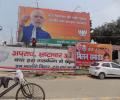
'The BJP has replaced huge portraits of the two BJP leaders from Gujarat with very small portraits of many leaders from Bihar. Much is being read into this changed tactic of hoardings and banners,' says Mohammad Sajjad.
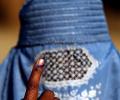
'Compared to other social groups, managing the Muslim constituency has always been easier for the secularists.' 'Just some symbolic measures and window-dressing would keep the Muslim flock together.' 'Having been betrayed by all the supposedly 'secular' political parties, Muslims should turn into citizens without any ascriptive identity marks,'says Mohammad Sajjad.

'If the charges are so serious against him, then why hasn't a single case been registered against Dr Zakir Naik?'
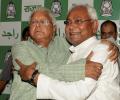
'The clearest interpretation of the November 8 mandate is that the backwards, Dalits and minorities, and a huge proportion of women cutting across caste and class, displayed massive consolidation to the extent that despite chipping of votes by the Left Front, by the Third Front and by the BSP, Mahagathbandhan candidates won, and in many cases by huge margins,' says Mohammad Sajjad.
 © 2026 Rediff.com - Investor Information - Advertise with us - Disclaimer - Privacy Policy - Sitemap - Feedback - About us - Terms of use - Grievances