
Maharashtra Chief Minister Devendra Fadnavis warned against violence and linguistic chauvinism related to the Marathi language, emphasizing constructive promotion and legal action against those taking the law into their own hands.

A surge in violent crimes, including targeted killings, has raised concerns about law and order in Bihar. Police attribute the rise to the widespread availability of illegal firearms and ammunition.
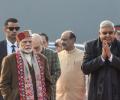
By getting Jagdeep Dhankhar to resign at short notice, Narendra Modi has sent a message to his own ideological clan that he brooks no one trying to get too big for their boots, observes Modi biographer Nilanjan Mukhopadhyay.

Khelo Bharat Niti: Regulatory bodies for better sports administration but will IOA, NSFs play ball?

Vice President V V Giri's resignation in 1969 triggered political upheavals that saw the ruling party defy its own presidential nominee, the expulsion of a sitting prime minister by her party president, and a historic split in the Indian National Congress, recounts Utkarsh Mishra.
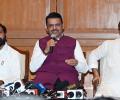
Facing mounting opposition to the introduction of Hindi language in Maharashtra schools from classes 1 to 5, the state cabinet on Sunday decided to withdraw two GRs (government orders) on the implementation of the three-language policy.

Indian-origin lawmaker Zohran Kwame Mamdani stunned in the Democratic primary race for New York City mayor, upsetting former governor Andrew Cuomo.

The Congress on Wednesday expelled former Madhya Pradesh MLA Laxman Singh, who is brother of ex-chief minister Digvijaya Singh, from the primary membership of the party for six years for 'anti-party activities'.

The Supreme Court of India has agreed to hear on May 6 the pleas of the Kerala government against the governor over the delay in approving bills passed by the state assembly. The court will consider whether the issues raised in the Kerala petition are covered by a recent judgment on a similar plea by Tamil Nadu, which set timelines for governors and the President on granting assent to bills.

Two investigations were ordered after six patients died due to alleged negligence at the state-run Saheed Laxman Nayak Medical College and Hospital in Odisha's Koraput, officials said on Wednesday.

In a landmark verdict, the Supreme court fixed a timeline for Governor to act on bills passed by the state legislature as it pulled up Tamil Nadu Governor R N Ravi for reserving 10 bills for President's consideration, saying it was against the constitutional provisions.

'Let's see how this love story shapes up in the run up to the municipal corporation election.'
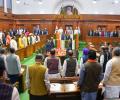
Gupta sought to draw the top city bureaucrat's attention to the procedure and protocol to be adhered to by the government officers while dealing with the members of the assembly.
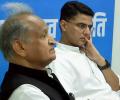
Gehlot's remark hinted at a possible thaw between the two senior Congress leaders after years of political tussle.
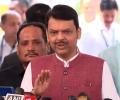
Fadnavis said, "The 2024 assembly polls results have shown who is a gaddar (traitor) and who is a khuddar (self-respecting). People have put a stamp of approval on Shinde being the true inheritor of (Shiv Sena founder) Bal Thackeray's legacy."
The Telangana government has become the first state in India to implement Scheduled Castes (SC) categorisation, dividing the 59 SC communities into three groups with varying reservation quotas. The decision was made after a commission headed by retired High Court judge Justice Shameem Akther recommended the categorisation. The implementation of SC categorisation in Telangana coincides with the birth anniversary of BR Ambedkar, architect of the Indian Constitution.
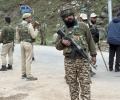
This timeline details major terror attacks on civilians in Kashmir since 2000. It highlights incidents targeting the Sikh community, Amarnath pilgrims, and other civilians, including a massacre of Kashmiri Pandits. The timeline also notes attacks on security personnel, including the 2019 Pulwama attack.
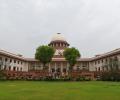
A Governor does not possess any discretion in exercise of functions under Article 200 of the Constitution in respect to any bill presented to them and must mandatorily abide by the advice tendered by the council of ministers, the Supreme Court has held.

The next Census' findings will help identify the extent of India's ageing population and vulnerability levels.
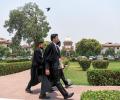
The Supreme Court of India has reserved its interim orders on three key issues related to the Waqf (Amendment) Act, 2025, including the power to denotify waqf properties, the composition of waqf boards, and the provision regarding government land. The court heard arguments from both the petitioners, who challenged the validity of the amended law, and the Centre, which defended the Act as a secular concept. The petitioners sought interim orders to prevent the implementation of certain provisions while the court considers the legal challenges.

President Droupadi Murmu has exercised powers under Article 143(1) used in rarity to know from the Supreme Court whether timelines could be imposed by judicial orders for exercise of discretion by President while dealing with the bills passed by state assemblies.

'Please don't politicise the incident or play with our emotions. We were there. We know what the terrorists said. We have already shared their statements during the attack'

Maharashtra Deputy Chief Minister Ajit Pawar has assured the public that the government's flagship 'Ladki Bahin' scheme, which provides financial assistance to women, will continue. This scheme, which is believed to have been a significant factor in the ruling Mahayuti's victory in the state polls last year, provides women with Rs 1,500 every month. Pawar, who is also the state's finance minister, clarified that there is no question of scrapping the scheme and that budgetary allocation has been made for its implementation. Earlier, state Women and Child Development Minister Aditi Tatkare also clarified that there has been no change in the amount of assistance provided under the scheme. The only adjustment made is that women already receiving Rs 1,000 under another scheme are being paid the difference of Rs 500, ensuring that they receive the full Rs 1,500. Tatkare addressed media reports claiming the aid under the scheme had been reduced, stating that this was not the case and that no eligible woman had been excluded from the scheme.
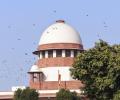
The Indian government defended the Waqf (Amendment) Act, 2025 in the Supreme Court, arguing that waqf, while an Islamic concept, is not an essential part of Islam. Solicitor General Tushar Mehta stated that waqf is essentially charity, which is recognized across religions, and cannot be considered a fundamental tenet of any faith. He also argued that the amended law addresses secular aspects of waqf and activities unrelated to Islam, and that "waqf by user" does not grant ownership of public land. Mehta highlighted the extensive consultations involved in the bill's creation, including feedback from various stakeholders. The hearing will continue on Thursday.

Bhimrao Ramji Ambedkar, the architect of the Indian Constitution, is also credited with the creation of the Election Commission of India. An amendment he brought to the Constituent Assembly led to the establishment of the Election Commission as an independent body responsible for conducting elections. Ambedkar's amendment consolidated election authority into a centralized body, headed by a chief election commissioner appointed by the President, rather than separate commissions for the Centre and states. This article delves into the historical context and the importance of Ambedkar's contribution in establishing the Election Commission of India.

The Shiv Sena, a ruling party in Maharashtra, has demanded the removal of the protected monument status from Aurangzeb's tomb in Khultabad. This demand comes after protests and calls for the tomb's demolition from organizations like the Bajrang Dal and Vishwa Hindu Parishad. The Archaeological Survey of India (ASI) protects the tomb as a monument of national importance. Maharashtra Chief Minister Devendra Fadnavis has stated that the state government will protect the tomb but will not allow the glorification of Aurangzeb.

A bench comprising Justices J B Pardiwala and R Mahadevan said, "He (the governor) seems to have adopted his own procedure. He says, 'I withhold assent, but I will not ask you to reconsider the bill'. It does not make sense to keep withholding assent and not send it to the legislature, thereby frustrating the provision of Article 200."
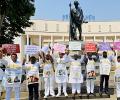
The Odisha Assembly Speaker, Surama Padhy, suspended 12 Congress MLAs for seven days for indiscipline in the House. The suspension followed a motion moved by the government Chief Whip, Saroj Pradhan. The suspended MLAs include the Congress Legislature Party (CLP) leader, Rama Chandra Kadam, and other prominent figures. The Congress members protested the decision, playing gongs and demonstrating in the assembly. The opposition BJD condemned the move, calling it motivated to suppress the voice of opposition. The Congress party demanded the withdrawal of the suspension order and criticized the government's actions. The House was adjourned multiple times amid the pandemonium.
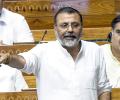
Fourth-term Bharatiya Janata Party MP Nishikant Dubey, one of the more vocal party members in the Lok Sabha, launched a broadside against the Supreme Court on Saturday, saying Parliament and state assemblies should be closed down if the apex court has to make the laws.
The Tamil Nadu government has argued in the Supreme Court that Governor R N Ravi's repeated withholding of assent to bills passed by the state legislative assembly would lead to the failure of the democratic system in India. The top court has questioned the delay by the Governor in granting assent to several bills passed by the state assembly and asked why governors should wait for parties to move the court with their grievances. The court has also said that the Governor cannot refer bills passed by the legislature and re-adopted by it for presidential assent.

Vice President Jagdeep Dhankhar on Thursday questioned the judiciary setting a timeline for the President to take decisions and act as a "super Parliament", saying the Supreme Court cannot fire a "nuclear missile" at democratic forces.

Unless Governor Ravi or the Union of India moves in appeal, seeking a hearing by a constitutional Bench, this is where it all will have to end, observes N Sathiya Moorthy.

Amidst ongoing tensions with the ruling DMK government, Tamil Nadu Governor R N Ravi has invited Vice President Jagdeep Dhankar to inaugurate a meeting of state university Vice Chancellors in the Nilgiris district, sparking criticism from political parties, particularly the Left, who have urged a boycott. The meeting comes in the wake of the Supreme Court ruling in favor of the Tamil Nadu government regarding the appointment of Vice Chancellors, which has stripped the Governor of his previous authority as Chancellor. The Governor, however, maintains his right to convene the meeting, highlighting the ongoing power struggle between the Governor and the state government. The meeting is scheduled for April 25 and 26.
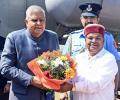
Karnataka Governor Thaawarchand Gehlot has reserved the Bill pertaining to four percent reservation for Muslims in government contracts for the President's assent, citing constitutional concerns. The Bill, which has been a subject of controversy in Karnataka, was passed by both houses of the state legislature amid protests from the opposition BJP. The Governor's decision to reserve the Bill highlights the ongoing debate over the constitutionality of religious-based reservations in India.

Supreme Court judge, Justice B R Gavai, expressed hope that the "current difficult phase" in ethnic strife-torn Manipur will be over soon with the assistance of the executive, legislature and judiciary and the state will prosper like the rest of the country. Justice Gavai, who led a delegation of Supreme Court judges that visited Manipur, called upon the people of the state to work together to restore peace and harmony. He also urged the people of the state to work together to restore peace and normalcy, and lauded the natural beauty he witnessed while travelling from Imphal to Churachandpur. He expressed delight in noting that training programmes were being imparted at the relief camps, and thanked the Chief Justice of Manipur High Court and the district legal services authority for their efforts. Justice Gavai also stressed the need for readmission of students who had to drop out of school due to the conflict and called upon the educational institutions and the public to ensure all students complete their education.

Tamil Nadu Chief Minister M K Stalin has welcomed the Supreme Court's ruling that state governors must give assent to bills passed by state assemblies, calling it a 'historic' victory for all state governments in India. The court's decision came after the Governor of Tamil Nadu, R N Ravi, withheld assent to several bills passed by the state legislature. The court found that the governor's actions were in violation of the Indian Constitution, which mandates that governors must act on the advice of the council of ministers. The ruling is seen as a significant step towards strengthening the federal structure of India.
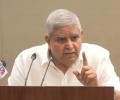
Rajya Sabha member Kapil Sibal has criticised Vice President Jagdeep Dhankhar for questioning the judiciary over the timeline for the president to take decisions, calling it "unconstitutional " and a lowering of the dignity of the chair. Sibal asserted that Dhankhar's remarks are not neutral and amount to an attack on the judiciary by the executive. He also pointed out that the president acts on the aid and advice of the council of ministers, and therefore, the president's power cannot be curtailed. Sibal urged Dhankhar to seek a review of the judiciary's decision or an advisory opinion from the Supreme Court if he has problems with it. He also questioned why Dhankhar only focuses on actions taken during Congress governments and not after 2014.

In controversial remarks, Maharashtra Congress leader Vijay Wadettiwar on Monday said terrorists have no caste or religion and questioned veracity of the claim that terrorists asked about faith of tourists before killing them in Kashmir's Pahalgam town last week.
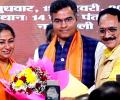
Rekha Gupta had the support of the RSS, which actively participated in the Delhi assembly poll campaign to help the BJP win.
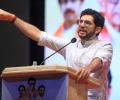
Targeting Aaditya Thackeray on Thursday, Bharatiya Janata Party minister Nitesh Rane said as per the Supreme Court's past decisions, if a person is facing allegations of rape, he must be arrested.
 © 2026 Rediff.com - Advertise with us - Disclaimer - Privacy Policy - Sitemap - Feedback - About us - Terms of use - Grievances