
The Supreme Court of India has granted permission for passive euthanasia for a 32-year-old man who has been in a coma for over 12 years, authorising the withdrawal of his artificial life support.
The Supreme Court of India has permitted the withdrawal of life-sustaining treatment for a 32-year-old man who has been in a coma for over 13 years following a traumatic brain injury.

The Supreme Court has reserved its judgment on a plea seeking passive euthanasia for a man who has been in a comatose state for over 12 years after suffering a fall in 2013. The court heard arguments regarding the withdrawal of artificial life support and the ethical considerations involved.
The father had approached the Supreme Court in 2024 seeking passive euthanasia for his son. The court had then declined to grant relief.

The Supreme Court on Friday dismissed a plea of Byju Raveendran, the promoter of Think and Learn Private Limited that operates ed-Tech firm Byju, challenging an NCLAT order which has mandated that the settlement of the BCCI's claim be placed before the Committee of Creditors.
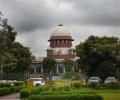
The Supreme Court criticized the Haryana government for uprooting 40 trees to build a road to a BJP office in Karnal, demanding a remedial plan and warning of consequences.

The Supreme Court of India has emphasized the importance of conducting day-to-day trials, especially in sensitive cases, to ensure speedy justice as guaranteed by Article 21 of the Constitution. The court has directed high courts to form committees to address trial delays and revert to the practice of continuous trials.
The Supreme Court has ordered the release of Sukhdev Yadav, convicted in the 2002 Nitish Katara murder case, citing completion of his 20-year sentence. The court questioned the Sentence Review Board's rejection of his remission plea.

The Supreme Court on Monday said citizens must know the value of the right of freedom of speech and expression, and exercise self restraint as it mulled guidelines to regulate offensive social media posts.

"Considering the importance of the matter, subject to the order of the Chief Justice of India, the matter be placed for final hearing on July 22," the bench said.
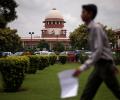
The Supreme Court has initiated a suo motu case regarding investigation agencies summoning lawyers and will examine if they can be put to notice. The action follows the Enforcement Directorate summoning senior lawyers, which was condemned by bar associations.

The Supreme Court expressed its disapproval of an analogy used by the Centre in support of the inclusion of non-Muslims in Waqf boards, stating that such logic would disqualify a bench of Hindu judges from hearing matters related to Waqf. The CJI questioned the Centre's stance on the provisions of the Waqf (Amendment) Act, 2025, which allows non-Muslim members in the Central Waqf Council and state waqf boards. The Solicitor General defended the provisions, emphasizing that the non-Muslim inclusion is limited and does not impact the Muslim composition of these bodies. However, the CJI asserted that judges shed their religious affiliations while serving on the bench and maintained their secularity in their judicial capacity.

The Supreme Court on Friday refused to entertain a fresh plea challenging constitutional validity of the Waqf (Amendment) Act, 2025.
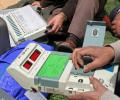
The Supreme Court of India dismissed a plea seeking a directive for 100% manual counting of Voter Verified Paper Audit Trail (VVPAT) slips in addition to electronic counting. The court cited its previous rulings on the safety and security of Electronic Voting Machines (EVMs) and stated that the issue was not open for reconsideration. The plea argued for a modified VVPAT system where voters could verify printed ballots before leaving the polling station, and for 100% manual counting of VVPAT slips. The court upheld the Delhi High Court's decision dismissing the plea, referring to previous Supreme Court judgments on the matter.

The Supreme Court of India has sharply criticized the Uttar Pradesh police for filing FIRs in civil cases, stating there is a "complete breakdown of rule of law" in the state. The court expressed its displeasure after discovering FIRs filed by the UP police in civil disputes, questioning the use of criminal law in such matters. The Chief Justice highlighted the absurdity of converting civil disputes into criminal cases, emphasizing that non-payment of money cannot be considered a criminal offense. The bench has summoned the investigating officer to justify the registration of an FIR in a specific case, and has stayed criminal proceedings against the accused while allowing the cheque bounce case to continue.

The Supreme Court of India has made public the asset details of its judges, including Chief Justice Sanjiv Khanna who has Rs 55.75 lakh in a fixed deposit, a three-bedroom DDA flat in south Delhi, and a four-bedroom apartment measuring 2,446 square feet in the Commonwealth Games Village. The court has also uploaded the complete process of appointments to the high courts and the Supreme Court on its website for public awareness.
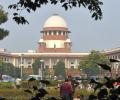
The Supreme Court on Monday said the pleas challenging the Waqf (Amendment) Act's constitutional validity will now be taken up by a bench headed by Chief Justice of India-designate Justice B R Gavai on May 15 as the incumbent CJI will be demitting office on May 13.
The Supreme Court of India has directed the Odisha government to decide within six weeks on a plea for remission filed by Ravindra Pal alias Dara Singh, who is serving a life sentence for the murders of Australian missionary Graham Stuart Staines and his two sons in 1999. Singh, who has spent over 24 years in prison, claims to have "repented" his actions and seeks an opportunity to reform his character. The court issued the notice after Singh argued that he has already served more than the required period of sentence and that his right to liberty is being jeopardized by the delay in processing his plea.
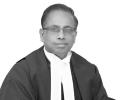
Justice Vishwanathan said he was in "the Common Cause (the NGO which had filed the PIL in coal scam cases). This case was of the ED (Enforcement Directorate), but still...".
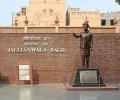
Former Supreme Court judge Justice Rohinton Nariman has warned that events similar to the Jallianwala Bagh massacre could occur if the 'basic structure' doctrine of the Constitution is diluted. In his new book, 'The Basic Structure Doctrine: Protector of Constitutional Integrity,' Nariman argues that the 1973 Kesavananda Bharati judgment, which established the doctrine, is essential for protecting fundamental rights and preventing constitutional amendments that could lead to such tragedies. Nariman's concerns are echoed by Supreme Court judge Justice K V Viswanathan, who applauds the book for its "chilling clarity" and underscores the importance of the Kesavananda Bharati ruling. The book provides a detailed analysis of the doctrine and its implications, highlighting the robustness of the Kesavananda Bharati judgment and the lack of a compelling alternative theory.

The Supreme Court has agreed to examine a PIL alleging that Arunachal Pradesh Chief Minister Pema Khandu awarded government contracts to his family members. The court has asked the state government to provide details of the beneficiaries and inform if due process was followed. The bench also sought responses from union ministries of home affairs, finance and the Comptroller and Auditor General of India on the issue within five weeks.
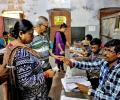
The Supreme Court of India has asked petitioners in two Public Interest Litigations (PILs) to make representations to the Election Commission of India (ECI) regarding their demand for uploading polling booth-wise voter turnout data on the ECI website. The PILs, filed by TMC MP Mahua Moitra and NGO Association for Democratic Reforms, seek a direction for the ECI to upload the data within 48 hours of the conclusion of polling in Lok Sabha and assembly elections. The ECI, represented by senior advocate Maninder Singh, expressed willingness to deliberate on the matter and suggested a meeting with the petitioners to address their concerns. The court has adjourned the hearing to the week of July 28.
The Centre on Thursday assured the Supreme Court that it will neither denotify Waqf properties, including "Waqf by user", nor make any appointments to the central Waqf council and boards till May 5.
The Supreme Court of India began hearing a batch of petitions challenging the constitutional validity of the Waqf (Amendment) Act, 2025. The bench, led by Chief Justice Sanjiv Khanna, asked both sides to address whether the court should entertain the petitions or relegate them to the high court. The hearing is underway with senior advocate Kapil Sibal arguing for the petitioners. The act, which was passed by Parliament following heated debates, has been challenged by various parties including AIMIM leader Asaduddin Owaisi, All India Muslim Personal Law Board (AIMPLB), and Jamiat Ulama-i-Hind.
The Act prohibits conversion of any place of worship and provides for the maintenance of the religious character of any place of worship as it existed on August 15, 1947.

The Supreme Court of India has directed the President to consider the mercy petition of Balwant Singh Rajoana, a death row convict in the 1995 assassination case of former Punjab Chief Minister Beant Singh. The court gave the President two weeks to decide on the plea. Rajoana was sentenced to death in July 2007 for his role in the bombing that killed Beant Singh and 16 others. The Shiromani Gurdwara Parbandhak Committee (SGPC) filed a mercy petition on his behalf in 2012.
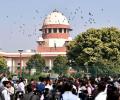
The Supreme Court of India expressed its disapproval of "scurrilous and unfounded allegations" made against judges in a petition challenging the conferment of senior designations to lawyers. The court found the plea's averments, which insinuated that judges favor their relatives in bestowing senior advocate titles, to be unacceptable. The bench offered the petitioners four weeks to amend the petition, warning that it may take further action if the offensive allegations are not removed.
The Supreme Court of India has sought the Indian government's response to a petition filed by a Muslim woman seeking to be governed by the Indian succession law instead of Shariat. The woman, Safiya P.M., argues that she does not believe in Shariat and wants to be governed by secular law, including the Indian Succession Act of 1925. The court has asked the government to file a counter affidavit within four weeks.
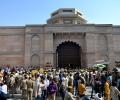
The Supreme Court of India is scheduled to hear a batch of petitions challenging the validity of certain provisions of the Places of Worship (Special Provisions) Act, 1991, which prohibits lawsuits to reclaim a place of worship or change its character from what prevailed on August 15, 1947. The pleas, including one filed by Ashwini Upadhyay, argue that these provisions violate the right to judicial remedy and create an arbitrary cut-off date. The matter will be heard in the backdrop of several ongoing cases related to places of worship, including the Gyanvapi Mosque in Varanasi and the Shahi Idgah Mosque in Mathura. The Muslim side has cited the 1991 law to argue that such suits are not maintainable. The Supreme Court had previously sought the Centre's response to Upadhyay's petition, which alleged that the law creates an "arbitrary and irrational retrospective cut-off date" for maintaining the character of places of worship.
The Supreme Court on Friday junked a public interest litigation (PIL) seeking a Central Bureau of Investigation (CBI) probe into alleged use of animal fat in making Tirupati laddus under the previous Y S Jagan Mohan Reddy-led regime.

The bench said it would be a travesty of justice to relegate Sisodia to the trial court for seeking bail in these cases.

The Supreme Court on Thursday refused to entertain a plea alleging contempt of its order on demolition of properties by the authorities in Uttarakhand, Rajasthan and Uttar Pradesh.
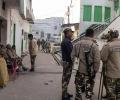
A four-member team from the Archaeological Survey of India (ASI) conducted a survey of the recently-discovered Shri Kartik Mahadev temple, five pilgrimage sites, and 19 wells in Sambhal, Uttar Pradesh, India. The survey followed the discovery of three damaged idols inside a well of the Bhasma Shankar temple, which was reopened after being shut for 46 years. The Shri Kartik Mahadev temple, also known as the Bhasma Shankar temple, was reopened on December 13 after authorities found the covered structure during an anti-encroachment drive. The temple houses an idol of Lord Hanuman and a Shivling and had remained locked since 1978. The district administration has requested carbon dating of the temple, including the well, from the ASI. Meanwhile, the Supreme Court has restrained courts across India from entertaining new lawsuits or passing any orders in pending ones seeking to reclaim religious places, especially mosques and dargahs, until further notice. This action halts proceedings in approximately 18 lawsuits filed by Hindu parties seeking surveys to determine the original religious character of 10 mosques, including the Gyanvapi at Varanasi, the Shahi Idgah Masjid at Mathura, and the Shahi Jama Masjid at Sambhal, where four individuals died in clashes. The Supreme Court will examine the legality, scope, and boundaries of the Places of Worship (Special Provisions) Act, 1991, which prohibits the conversion of places of worship and ensures the preservation of their religious character as it existed on August 15, 1947.

It said the law must be just and fair and should protect the human rights and dignity of all members of society.
The Supreme Court on Friday said if it finds that authorities in Gujarat acted in contempt of its order on demolition of properties, it will ask them to restore the structures.

Equating 'bulldozer justice' with a lawless state of affairs where might is right, the Supreme Court on Wednesday laid down pan-India guidelines and said no property should be demolished without a prior show cause notice and the affected must be given 15 days to respond.
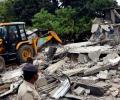
The Supreme Court on Wednesday issued pan-India guidelines on demolition of properties and said affected people need to be given some time to challenge demolition orders before an appropriate forum.

The Supreme Court has said that commitments made by political parties in their election manifestos will not amount to 'corrupt practice' under the election laws.

The Supreme Court on Friday set up a five-member independent SIT to probe the allegations of animal fat used in preparing Tirupati laddus to "assuage the feelings of crores of people" while making clear that the court cannot be used as a "political battleground".

The Supreme Court on Friday said the trial court's finding that Aam Aadmi Party leader Manish Sisodia was responsible for delaying the trial in the Delhi excise policy cases was not supported by the record.
 © 2026 Rediff.com - Advertise with us - Disclaimer - Privacy Policy - Sitemap - Feedback - About us - Terms of use - Grievances