
Around 75 per cent of total returns are expected to be e-filed in current year.
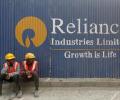
Reliance Industries Ltd was the biggest wealth creator during the five-year period from 2018 to 2023 while Adani Enterprises Ltd was the top all-round wealth creator, according to a study by Motilal Oswal Financial Services. The study, based on stock market performance of companies, said for the fifth time in succession, Reliance emerged as the largest wealth creator, adding Rs 9,63,800 crore wealth over 2018-23. It was followed by Tata Consultancy Services (Rs 6,77,400 crore wealth addition), ICICI Bank (Rs 4,15,500 crore), Infosys (Rs 3,61,800 crore) and Bharti Airtel (Rs 2,80,800 crore).

The government is drawing up a relief package for industry with steps such as relaxation of asset-classification norms by banks, thus allowing companies to delay the repayment of loans, and tax holidays for the worst-hit sectors like aviation and hospitality. But it might not be enough to stop more bankruptcies from getting filed.

The value of mergers and acquisitions that India Inc snapped up in the first half of the year surged over seven times to a staggering $38 billion or over Rs 1.8 trillion, led by big ticket deals in the telecom and pharma sectors.

It would pave the way for Jammu and Kashmir to attract large-scale investments, the industry leaders said.

The migration of domestically developed intellectual property to foreign corporations within India reflects an anomaly in the demand pattern of the country's job market, points out Kanika Datta.

Though India was under lockdown for only seven days of the quarter, global demand and commodity prices began falling from February as COVID-19 was spreading in other countries. 1,002 listed companies - excluding banks, non-bank lenders, insurers, brokerages, and IT firms - reported a combined pre-tax loss of around Rs 2,700 crore during Q4.

144 companies will pay Rs 61,087 crore in equity dividends to their shareholders for FY16, an increase of 19.2 per cent year-on-year

The higher than expected growth in the second quarter of 2013-14 is an indication of recovery in economy but some key sectors still need to perform better, India Inc said on Friday.

The Reserve Bank on Friday accepted most of the recommendations of its working group on corporate ownership of private sector banks, by allowing unrestrained promoter shareholding in the first five years of operations and hiking the same to 26 per cent after 15 years from the extant 15 per cent and also the new capital requirements. The move will benefit leading banks like Kotak Mahindra Bank and IndusInd Bank, among others, which have been seeking more time from the regulator to divest their stakes for many years now. Accepting 21 of the 33 recommendations of the internal working group, the central bank said the remaining suggestions are under its consideration.

Trade unions have called for a nation-wide strike on September 2.

India Inc needs to tighten norms against sexual harassment at work.

India Inc raised Rs 47,720 crore (Rs 477.20 billion) through various debt instruments during the first six months of the fiscal 2004-05 even as central public sector undertakings lagged behind the private sector and state-level undertakings in the re

Around 67 per cent respondents see the rupee to be at or below 60 for FY'15.

Reversing a six month declining trend, WPI inflation moved up marginally to 0.11 per cent in December mainly because of increase in prices of food items.

Inflation dipped to a five-month low of 5.19 per cent in July mainly on account of decline in prices of some food articles, vegetables and protein rich items.
Industry bodies said the decisions will help attract much-needed capital, create jobs, encourage collaboration and benefit cash-starved small and medium enterprises.

June indicates a change in trend from previous quarters in terms of how much companies are spending on employees. The worst hit sectors included steel, air transport service and automobile firms.
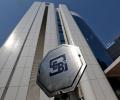
The Securities and Exchange Board of India (Sebi) might relax the disclosure norms around rumour verification to help smooth implementation and ease compliance amid pushback from India Inc, said people in the know. The rule has been notified following amendments to the Listing Obligations and Disclosure Requirements (LODR) by Sebi. However, its implementation has been deferred until February.

Could the MPCE survey results be used as a basis of reconstructing the Consumer Price Index with new weights, asks Madan Sabnavis.

They say that a stimulus package may not be necessary because, unlike last year's total lockdown, public transport, including the railways and airlines, is running and the restrictions on movement are localised and, in some cases, are partial rather than total.

Many corporate figures, who are not full-fledged businessmen, have felt the need to make a change in the system. That's why they are joining the AAP, Captain Gopinath tells Rediff.com's Vicky Nanjappa

Budget in the medium term aims to kick-start the investment cycle.

Lack of political consensus on economic reforms a key concern.

The Union government is projected to share about 32 per cent of central taxes with states during the financial year 2024-25 against the 15th Finance Commission's recommendation of 41 per cent. The Revised Estimates (RE) for FY24, too, show a similar share of states in the central taxes at 32 per cent. In absolute terms, however, there has been an increase in the amount devolved to states compared to the Budget Estimates (BE) for FY24 at Rs 11 trillion.

Terming the rise in October retail inflation despite a bumper crop as "disturbing", India Inc said the government must immediately address supply side bottlenecks to bring down the consumer price inflation.
The industry also emphasised on supply-side interventions by the government to tackle persistently high food inflation.

Congratulating Narendra Modi on becoming the Prime Minister, India Inc on Monday said it is looking forward to an era of renewed trust and expressed confidence that the nation will leapfrog into a higher orbit of growth creating more jobs, income and social stability.

The date of implementation of the regulatory provision has been deferred to April 1, 2022, Sebi said in a notification without giving any reason for the move.

While the market regulator's recent note on portfolio management schemes has kicked up a storm, that is not the only pain point for businesses, says N Sundaresha Subramanian.

Emphasising that revival of growth should be the number one priority of the RBI at this time, industry groups said apprehensions about inflation rearing its head again may prove to be misplaced.

The financial year ending Saturday saw such big-ticket events that set the directional tone for the country's business journey.

Corporate India raised decent fund via debt in April.

With the threat of a third Covid-19 wave looming large, companies are scrambling to protect employees and keep operations safe--from a no-jab-no-entry-at-workplace policy to ramping up vaccination, it's an all-out effort to prevent the scale of devastation seen in the first two waves. At least two top steel companies--Tata Steel and ArcelorMittal Nippon Steel India (AM/NS India)--are pushing for vaccination certificates for entry into work premises. AM/NS India, a joint venture between world's leading steelmaker, ArcelorMittal, and Japan's Nippon Steel, is set to make vaccination the certificate a requirement from July 1.

Almost 2,000 companies whose private provident and pension funds have invested in non-convertible debentures of IL&FS group firms are staring at the prospect of booking losses to the tune of Rs 9,000 crore or more if the interest income is added.

India Inc has expressed strong displeasure over the Delhi government's decision to withdraw approval to FDI in multi-brand retail, saying the move was likely to hinder foreign investments flowing into the country.

Chief executives in the real estate, consumer products, automobiles, construction, and textile sectors said they were all expecting workers to re-join in the next 45-60 days, which would help them ramp-up production from July.

The Virat Kohli-Anil Kumble fiasco proves that two power centres don't work whether it's Team India or Indian companies, says Shyamal Majumdar.

A total of Rs 52,759 crore has been raised by 61 companies through initial public offers till October this fiscal, higher than the funds mopped up through this route in the last financial year, the government told the Lok Sabha on Monday. Out of the 61 companies that hit the markets till October of the current fiscal, 34 entities were Small and Medium Enterprises (SMEs). Finance Minister Nirmala Sitharaman said that a large number of manufacturing and service sector companies are coming up for listing.

In order to boost growth amid some softening of inflation, RBI earlier this month cut the key interest rate by 0.25 per cent. It is scheduled to announce its mid-quarter policy review on June 17.
