
Indian CEOs might like to make some serious course correction.

The Reserve Bank on Friday accepted most of the recommendations of its working group on corporate ownership of private sector banks, by allowing unrestrained promoter shareholding in the first five years of operations and hiking the same to 26 per cent after 15 years from the extant 15 per cent and also the new capital requirements. The move will benefit leading banks like Kotak Mahindra Bank and IndusInd Bank, among others, which have been seeking more time from the regulator to divest their stakes for many years now. Accepting 21 of the 33 recommendations of the internal working group, the central bank said the remaining suggestions are under its consideration.

Senior bankers point out that while they will eventually attract qualified professionals, onboarding them takes time.
The status quo decision came as a breather as only last week the RBI had pulled up banks for not helping it in monetary policy transmission.

Prime Minister's key economic advisor C Rangarajan on Friday lowered the growth forecast for the current fiscal to 5.3 per cent from 6.4 per cent projected earlier and listed out host of measures, including further liberalisation of FDI norms to improve economic condition.

They say that a stimulus package may not be necessary because, unlike last year's total lockdown, public transport, including the railways and airlines, is running and the restrictions on movement are localised and, in some cases, are partial rather than total.

Corporate houses believe RBI must cut rates to boost investment in the system.

Analysts now expect India Inc to report a decline in both top line and bottom line for the September quarter.

China has cast a long shadow on India's economy.

The lack of a strong diversity policy on the part of companies, a limited pool of women candidates as well as socio-cultural factors contribute to their low numbers.

Banking is a boring business but still the banker should enjoy it as fancy awards and cozy relationships with politicians, Bollywood stars and corporate honchos cannot save them if the job is not done properly. In the concluding part of the series Tamal Bandyopadhyay wonders how long Kochhar would need to wait for her redemption or downfall and atonement.

'The Indian state is very benevolent when it comes to corporates,' says Tom Thomas, chief executive officer of Praxis, and convenor of CRW India.

Industrialists affirm their belief that the adverse effects of demonetisation and the goods and services tax are finally over.

India Inc on Wednesday said it looked forward to the new RBI Governor Raghuram Rajan initiating cut in interest rates and improving credit flow to crucial sectors like infrastructure to put economy back on high-growth path.

Arvind Kumar Sharma, a 1988-batch IAS officer and one of the many joint secretaries in PMO, definitely wields some power.

Chief executives in the real estate, consumer products, automobiles, construction, and textile sectors said they were all expecting workers to re-join in the next 45-60 days, which would help them ramp-up production from July.

India Inc has pitched for rate cut to boost economic activities.

Combined profit before tax of 81 firms down 37.5% y-o-y, worst show in at least 3 years.

A recent survey done by indianboards.com suggests that around 283 directors will retire by October this year.

With the threat of a third Covid-19 wave looming large, companies are scrambling to protect employees and keep operations safe--from a no-jab-no-entry-at-workplace policy to ramping up vaccination, it's an all-out effort to prevent the scale of devastation seen in the first two waves. At least two top steel companies--Tata Steel and ArcelorMittal Nippon Steel India (AM/NS India)--are pushing for vaccination certificates for entry into work premises. AM/NS India, a joint venture between world's leading steelmaker, ArcelorMittal, and Japan's Nippon Steel, is set to make vaccination the certificate a requirement from July 1.

Top companies across sectors -- automobile maker Maruti Suzuki, consumer electronics giant Samsung to IT giant Infosys -- have reopened factories and offices as India took its first steps towards resuming economic activity after weeks under a near-total coronavirus lockdown.

We can hope that some of the benefits of the rural spending - on irrigation, roads, etc -- will spur rural demand and improve rural productivity, says P V Subramanyam.
We can hope that some of the benefits of the rural spending - on irrigation, roads, etc -- will spur rural demand and improve rural productivity, says P V Subramanyam.
We can hope that some of the benefits of the rural spending - on irrigation, roads, etc -- will spur rural demand and improve rural productivity, says P V Subramanyam.

'We emphasise the importance of not basing investment decisions solely on electoral outcomes.' 'Instead, focusing on investing in high-quality businesses capable of prospering regardless of the political landscape is paramount.'
Sentiment has improved but no progress on GST & ending 'tax terrorism' disappoints.

RBI Governor Raghuram Rajan expressed anguish at the banks' reluctance to pass on benefits of the earlier rate cuts.

Top firms will have enough firepower to go for foreign M&As, given their balance sheet growth, say bankers.

'A bold, progressive step forward,' Kotak Mahindra Bank CEO Uday Kotak said of Nirmala Sitharaman's corporate tax breaks.
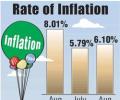
Costlier onion and other vegetables pushed up inflation for the third month in a row to 6.1 per cent in August, making it difficult for the RBI to cut rate in the monetary policy review due later this week.

No new capacity addition is planned for 2018 and capital expenditure plans are on hold

While FMCG companies were not barred from carrying out their operations during the 21-day lockdown, since most manufacture staples and essential products, capacity utilisation remained poor, owing to the restricted movement of raw materials, finished goods, and labour.

'A cutback in hiring and compensation growth by IT companies will have a significant impact on consumer demand, especially in the urban sector of the economy.'

A full-blown recovery remained elusive for India Inc in the July-September quarter, even as it overcame the challenge of achieving profitable growth.

Corporate India handed over an average increment of 8 per cent in 2021, and early estimates reveal that average increment for 2022 is expected to increase to 8.6 per cent in line with a healing economy and improving confidence, according to a Deloitte survey. As per the second phase of Deloitte's Workforce and Increment Trends survey 2021, 92 per cent companies gave an increment in 2021 at an average of 8 per cent, compared with only 4.4 per cent in 2020, where just 60 per cent companies had extended a pay hike. For 2022, average increment is expected to increase to 8.6 per cent, at par with the pre-pandemic levels of 2019, the survey said, adding that about 25 per cent companies surveyed have projected a double-digit increment for 2022.

A senior official in the central labour commissioner's office said the efforts of the government were to resolve the cases amicably and not to press for legal action against employers. "Everyone is going through tough times. We could initiate legal action if we want but that's not the idea. We want to address the issues amicably," the official said.

Govt depts, banks prone to information leakage.

Showing signs of recovery, industrial production grew at 4.7 per cent in May, the highest since October 2012, on account of improved performance of manufacturing, mining and power sectors and higher output of capital goods.

'Das is friendly, but he finally does what he does. The quality of engagement is very good.'

A total of Rs 52,759 crore has been raised by 61 companies through initial public offers till October this fiscal, higher than the funds mopped up through this route in the last financial year, the government told the Lok Sabha on Monday. Out of the 61 companies that hit the markets till October of the current fiscal, 34 entities were Small and Medium Enterprises (SMEs). Finance Minister Nirmala Sitharaman said that a large number of manufacturing and service sector companies are coming up for listing.
