
'Our unsecured loan is not exactly unsecured. It is backed by cash flow of customers.'

'Currently, our individual first premium would be in the Rs 3,000-Rs 3,200 crore range. We want to take that to about Rs 6,000 crore in three years.'

>It's not easy to predict the market. But there are at least two positive factors to back the PSU banks, explains Tamal Bandyopadhyay.

The Paytm application (app) could potentially face a permanent loss of its integrated mobile wallet feature, currently owned by Paytm Payments Bank (Paytm PB). With the recent crackdown on Paytm PB, sources say getting a fresh wallet licence may get tough for the group. "The Paytm app (One97 Communications) has to apply afresh to the RBI for a licence to operate a prepaid payment instrument (PPI) like a mobile wallet within the Paytm app, as PPI is a regulated entity.

Corporate India is busy restructuring - through mergers, demergers and splits. That seems to be the new normal as CXOs and boards brainstorm on how to create assets and value. The pitch rose significantly during the third quarter of this financial year (FY24), translating into $32.9-billion worth of such deals - the highest quarterly total since the HDFC Bank-HDFC merger announced in FY22 Q2.

A potential risk to the rupee's appreciation trajectory lies in the event of a delay in the Federal Reserve's rate cut cycle, particularly if core inflation in the US remains elevated.

Fundraising through qualified institutional placement (QIP) has revived this year, led by commercial banks, after a lacklustre 2022. According to data compiled by Prime Database, Indian companies have raised Rs 53,070 crore in 2023 so far, of which seven banks - Union Bank of India, Indian Bank, Bank of India, Federal Bank, IDFC First Bank, Bank of Maharashtra, and J&K Bank - account for Rs 21,290 crore, or about 40 per cent. If other financial institutions are included, the figure surges to Rs 26,690 crore.

Foreign portfolio investors' (FPIs') net investments in the domestic debt market surged in December, marking a 77-month high, that is, since July 2017. According to market participants, this significant uptick in FPI inflows can be attributed to the post-domestic policy outcome and the US Federal Reserve's dovish stance at the December policy. FPI inflows into debt stood at Rs 18,393 crore in December against Rs 14,106 crore in November, according to data on the National Securities Depository Limited.

rediffGURU and financial planning expert Colonel Sanjeev Govila (retd) answers your personal finance-related questions.
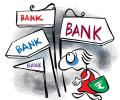
Investors should view any bounce-back in bank stocks as an opportunity to exit the pack, analysts suggested, as the worst may not be over yet. The recent quarterly results of HDFC Bank and Axis Bank disappointed the Street, triggering a marketwide selloff by foreign institutional investors, especially in banking counters. While HDFC Bank, which was the anchor for the market correction during the past week, ended 2 per cent higher amid short covering on Wednesday, Axis Bank's shares settled 3 per cent lower.

The Indian economy is likely to post better than anticipated growth in the second quarter (July-September) owing to robust urban consumption and expansion in services, a Business Standard analysis of high-frequency indicators showed. While gross domestic product growth in the September quarter is expected to come below the 7.8 per cent print in the June quarter due to a favourable base fading, analysts say the print will be much closer to 7 per cent than the 6.5 per cent anticipated earlier. While the Reserve Bank of India (RBI) had estimated 6.5 per cent growth for July-September, last month Governor Shaktikanta Das said the growth figure would surprise on the upside.

'Just the amount of work which is there just to become more and more successful in banking. For this to happen you need to have leaders who understand technology.'

The currency in circulation (CIC) declined in the first half of this financial year and this is the first time this has happened in H1 in at least 10 years. The CIC on March 31, 2023, was Rs 33.78 trillion, which fell to Rs 33.01 trillion on September 22 -- a difference of about Rs 76,658 crore. In the first half of the last two financial years, the CIC went up by Rs 33,357 crore in FY23 and Rs 84,978 crore in FY22.
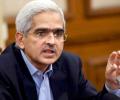
Reserve Bank of India (RBI) Governor Shaktikanta Das had stumped the market in the previous two policies - in August and in October - first with action and then with words. In August, it was the introduction of an incremental cash reserve ratio (I-CRR) to take out excess liquidity, which took the markets by surprise. In October, there was no action. Rather, what is known as "open mouth operation", Das' comment that the central bank might conduct open market operations (OMOs) by selling bonds tempered the euphoria in the bond markets after JP Morgan's inclusion of India in its Emerging Market Bond Index.

Market participants attribute the stability to the Reserve Bank of India's timely intervention in the foreign exchange market, both in terms of selling and buying dollars.

The Reserve Bank is planning to extend wholesale Central Bank Digital Currency (CBDC) for transactions for interbank borrowing or call money market, sources said on Tuesday. The pilot in the wholesale segment, known as the Digital Rupee -Wholesale (e-W), was launched on November 1, 2022, with the use case being limited to the settlement of secondary market transactions in government securities. "RBI is now planning to go into the interbank borrowing market.

It won't be easy for the banking sector to better its performance every quarter, predicts Tamal Bandyopadhyay.

'There was a 77 per cent chance that electorates in India voted for the same party for both the state and Centre when elections were held simultaneously.'
The Reserve Bank will launch the first pilot for retail digital rupee in Mumbai, New Delhi, Bengaluru and Bhubaneswar on December 1, and later expand it to nine more cities in the initial phase. This follows a month after the RBI had started a pilot in the digital rupee - wholesale segment on November 1. The Reserve Bank announces the launch of the first pilot for retail digital rupee (e?-R) on December 1, 2022, the central bank said in a statement on Tuesday.

The sessions court last week began the trial by issuing the process order and then released all the 25 accused present in court on bail. The case will be heard on June 20. All the accused were charged of committing fraud in the initial public offering of the shares of IDFC, which was open for subscription from July 15-July 22 in 2002.

Shares of Yes Bank may face selling pressure as the Reserve Bank-mandated three-year lock-in period for individual investors and exchange-traded funds is ending on Monday, according to analysts. The analysts expect distress on the bank counter on Monday as they expect investors, primarily the nine banks led by State Bank, which picked up almost 49 per cent of its stocks in March 2020 for Rs 10 per share -- at a premium of Rs 8 on the face value as part of the RBI bailout, making an exit. Exchange-traded funds are also likely to press the exit button.

Liquidity in the banking system has slipped into a deficit for the first time in three weeks, prompting banks to borrow the largest quantum of funds from the Reserve Bank of India (RBI) in around a month and a half. The key catalyst for the sudden tightening in liquidity was due to outflows on account of advance tax payments, which occur towards the end of a quarter. Analysts also cited other factors such as a currency leakage and possible interventions by the RBI in the foreign exchange market, which contributed to the tighter liquidity conditions.
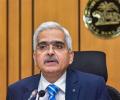
The RBI raked in a massive net income gain from foreign exchange currency sales as a buffer for the rupee during tumultuous geopolitical upheavals last year owing to Russia's invasion of Ukraine.
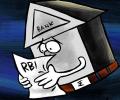
Even as competition to garner deposits is intensifying into a tight liquidity and high credit growth scenario, Bank of Baroda (BoB) has hiked deposit rates for the second time in the current quarter. Also, private lender IDBI Bank has come out with a limited period offer on its term deposits. It is offering 7.6 per cent interest rate for a tenor of 700 days, effective from December 2022.
India's first digital rupee pilot project will commence on Tuesday with nine banks, including SBI, HDFC Bank and ICICI Bank, issuing the virtual currency for transactions in government securities. "...the first pilot in the digital rupee - Wholesale segment shall commence on November 1, 2022," the RBI said in a statement on 'Operationalisation of Central Bank Digital Currency-Wholesale (e?-W) Pilot'. It also announced that the first pilot in digital rupee - Retail segment is planned for launch within a month in select locations in closed user groups comprising customers and merchants.

Sebi is reportedly examining the matter internally and has reached out to the fund house on the matter.

Only NIIF has stayed the course as a viable infrastructure financing institution.

Ajit Mishra, vice president, research, Religare Broking, answers your stockmarket queries.

The International Monetary Fund (IMF) has said India and China will account for half of the global economic growth in 2023, as the multilateral agency retained its growth forecast for Asia's third-largest economy for 2023-24 (FY24). "India remains a bright spot. Together with China, it will account for half of global growth this year, versus just a tenth for the US and euro area combined," the IMF said in its latest update to the biannual World Economic Outlook. Growth in India is set to decline from 6.8 per cent in 2022 (FY23) to 6.1 per cent in 2023 (FY24) before picking up to 6.8 per cent in 2024 (FY25), the global lender said while citing "resilient domestic demand despite external headwinds".

If there was one event that made the month of August stand out, it was a strengthening of the dollar index to levels last seen only 20 years ago, as the Federal Reserve dispelled all doubts about its intention to continue raising interest rates. Predictably, most currencies suffered against the US unit, with the bulk of the losers belonging to the emerging markets pack. Amid the volatility, the rupee, however, has displayed significant resilience and fared much better than most of its peer currencies.

Unlike any other business, banking is a turf where the captain's role is the most critical. Often a bank is defined by the personality of the CEO who runs it. Both HDFC Bank and Kotak Mahindra Bank are the creation of their CEOs, notes Tamal Bandyopadhyay.

Omkeshwar Singh, Head, Rank MF, a mutual fund investment platform, answers your queries.

The pilot project for central bank digital currency (CBDC) in the retail segment went live on Thursday with the Reserve Bank of India (RBI) issuing Rs 1.71 crore to four participating banks based on their indents. The central bank has identified four banks for the first phase of the pilot - State Bank of India, ICICI Bank, Yes Bank and IDFC First Bank - in four cities, Mumbai, New Delhi, Bengaluru and Bhubaneswar. The highest indent was received from one private sector bank.

'India is the largest stomping ground in the world for impact investing as we have an extraordinary combination of entrepreneurial drive with huge, absolute demand for all kinds of social services,' IDFC First Bank's chief Rajiv Lall tells Anjuli Bhargava.

The Indian rupee is expected to trade between 80 and 84 against dollar in the first three months of 2023 with support from overseas inflows though worsening current account deficit (CAD) and reduced interest rate differential between the US and India pose challenges. According to a Business Standard Poll of 10 participants, most said the rupee could gain strength in January due to foreign inflows, and the Reserve Bank of India (RBI) is not expected to allow the currency to depreciate ahead of the Union Budget scheduled on February 1. The rupee depreciated 10.15 per cent in 2022, its worst performance since 2013 as the war in Europe and the interest rate increase by the US Federal Reserve prompted investors to flee emerging markets.

Since infrastructure projects have long gestation periods, investors need to enter them with a long horizon of at least 10 years.

Ajit Mishra, vice president, Research, Religare Broking, answers your queries.

The coming years could be exciting for Bandhan Bank, IDBI Bank, IDFC First Bank, Federal Bank, and CSB Bank.
