
The satellite, weighing about 4,410 kg will be the heaviest to be launched from the Indian soil and into a Geosynchronous Transfer Orbit (GTO), the space agency said. The satellite will travel onboard a LVM3-M5 rocket, dubbed as 'Bahubali' for its heavylift capability.

ISRO is set to launch its communication satellite CMS-03 from Sriharikota. The satellite, weighing 4,410 kg, will be the heaviest launched from Indian soil into a Geosynchronous Transfer Orbit (GTO).

Weighing 6,100 kg, the communication satellite would be the heaviest payload to be placed into the Low Earth Orbit (LEO) in LVM3 launch history from Indian soil.
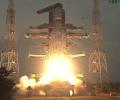
The heaviest communication satellite to be launched from the Indian soil onboard a new generation, homegrown 'Bahubali' rocket was successfully placed into the intended orbit on Sunday, the Indian Space Research Organisation said.
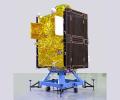
The need for NavIC was cemented after India was denied access to crucial navigation data from global providers during the 1999 Kargil War.

'The satellite's condition is healthy.'

'The work is already on with various data being studied.'
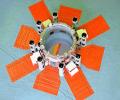
The Indian Space Research Organisation will open 2025 scoring a century orbiting the country's navigation satellite 2,250 kg NVS-02 with its rocket Geosynchronous Satellite Launch Vehicle (GSLV)-F15.

The 4,700 kg GSAT-N2 High-throughput (HTS) satellite has been injected into the desired orbit, NewSpace India Limited (NSIL) said in a series of posts on microblogging site 'X.

ISRO's vendor policy and quality control processes are under scanner.
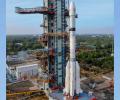
At 6.23 am on 29.1.2025, the 50.9 metre tall and weighing 420.7 ton Geosynchronous Satellite Launch Vehicle-F15 (GSLV-F15) is slated to blast off from the second launch pad carrying the 2,250 kg NVS-02 navigation satellite.
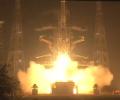
The Indian Space Research Organisation successfully launched its 100th mission on Wednesday, with a GSLV rocket carrying navigation satellite NVS-02.
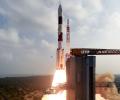
The Indian Space Research Organisation (ISRO) is all set to make its maiden commercial launch of 36 broadband communication satellites on board the space agency's heaviest rocket LVM3-M2, the countdown for which began early on Saturday at Sriharikota spaceport in Andhra Pradesh.

The Propulsion Module (PM) of Chandrayaan-3 has been moved from an orbit around the Moon to an orbit around Earth, the Indian Space Research Organisation (ISRO) has said, terming the operation a unique experiment.

Indian Space Research Organisation's (ISRO's) heaviest rocket LVM3 will launch British start-up OneWeb's 36 broadband satellites from the spaceport in Andhra Pradesh's Sriharikota on October 23, marking the launcher's entry into the global commercial launch service market.
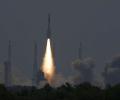
The Indian Space Research Organisation (ISRO) on Monday successfully launched a second generation navigation satellite, using a GSLV rocket with a cryogenic upper stage to do the job.

The company, which is part of tech giant Microsoft, has about 1,200 employees in India. It, however, did not comment on the impact of the job cuts on its India operations.

The heaviest rocket of the Indian Space Research Organisation -- LVM3-M2/OneWeb India-1 -- blasted off from the Sriharikota spaceport on Sunday to place 36 broadband communication satellites into the Low Earth Orbit (LEO) for a UK-based customer.

About a month after it was thrown open for bookings, the Games Travel Office (GTO) of the Commonwealth Games does not seem to be generating much response from tourists.

On Sunday morning, in its mission to place an earth observation satellite and students satellite into the low earth orbit, the SSLV-D1/EOS-02 blasted off precisely at 9.18 am amid cloudy skies from the first launch pad at Satish Dhawan Space Centre in this spaceport.

Thursday's launch is the last one of 2020 for ISRO.

The 3,357-kg satellite, which was deployed from the lower passenger position of Ariane-5 launch vehicle (VA 251) into the geostationary transfer orbit, is configured on ISRO's enhanced I-3K Bus structure to provide communication services from Geostationary orbit in C and Ku bands.

"First orbit raising operation of GSAT-6 was successfully completed by firing the Apogee Motor for 3385 seconds at 8:35 pm IST on August 28," the ISRO said.

The agency has booked 23 Army personnel and civilians, including relatives of officers, for allegedly demanding bribe and facilitating bribery, they said.

ISRO Chairman K Sivan said there might by a postponement if the weather was not conducive.

India's heavy-lift rocket GSLV MkIII, carrying communication satellite GSAT-19.

Indian Space Research Organisation is all set for the launch of the first flight-testing of indigenous cryogenic engine on homespun rocket, Geosynchronous Satellite Launch Vehicle (GSLV-D3), from the Satish Dhawan Space Centre at Sriharikota at 4.27 pm on Thursday.

The 43.43 metre tall rocket lifted off at 5.28 pm from the second launch pad at the Satish Dhawan Space Centre in Sriharikota
The flight took off from Sriharikota in the Bay of Bengal on schedule.
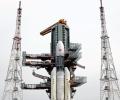
India's second mission to the moon will be launched on Monday at 2.43 pm after its initial launch on July 15 was called off owing to a "technical glitch."

A high power satellite, GSAT-15 is being inducted into the INSAT/GSAT system. GSAT-15 carries a total of 24 communication transponders in Ku-band as well as a GPS-Aided GEO Augmented Navigation (GAGAN) payload operating in L1 and L5 bands.

The launch of IRNSS IC, the third of seven satellites in the series to put in place India's navigation system at par with US' Global Positioning System, that was deferred following a technical snag has been rescheduled for October 16.

People were seen wading through knee-deep water in several areas. Commuters, too, had a hard time as vehicular traffic crawled on the roads clogged with long tailbacks.

The 3,423 kg GSAT-29 carries Ka and Ku band high throughput transponders intended to meet the communication requirements of users, including in the North East and in Jammu and Kashmir.
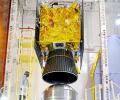
India successfully launched IRNSS 1C on board ISRO's PSLV C26 rocket from the spaceport at 1.32 am on Thursday, moving a step closer to setting up the country's own navigation system on par with Global Positioning System of the US.
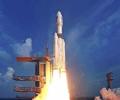
If successful, this would increase capacity to hurl small satellites into space, meeting both local demand and serving global customers.
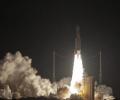
Boosting India's communication services, its latest satellite GSAT-16 was successfully launched on board Arianespace rocket from the spaceport of Kourou in French Guiana in the early hours of Sunday, after a delay of two days due to bad weather.
 © 2026 Rediff.com - Investor Information - Advertise with us - Disclaimer - Privacy Policy - Sitemap - Feedback - About us - Terms of use - Grievances