
In 2013-14, the funds witnessed outflow of Rs 2,293 crore

Investor wealth too fell by nearly Rs 7 lakh crore during 2015-16 or over Rs 2,700 crore per trading session.

Between April-June 2016-17, the additional excise duty mop up on these two products stood at Rs 17,692 crore.

Finance Minister Arun Jaitley on Saturday proposed to infuse Rs 7,940 crore funds next fiscal in the public sector banks.

The EPFO pays rate of return to its subscribers on the basis of returns it generates from its investments.

During March, FPIs were net buyers to the tune of over Rs 21,000 crore (Rs 210 billion) in equities.

It was August 2007. Tata Steel was turning 100. Jamshedpur, its hometown, had an air of celebration. The line-up for the special event included the launch of Air Deccan's commercial flight connecting Kolkata and Jamshedpur, and release of Russi Lala's new book, Romance of Tata Steel. There was also the screening of The Spirit of Steel, a 20-minute documentary directed by Zafar Hai showcasing Tata Steel's legacy, and a corporate anthem penned by Javed Akhtar and composed by Shankar, Ehsaan and Loy.

Trade generic drugs (medicines that are sold directly through distributors) are fast becoming a key segment for domestic pharma firms as volume growth slows in the overall market. Big companies like Cipla and Alkem have a significant presence in the segment but recently, players like Torrent Pharmaceuticals and Dr Reddy's Laboratories (DRL) have also entered this market. What is driving big pharma's focus on trade generics? The volume growth in the Indian Pharma Market (IPM) has come down from 5.6 per cent in FY16 to 0.1 per cent in FY23.

India would be a major beneficiary of softer oil prices among the G20 economies as the country is a major crude importer.

Top companies have grabbed a bigger pie of their sectors in the pandemic period, leading to a further rise in market concentration in many industries as measured by the Herfindahl-Hirschman Index (HHI). The HHI score, which indicates competitive intensity in an industry (or a lack of it), reached a new high in FY21 as bigger firms raised their revenue market shares either organically or through mergers and acquisitions. A higher HHI score indicates a rise in market concentration in favour of a few firms while a lower score means that the industry's revenue is more evenly divided among many companies

On the back of ongoing reforms and stress on manufacturing, India. he said, can look for much bigger share in global exports.

The jury is still out on the decision to demonetise high value currency notes on November 8, 2016, with the government claiming it has helped greater formalisation of the economy while critics saying it has failed to curb black money and reduce dependence on cash. On November 8, six years ago, Prime Minister Narendra Modi had announced the demonetisation of old Rs 1,000 and Rs 500 banknotes and one of the key objectives of the unprecedented decision was to promote digital payments and curb black money, besides eliminating terror funding. As per a Reserve Bank data, currency with the public has jumped to a new high of Rs 30.88 lakh crore an October 21, indicating that cash usage is still substantial even six years after the demonetisation move.

These firms reported a combined operating profit of Rs 26,077 crore (Rs 260.77 billion).

She pocketed Rs 9.12 crore as remuneration in FY16

Almost every company launched a new product in FY16.

If that happens, India's economic size will be just shy of $20 trillion and its annual per capita income will be about $10,000, when the country celebrates its centenary of independence.

Foreign portfolio investors (FPIs) have pumped in a whopping $33.8 billion into domestic equities and debt till February 15 this fiscal year -- the highest since FY15 when it was nearly $46 billion --taking their net outstanding investments to a record $592.5 billion, as per a report. Of the total FPI assets of $592.5 billion, $537.4 billion were in equities and $51.38 billion in debt, according to the data collated by Care Ratings. The maximum holding is in financial services sector at $191.3 billion, followed by software ($76.1 billion), oil & gas ($50 billion), automobiles & auto components ($26.9 billion, pharmaceuticals & biotechnology ($22.8 billion), sovereign ($21.7 billion--debt), household & personal products ($20.2 billion), capital goods ($19.8 billion), food, beverages & tobacco ($15.7 billion) and insurance ($13.4 billion).

In FY16, Infosys had 48 employees in India who were paid more than Rs 1 crore in annual compensation, as compared to 111 in FY15.

Devangshu Datta highlights the silver lining for the long-term investor.
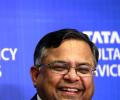
N Chandrasekaran saw his annual compensation rise to Rs 25.6 crore.

despite an Election Commission notification, disallowing tax benefits on cash donations to political parties, the cash contribution increased from 0.14% in FY15 to 1.42% in FY16.

While Zee managed single-digit growth in revenue, HT Media's income dipped marginally, reports Urvi Malvania/Business Standard.
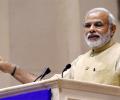
Even so, the PM's cash in hand is among the lowest when compared with his Cabinet colleagues

Karvy expects individual wealth in India to grow to Rs 558-lakh crore at a CAGR of 12.9% over the next five years.

Corporate indebtedness is now twice what it was before the global financial crisis; banks' bad loans ratio is 3.5 times higher.

Wonder why corporate India is showering dividends?

Morgan Stanley says the Indian market's performance would depend on policy action.

Most employment surveys suffer from drawbacks such as limited data coverage, infrequent data collection, and time lag

144 companies will pay Rs 61,087 crore in equity dividends to their shareholders for FY16, an increase of 19.2 per cent year-on-year

India Inc's debt-to-equity ratio has fallen, from 0.92 in FY15 to 0.88 in FY16.

The total dividend income for seven firms grows 25%.

The agency said announcements by Modi and Finance Minister Arun Jaitley after government formation 'signal a strong intention to pursue reforms'.

Oil-to-telecom conglomerate Reliance Industries (RIL) has emerged as the country's largest wealth creator, adding a staggering Rs 9.6 trillion over the past five years, according to Motilal Oswal's 26th Annual Wealth Creation Study. In doing so, the Mukesh Ambani-led company has beaten its own record of Rs 5.6 trillion generated in 2014-19. The study covered financial year 2015-16 (FY16) to FY21 and ranks the top 100 companies in descending order of absolute wealth created, subject to the company's stock price outperforming the BSE Sensex. The firms were also ranked according to speed (price CAGR during the period).

Defence Secretary Mattis said he cannot certify that Islamabad has taken 'sufficient actions' against the dreaded Haqqani terror network.

YES Bank said that it has not paid any bonus to Kapoor for FY17 and FY18. He drew a salary of Rs 6.48 crore for the ten months he served as MD & CEO, before his tenure ended in January.

Tata now occupies the fourth slot with the incremental volumes from the Tiago

Unless these companies falter on growth or external and domestic factors play spoilsport, analysts expect them to do well

With a potential for a 10x growth in pre-tax profit from the business over the next decade, retail including e-commerce will be the next growth engine for Reliance Industries Ltd, Goldman Sachs said in a report. After growing 5x over FY16-FY20, RIL's core retail revenue growth has taken a pause in FY21 (April 2020 to March 2021) due to Covid related macro headwinds including lower footfalls. The oil-to-telecom conglomerate run by billionaire Mukesh Ambani used the period to build strong digital capabilities of the retail business while continuing to expand its physical reach.
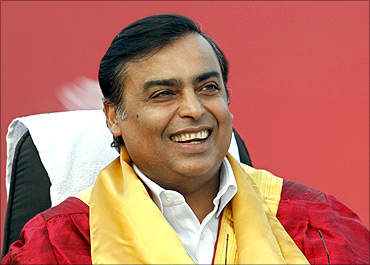
The company had received a loan restructuring package from banks under the 5/25 scheme last year.

'Investing in the stocks of holdcos can be a very efficient and inexpensive way of gaining exposure to the stocks of India's reputable growing business houses.'
