
The Supreme Court declined to hear a plea from the producer of Vijay's 'Jana Nayagan' regarding censor board clearance, directing them to the Madras High Court. The case involves delays in certification and political undertones in the film.
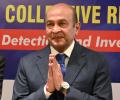
The remarks were made by the bench which refused to agree with the submission made on behalf of Justice Varma that the deputy chairman of Rajya Sabha had no power to reject a motion and, under the Judges (Inquiry) Act of 1968, only the Speaker and the chairman have the power to accept or reject a motion against a judge.

The Supreme Court has clarified that a decree passed only against a real estate developer cannot be enforced against its directors or promoters in their personal capacity unless the original adjudication clearly finds them liable.

The Supreme Court has directed the Election Commission to display the names of those on the 'logical discrepancies' list at various public offices in West Bengal, addressing concerns about irregularities in the voter rolls.
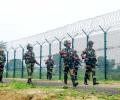
The Indian Army has raised concerns in the Supreme Court regarding the construction of a multi-speciality hospital near the Indo-Bangladesh border in Assam, citing potential security risks from drone movement and long-range sniper rifles. The court is seeking a balance between public health needs and national security.
The Supreme Court intervened to ensure a tragedy-struck widow received compensation from the Railways after a 20-year legal battle following her husband's death in a train accident.
The Supreme Court of India resolved a decades-old land dispute in the Union Territory of Dadra and Nagar Haveli, involving land originally vested in the Portuguese government.
The Supreme Court questioned Justice Yashwant Varma's conduct regarding an in-house inquiry panel report that found him guilty of misconduct in a cash discovery row. The court raised concerns about his delayed challenge to the inquiry and the implications of the panel's recommendations.

The Supreme Court has directed the Chhattisgarh police to preserve the body of top Maoist commander Katha Ramchandra Reddy, who was killed in an alleged fake encounter. The court has instructed that the body not be buried or cremated until the high court decides on the plea alleging a fake encounter and torture.

The Supreme Court refused to interfere with an order dismissing Jacqueline Fernandez's plea to quash an ECIR in a Rs 200 crore money laundering case involving Sukesh Chandrasekhar.

The Supreme Court has ruled that a bank's one-time settlement (OTS) scheme cannot be invoked as a matter of right and that borrowers must strictly comply with its mandatory conditions, including upfront payment of a specified portion of dues, to avail themselves of the benefits of the scheme.

The Supreme Court is scheduled to hear on Monday Allahabad high court judge Yashwant Varma's plea seeking invalidation of a report by an in-house inquiry panel which found him guilty of misconduct in the cash discovery row.
The Supreme Court questioned Justice Yashwant Varma regarding his plea to invalidate an in-house inquiry panel report that indicted him after a large amount of burnt cash was discovered at his official residence during his time as a Delhi High Court judge.

'You are Leader of Opposition. Say things in Parliament, why do you have say it on social media?'
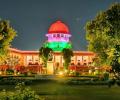
The Supreme Court of India has referred the matter of the Right to Education (RTE) Act's applicability to minority schools to a larger bench for adjudication, expressing concerns about potential misuse and fragmentation of the education system.

The Supreme Court of India is set to determine whether Rohingya individuals in the country are to be considered refugees or illegal entrants, a crucial decision that will impact their rights and potential deportation.
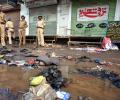
The 2008 Malegaon bomb blast case, spanning nearly 17 years, was marked by changes in investigating agencies and five different judges, contributing to significant delays, according to victims and accused.
The Supreme Court dismissed Allahabad High Court judge Yashwant Varma's plea seeking invalidation of a report that found him guilty of misconduct in the cash discovery row.
The petitioner's counsel said his client was facing threats of arrest and torture in his country as he was a former Liberation Tigers of Tamil Eelam member, and that his wife and children had settled in India.

The Supreme Court of India has extended the interim bail of Ashoka University professor Ali Khan Mahmudabad, who was arrested for contentious social media posts on Operation Sindoor. The court, however, restrained him from posting anything online with respect to the cases against him, stating that there was no impediment on his right to speech and expression. The court directed the Special Investigation Team (SIT) to furnish the investigation report on the next date of hearing.
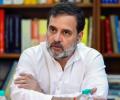
The Supreme Court of India reprimanded Congress leader Rahul Gandhi for his remarks about Vinayak Damodar Savarkar, calling them "irresponsible." The court stayed criminal proceedings against Gandhi in a case filed in Uttar Pradesh for his comments but warned him against making such statements in the future. The court also asked Gandhi's lawyer if he was aware that even Mahatma Gandhi used terms like "your faithful servant" in his communications with the British.
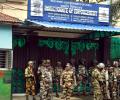
The Supreme Court of India has repeatedly criticized the Enforcement Directorate (ED) for exceeding its authority and misusing its powers. The latest rebuke came on Thursday, when the court accused the agency of 'crossing all limits' in a money laundering probe against a Tamil Nadu state-run liquor retailer. This follows a string of similar observations by the Supreme Court and high courts across India, raising concerns about the ED's investigative practices and the potential for misuse of its powers.

If a woman can fly Rafale fighter jet in the Indian Air Force, then why are fewer women officers in gender neutral posts of judge advocate general (legal) branch of the Army, the Supreme Court wondered recently and questioned the Centre's rationale on a 50-50 selection criterion.
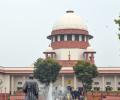
In a significant development, the Supreme Court on Tuesday asked the Election Commission of India to provide details of cases in which it had either removed or reduced the period of disqualification from electoral rolls of leaders post their conviction in criminal cases.

The Supreme Court of India granted custody of a man suffering from cerebral palsy to his mother, a US national, after determining it was in his best interest due to his inability to make independent decisions. The court overruled a Madras High Court decision, finding the lower court's interaction with the son insufficient to assess his needs. The Supreme Court emphasized the son's limited cognitive capacity and the availability of specialized support in the US, where he had completed most of his schooling.

The Supreme Court of India has emphasized the importance of individual liberty, setting aside a Himachal Pradesh High Court order that cancelled bail for an accused in an attempt-to-murder case. The Supreme Court found no material to support the cancellation, stating that courts should be cautious about interfering with an individual's freedom.
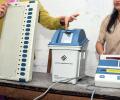
The Supreme Court of India has sought a response from the Election Commission of India (ECI) regarding pleas seeking verification of burnt memory and symbol loading units in Electronic Voting Machines (EVMs). The court directed the ECI to refrain from erasing or reloading data during the verification process and to explain the procedure adopted for verification. The bench also expressed concerns over the high cost of verification and directed the ECI to reduce the fee. The court's directive comes following its previous judgement where it allowed aggrieved candidates to seek verification of EVMs.
The Supreme Court of India expressed concern about the "criminalization of politics" and questioned how convicted individuals can return to Parliament. The court sought the assistance of the attorney general on this issue, highlighting the apparent conflict of interest and the need for clarity on the Representation of People Act's provisions. The court also raised concerns about the slow pace of trials against lawmakers, with a significant number of cases pending. The issue has been referred to a larger bench for consideration.
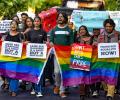
A five-judge bench of the Supreme Court will consider review pleas challenging the October 2023 verdict that declined legal sanction to same-sex marriage. The review pleas will be heard in chambers on January 9, with Justice P S Narasimha being the only member of the original bench that delivered the verdict.
The Supreme Court on Thursday dismissed a batch of pleas seeking to review its October 2023 verdict declining legal sanction to same-sex marriage.
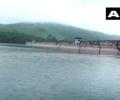
The Supreme Court of India expressed shock and disappointment at the Indian government's failure to implement the Dam Safety Act, enacted in 2021. The court highlighted the lack of progress in constituting a national committee for dam safety and formulating regulations despite the law's provisions. The case pertains to the safety of the Mullaperiyar Dam, a 130-year-old structure in Kerala, which is controlled by Tamil Nadu. The court has ordered the government to take immediate action and seek assistance from the Attorney General in this matter.
It will be court's opinion versus the legislative power to enact law, the Supreme Court on Wednesday said as it posted the pleas challenging the appointment of the chief election commissioner and election commissioners under the 2023 law on February 4.

The court said it is a matter of propriety but there is no legal right seeking removal of Kejriwal as chief minister following his arrest.

The Supreme Court on Wednesday ordered the deletion of advocate Bansuri Swaraj's name from its order of granting bail to AAP leader Sanjay Singh after the Enforcement Directorate said her name got added to the list due to an "inadvertent error".
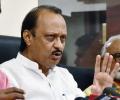
The Supreme Court on Thursday directed Maharashtra Deputy Chief Minister Ajit Pawar to use the 'clock' symbol in its publicity material in the upcoming Maharashtra assembly elections with a disclaimer that the matter was sub judice before it.

On February 1, grappling with the intractable issue of the AMU's minority status, the top court said the 1981 amendment to the AMU Act, which effectively accorded it a minority status, only did a "half-hearted job" and did not restore the institution the position it had prior to 1951.
The court also directed the Maharashtra Deputy Chief Minister Ajit Pawar-led NCP faction to publish a disclaimer in newspapers, including Marathi ones, that the issue of allocation of "clock" symbol was pending in court.

We don't recall ever seeing photographs of a Supreme Court judge being sworn in, which is why we are sharing glimpses of Monday's ceremony at the highest court in the land with you.
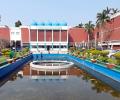
The Supreme Court on Friday deferred the question of Aligarh Muslim University's minority status to a fresh bench and overruled the 1967 judgment that said the university cannot be considered a minority institution since it was created by a central law.
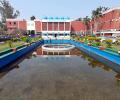
Aligarh Muslim University is not a minority educational institution, Supreme Court's Justice Dipankar Datta said on Friday and noted had it not been a "race against time" he would have articulated better in his dissenting opinion. The judge also flagged a non-exchange of ideas and opinions in a "true democratic spirit" to build a consensus.
 © 2026 Rediff.com - Investor Information - Advertise with us - Disclaimer - Privacy Policy - Sitemap - Feedback - About us - Terms of use - Grievances