
Outgoing Chief Justice of India Uday Umesh Lalit turned nostalgic on Monday as he recalled his journey of nearly 37 years in the Supreme Court, saying he enjoyed his stint both as a lawyer and a judge.

Podcaster Allahbadia's remarks on parents and sex on comedian Samay Raina's YouTube show India's Got Latent triggered a controversy and several FIRs have been lodged against him and others in various parts of the country.

Justice Ramana, who had taken over as head of the Indian judiciary from predecessor SA Bobde on April 24, 2021 as the 48th CJI, is scheduled to demit office on August 26 after a tenure of over 16 months.
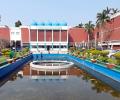
A two-judge bench of the top court in 1981 questioned the correctness of the 1967 verdict holding Aligarh Muslim University not to be a minority institution since it was created by a central law and referred the issue to a larger bench for decision.

As part of the procedure, the law minister writes to the CJI to name his or her successor.
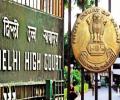
The Supreme Court collegium has initiated an initial inquiry against Delhi High Court judge Justice Yashwant Varma following the alleged discovery of a large stash of cash at his official residence during a fire incident. The collegium has also reportedly recommended Justice Varma's transfer to his parent high court, the Allahabad High Court. The inquiry will involve seeking a report from the Chief Justice of the Delhi High Court on the incident. The controversy surrounding the alleged discovery of cash was first reported by The Times of India. Justice Varma's proposed transfer is subject to the Centre's approval. The amount of cash found is not yet known. Justice Varma, currently heading a division bench dealing with sales tax, GST, company appeals and other appeals, did not hold court on Friday. Delhi High Court Chief Justice D K Upadhyaya expressed shock over the incident. The collegium reportedly received information about the cash discovery from government officials. Some collegium members have called for stricter action against Justice Varma, including seeking his resignation or launching an in-house inquiry. The Supreme Court has an in-house inquiry mechanism to deal with allegations against judges, which involves forming a committee to investigate and, based on the report, take further action. A judge of a constitutional court can only be removed through impeachment by Parliament.
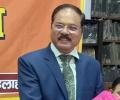
Justice Shekhar Kumar Yadav, an Allahabad High Court judge, is set to appear before the Supreme Court Collegium to explain his controversial statements made at a Vishva Hindu Parishad (VHP) function. The Supreme Court has sought a report from the Allahabad High Court after news reports surfaced regarding Justice Yadav's remarks, which were widely condemned as "hate speech". The judge's statements, made at a VHP event, sparked outrage from various quarters, including opposition leaders and lawyers. The Bar Association of India has also condemned the judge's remarks and called for an apology.
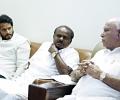
The Supreme Court referred to a larger bench the legal issues stemming from a plea of BJP leader B S Yediyurappa, including the question whether a prior sanction to prosecute is needed under the Prevention of Corruption Act after a magisterial court order of inquiry. The questions revolve around the interplay between the provisions of the Prevention of Corruption Act and the Code of Criminal Procedure on the issue of prior sanction to prosecute a public servant.

He would have a tenure of two years and is due to retire on November 10, 2024.

Modi also said that Lord Ganesh was "put behind bars" in Karnataka by these people.

Terming pendency of cases a 'huge challenge', Chief Justice of India N V Ramana on Friday expressed regret for not being able to pay much attention to issues of listing and posting of matters for hearing in the Supreme Court.
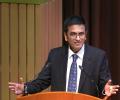
Besides the present CJI Chandrachud, former CJIs Ranjan Gogoi and SA Bobde and former judges Ashok Bhushan and S Abdul Nazeer were part of the bench which had delivered the historic verdict on November 9, 2019.

"If somebody has any urgency, we are here for mentioning. Otherwise, we will be able to sort out with these directions," he told lawyers who were in a queue for mentioning cases for urgent listing.

Chief Justice of India N V Ramana on Thursday set in motion the process of appointment of his successor by recommending the name of Justice Uday Umesh Lalit, the most senior judge, to the Centre.
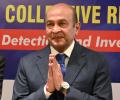
The Allahabad High Court Bar Association has begun an indefinite strike to protest the proposed transfer of Delhi HC judge Yashwant Varma, who is under investigation after a large amount of cash was found at his residence. The Oudh Bar Association (OBA) of the Lucknow bench of the High Court has also condemned the transfer, calling for impeachment proceedings against Justice Varma. Both bar associations are concerned about the impact on public faith in the judiciary and have called for a reconsideration of the transfer decision.
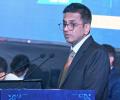
The division bench of the high court noted that certain allegations have also been levelled against them in the petition, and said it cannot hear the case.

Observing secularism means to 'live and let live', the Supreme Court on Tuesday said regulating madrasas was in the national interest as several hundred years of the nation's composite culture could not be wished away by creating silos for minorities.
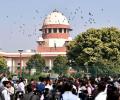
The Supreme Court on Monday said the trial of the Manipur ethnic violence cases, probed by the Central Bureau of Investigation, would be conducted in Guwahati, Assam, where it was transferred to earlier.

Union Law Minister Kiren Rijiju on Friday said formalities are being carried out ahead of the appointment of the next chief justice of India and hoped that everything will go smoothly because the government is "always particular" about rules and conventions.
The Supreme Court on Thursday witnessed a heated exchange of words between Chief Justice D Y Chandrachud and Supreme Court Bar Association president Vikas Singh in a case related to allotment of a parcel of land for lawyers' chambers.
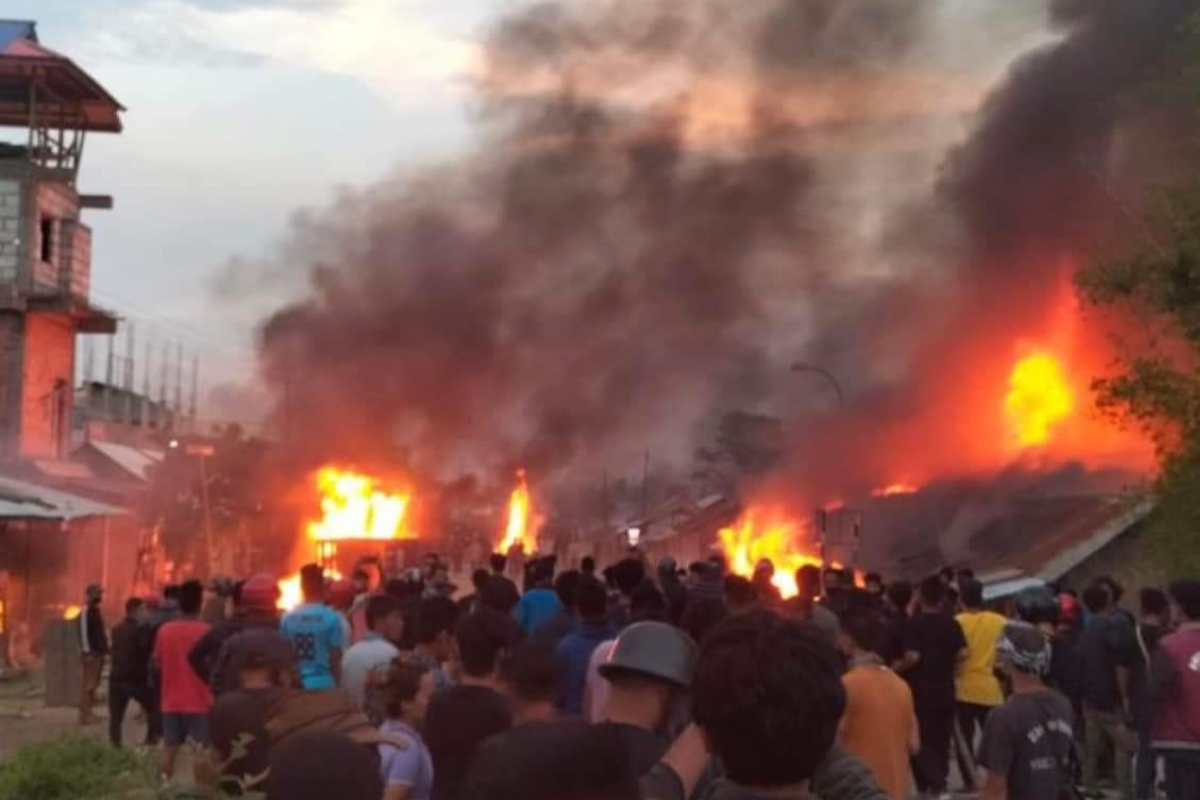
The top court asked the state government to spell out details of its actions taken against the culprits and the encroachers.

The remarks by the CJI came against the backdrop of the recent remarks by Vice President Jagdeep Dhankhar who questioned the landmark 1973 Kesavananda Bharati case verdict that gave the basic structure doctrine.
The Supreme Court of India has asked petitioners in two Public Interest Litigations (PILs) to make representations to the Election Commission of India (ECI) regarding their demand for uploading polling booth-wise voter turnout data on the ECI website. The PILs, filed by TMC MP Mahua Moitra and NGO Association for Democratic Reforms, seek a direction for the ECI to upload the data within 48 hours of the conclusion of polling in Lok Sabha and assembly elections. The ECI, represented by senior advocate Maninder Singh, expressed willingness to deliberate on the matter and suggested a meeting with the petitioners to address their concerns. The court has adjourned the hearing to the week of July 28.
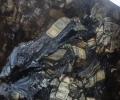
The Supreme Court of India has released an inquiry report into the alleged discovery of a large amount of cash at the residence of Delhi High Court judge Yashwant Varma. The report, which includes photos and videos, was uploaded on the court's website. Chief Justice of India Sanjiv Khanna has formed an in-house committee to investigate the matter and has asked the Delhi High Court Chief Justice to not assign any judicial work to Justice Varma. Justice Varma has denied the allegations, claiming they are part of a conspiracy to frame him. The inquiry report, submitted by the Delhi High Court Chief Justice, has been made public and calls for a deeper probe into the incident. The incident has raised concerns about judicial accountability and has prompted the Congress party to call for strong measures to uphold public trust in the judiciary.
In a significant development, the Supreme Court on Tuesday asked the Election Commission of India to provide details of cases in which it had either removed or reduced the period of disqualification from electoral rolls of leaders post their conviction in criminal cases.
The Supreme Court on Monday termed as "fake" and "ill-intended" a social media post exhorting the public to protest against authorities using a file photograph and falsely quoting Chief Justice of India D Y Chandrachud.
The Supreme Court said on Monday it will have to constitute a bench to hear a plea against the collegium system of appointment of judges to the apex court and high courts.
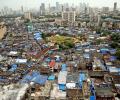
The Supreme Court of India has refused to halt the redevelopment project of Dharavi in Mumbai, allowing the Adani Group to proceed with their project. The court rejected a plea from Seclink Technologies Corporation, the original highest bidder for the project in 2018, which challenged the tender process and the award to Adani Properties Pvt Ltd in 2022. The court directed Adani Properties to make payments through a single bank account and ordered Seclink Technologies to file an affidavit detailing their increased offer for the project. The project work has already commenced, with constructions underway and 2,000 people employed on the site.

Justice Chandrachud, the CJI-designate, will take oath as the 50th Chief Justice of India on November 9.

The bench asked the petitioner to circulate three copies of the petition for the three judges and cautioned with imposition of fine.

The Supreme Court on Thursday set aside caste-based discriminatory provisions of prison manuals of around 11 states while deprecating the practice of distribution of work and segregation of prisoners in separate wards on basis of their castes.
In a significant verdict, the Supreme Court by a majority of 7:2 on Tuesday held all private properties cannot form part of "material resources of the community" empowering states to take them over for distribution to serve "common good" under the Constitution.
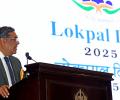
The Supreme Court of India will examine the jurisdiction of the Lokpal, India's anti-corruption ombudsman, in entertaining complaints against sitting high court judges. The court is considering a suo motu proceeding initiated over the Lokpal's January 27 order on the issue. The case involves two complaints filed against a sitting additional judge of a high court, alleging that he influenced a judge of the subordinate judiciary and a judge of the same high court set to deal with a suit filed against the complainant by a private company.
"This is complete abuse of the process," said the bench comprising Chief Justice D Y Chandrachud and justices JB Pardiwala and Manoj Misra while junking the PIL on the issue.

CJI Chandrachud met the delegations in the presence of two other members of the collegium -- Justice SK Kaul and Justice MR Shah.
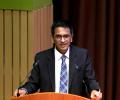
The CJI said the higher judiciary is getting 'flooded' with bail matters because of the reluctance at the grassroots level to grant bail.
Chief Justice of India DY Chandrachud on Tuesday remarked that once judges demit office whatever they say is just opinion and is not binding, after former CJI Ranjan Gogoi's comments that the basic structure doctrine was debatable was flagged in the Supreme Court.

Chief Justice of India (CJI) N V Ramana on Wednesday did not permit senior advocates to mention cases for urgent listing in the court presided over by him, saying, "No question of allowing seniors to mention".

Chief Justice of India (CJI) D Y Chandrachud's first 100 days in office saw the Supreme Court take a giant leap towards reforms, especially making courts more technology-friendly, and ensuring relatively fast judicial appointments including those of eight judges to the apex court.
The CJI emphasized through the lives of the members of the bar, who fearlessly espouse those causes, "the flame of liberty burns bright even today".
 © 2026 Rediff.com - Advertise with us - Disclaimer - Privacy Policy - Sitemap - Feedback - About us - Terms of use - Grievances