
Pharma major Dr Reddy's Laboratories (DRL) reported a 14 per cent year-on-year (Y-o-Y) drop in consolidated net profit to Rs 1,210 crore in the December quarter of FY 2025-26 (Q3FY26) on low sales of cancer drug Lenalidomide in the North American market. The firm's revenue from operations grew to Rs 8,727 crore in Q3FY26, a 4.4 per cent Y-o-Y increase from Rs 8,357 crore recorded for the same quarter last year.

The government on Sunday gave a strong push to upgradation and expansion of healthcare infrastructure, medical education and pharma sector with the Union Budget 2026-27 announcing a slew of steps, including those aimed at making India a global hub for allied healthcare professionals and biopharma manufacturing.

Following the death of 22 children due to consumption of contaminated cough syrups in Madhya Pradesh three months ago, the Union health ministry has proposed amendments in the country's drug rules to ensure a tougher criterion for their over-the-counter (OTC) sales in India.

'India is clearly moving toward more targeted treatment pathways in high-burden cancers.'

Biocon Limited has launched its GLP-1 peptide, liraglutide, for the treatment of diabetes and obesity in the Netherlands, as the biopharmaceutical firm positions itself as a global player in the fast-growing diabetes and obesity market currently dominated by the likes of Novo Nordisk and Eli Lilly.
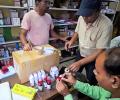
The Central Drugs Standard Control Organisation (CDSCO) will conduct testing, inspection and auditing of cough syrup manufacturers.

The Central Drugs Standard Control Organisation (CDSCO) has initiated a nationwide campaign to test, inspect, and audit cough syrup manufacturers following concerns about contaminated products and child deaths. The initiative aims to ensure adherence to safety standards and regulatory compliance.

The World Health Organisation (WHO) has issued an alert against three "substandard" oral cough syrups identified in India and urged national regulatory authorities worldwide to immediately notify it if these are detected in their country.

In a major development in the toxic syrup tragedy that killed 23 children in Madhya Pradesh, S Ranganathan, director of the Tamil Nadu-based Sresan Pharmaceuticals, has been arrested and remanded to 10 days' police custody.
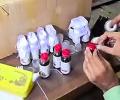
A new law is being proposed to grant statutory powers to the Central Drugs Standard Control Organisation to regulate the manufacture, distribution, and sale of drugs, medical devices, and cosmetics.

India's drug regulator CDSCO has recalled three cough syrups and halted their production after the WHO raised concerns about potential contamination and links to child deaths. The WHO is investigating reports of pediatric illnesses and deaths in India potentially linked to contaminated syrups.

The bumper rise is due to the rising demand for the drug and patients' gradual shift towards its higher dosage.

The Enforcement Directorate (ED) raided premises linked to Sresan Pharmaceuticals, the manufacturer of Coldrif cough syrup linked to the deaths of children in Madhya Pradesh and Rajasthan, and top officials of the Tamil Nadu FDA as part of a money laundering investigation.

Police have arrested a doctor for alleged negligence and registered a case against the manufacturer of a 'toxic' cough syrup after the death of 14 children in Chhindwara due to suspected renal failure, officials said on Sunday.
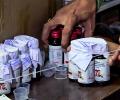
The Indian Medical Association (IMA) has defended a doctor arrested in connection with cough syrup deaths in Madhya Pradesh, attributing the incident to failures in the drugs regulatory system.
Prices for Indian consumers are expected to come down significantly from the current Rs 17,000-Rs 26,000 monthly.
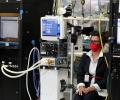
A large number of medical device-manufacturing units have been forced to move to Vietnam and Malaysia due to delays, inconsistent timelines, and a lack of transparency in licensing processes, according to the Parliamentary Standing Committee on Health and Family Welfare.
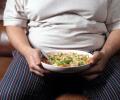
Mounjaro is indicated as an adjunct to a reduced-calorie diet and increased physical activity for chronic weight management in adults with an initial body mass index (BMI) of 30 kg/m2 or greater (obesity) or 27 kg/m2 or greater (overweight) in the presence of at least one weight-related comorbid condition.

'Anti-cancer, anti-diabetic, and other drugs suspected to be spurious were seized from the raid carried out at the firm.'

According to the Department of Pharmaceuticals' annual report for 2024-25, India imported medical devices worth $8.1 billion, while exports stood at $3.7 billion in the financial year 2023-24 (FY24)

Among the commonly used analgesic formulations (painkillers) found NSQ are combinations of paracetamol with ibuprofen, diclofenac and mefenamic acid. Medications using these combinations are commonly used to treat fever, mild migraine, period and muscle pain.

Indian pharmaceutical companies are stepping up their efforts to combat the problem of counterfeit drugs, employing a variety of strategies, from packaging innovations to engaging private investigation agencies. The stakes are high, as counterfeit medicines not only harm consumers but also tarnish the reputation of leading brands.

Rise in raids on illicit drug manufacturing units, alongside arrests for the production, sale, or distribution of spurious or adulterated drugs.

Another maternal death has been reported at the Ballari Medical College and Research Centre (BMCRC), bringing the total number of such fatalities in the past month to five.

Most of the pharma units are failing in documentation, and validation processes, and many don't have full-fledged quality control laboratories.
The emergency use of the drug will be for adult COVID-19 patients with SpO2 93 percent and who have a high risk of progression of the disease including hospitalisation or death subject to certain conditions
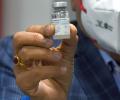
The Union health ministry on Thursday termed as 'misleading' and 'fallacious' media reports which claimed that regulatory approval for COVID-19 vaccine Covaxin was rushed due to political pressure.

They said after examining and analysing the adverse event reports, causal relationship and all related details shared by or to be shared by the WHO, the committee will advise and recommend further course of action to the Drugs Controller General of India (DCGI).

A notification of the revised Schedule M rules by the Ministry of Health and Family Welfare has elicited mixed responses from the pharma sector and industry observers. While the industry has welcomed the revision of rules, several analysts said that implementation and compliance can become a challenge for smaller pharmaceutical companies. The Schedule M of the Drugs and Cosmetics Rules specifies the good manufacturing practices (GMPs), which aim to ensure quality of drugs made in the country.

A probe has been initiated by India's drug regulator after the World Health Organisation (WHO) issued an alert saying cough syrups manufactured by an Indian firm could potentially be linked to the death of children in The Gambia, official sources said.
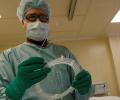
The transition of Class A and Class B medical device makers to the licensing regime by October 1 seems to be an uphill task with several small and medium manufacturers saying they are still awaiting the audit from the government authorities. If the licenses don't come through, either due to lack of audits or MSME units not clearing the audits, then a few thousand small-scale medical device units will face the issue of business continuity in three weeks. Class A medical devices are those with low to moderate risk to the patient or user (surgical dressings for example), while Class B medical devices refer to devices with moderate risks that require special controls (catheters for example).

India's drug regulator has initiated a probe and sought further details from the WHO after the global health body issued an alert that cough syrups manufactured by an Indian firm could potentially be linked to the death of children in Gambia.
After reports of contamination in cough syrups sent from the country, India is considering a system to test them before exporting. It is learnt that the Central Drugs Standard Control Organisation (CDSCO) has sent a proposal to the Union health ministry on this. The idea is to test the medicines at government labs before exporting.
The World Health Organisation on Friday said that it is in touch with the Uzbek authorities about the reported deaths of 18 children after consuming contaminated cough syrup made by Noida-based Marion Biotech.

The joint inspections is to ensure the safety, efficacy, and quality of drugs available in the country

Three employees of a Noida-based pharmaceutical firm, whose cough syrup is alleged to have led to the death of 18 children in Uzbekistan last year, were arrested on charges of manufacturing and sale of adulterated drugs, officials said.
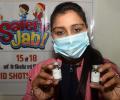
The company had in December said that the CDSCO had approved a 12-month shelf life for Covaxin, which was nine months earlier, Sohini Das reports.
In the letter, Somani said the samples of four made-in-India cough syrups linked to the deaths of 66 children in Gambia which were tested in government laboratory here were found to be complying with specifications and not to have been contaminated with DEG or EG according to the test reports.

A three-member team each from the Central Drugs Standard Control Organisation (CDSCO) and the State Drug Controller visited the plant in Tamil Nadu's Kancheepuram, 40 km from Chennai, on Friday after the company recalled the eye drop.
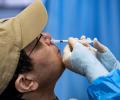
iNCOVACC is the world's first intranasal vaccine for COVID-19 to receive approval for the primary two-dose schedule, and as a heterologous booster dose.
 © 2026 Rediff.com - Investor Information - Advertise with us - Disclaimer - Privacy Policy - Sitemap - Feedback - About us - Terms of use - Grievances