
The Supreme Court has directed the government to raise awareness, compensate, and protect vulnerable individuals who have lost money in cyber scams. The court's remarks came while granting bail to an accused in a cybercrime case, emphasizing the need for public education and cybersecurity awareness.
The Supreme Court of India quashed a rape FIR, stating the case was a consensual relationship that turned sour. The court emphasized the need for caution in identifying genuine rape cases versus disputes arising from consensual relationships.

The Supreme Court of India has allowed a 17-year-old girl to terminate her 30-week pregnancy, emphasizing that courts cannot force a woman, especially a minor, to continue an unwanted pregnancy.
The Supreme Court, in a 2:1 majority, has recalled its previous judgment prohibiting the Centre from granting retrospective environmental clearances to projects violating environmental norms, paving the way for reconsideration of the issue.
A woman lawyer was escorted out of the Chief Justice of India's courtroom after disrupting proceedings by persistently raising an unlisted case despite directions to stop by the bench.

Chief Justice of India lays the foundation for an Integrated Judicial Court Complex in Assam's Kamrup district, facing protests from the Gauhati High Court Bar Association (GHCBA) over the relocation of the High Court.

Students at Tezpur University in Assam have shut down the institution, protesting against Vice Chancellor Shambhu Nath Singh over allegations of corruption and financial irregularities. The shutdown has led to the cancellation of end-term examinations and has garnered support from teachers and non-teaching staff.

Justice Ujjal Bhuyan, who is sharing the bench, differed with the course of action adopted against the errant lawyer, and said, "I have my own views on this, he is the CJI, it is not a matter of joke!"
A bench comprising Chief Justice B R Gavai and Justices Ujjal Bhuyan and K Vinod Chandran dismissed the PIL filed by lawyer Vishal Tiwari after Solicitor General Tushar Mehta objected to it.

The petition points out that Shami's annual income, as disclosed in his Income Tax Return for 2021-22, stood at nearly Rs 48 crore, while she has been forced to live in "downtrodden conditions", struggling to meet even basic expenses.

The Supreme Court agreed to hear on Friday a public interest litigation (PIL) seeking inquiry and systemic reform in drug safety mechanisms in the wake of deaths of children in Madhya Pradesh and Rajasthan allegedly due to consumption of toxic cough syrups.
The Supreme Court has expressed serious concern over the rising cases of digital arrest cybercrime in India, where fraudsters extort money from victims by posing as law enforcement officials. The court has vowed to deal with such cases with an iron hand and has sought reports from the Ministry of Home Affairs and the CBI.

Pankaj Kapur, who visibly enjoys playing the ringmaster to this family circus, is the glue that holds Thode Door Thode Paas together, observes Deepa Gahlot.

Zubeen Garg's cousin and Assam Police DSP Sandipan Garg was apprehended on Wednesday in connection with the singer's death in Singapore last month, taking the total number of arrests in the case to five, a senior officer said.
Supreme Court judge Surya Kant expressed his reluctance to order urgent listing of cases on the same day, except in extreme circumstances, highlighting the workload and sleep deprivation of judges.

The Supreme Court will also hear similar pleas related to permanent commission from the Indian Navy, followed by the Indian Air Force and Coast Guard.
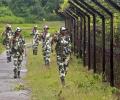
The Centre has denied any discrimination in granting permanent commission to Short Service Commission (SSC) women Army officers compared to their male counterparts, assuring the Supreme Court that all parameters are being duly followed.

The Supreme Court has questioned the 'arbitrariness' in the consideration of 'criteria appointment' for Short Service Commission (SSC) women Army officers seeking permanent commission, compared to their male counterparts. The court is hearing a plea from women officers challenging the denial of permanent commission.

The Supreme Court has ruled that motor vehicle tax is not applicable if a vehicle is not used or kept for use in a 'public place'. The ruling came on an appeal challenging a judgement of the Andhra Pradesh High Court.

The Supreme Court on Tuesday came down heavily on the Karnataka government over actor Kamal Haasan's film "Thug Life" not being released in the state, saying mob and vigilantes cannot be allowed to take to the streets.

The Supreme Court on Thursday asked the Karnataka government to take action against those obstructing the screening of Kamal Haasan starrer Thug Life in the state.
The petitioners questioned the rules, citing only a week's time to file objections to the draft rules.
Participating in Operation Sindoor doesn't give you immunity from committing atrocity at home, the Supreme Court on Tuesday said while refusing to exempt a convict from surrendering in a dowry death case of his wife.

Sometimes the most relatable reaction face can land you brand deals with Swiggy and Yes Madam faster than a Dhoni six.

The Supreme Court has directed the Election Commission to provide details regarding the approximately 65 lakh voters removed from the draft electoral rolls in Bihar, a state preparing for elections. The court's order comes in response to a petition filed by an NGO challenging the Election Commission's Special Intensive Revision of electoral rolls.

The Supreme Court of India expressed shock over a viral video showing an eight-year-old girl fleeing her shanty as it was demolished by a bulldozer during an anti-encroachment drive in Uttar Pradesh. The court mentioned the video while hearing a case concerning illegal demolition in Prayagraj. The incident drew criticism from opposition parties, while local authorities defended the demolition, citing court orders and multiple notices issued to the encroacher.

'Non-BJP state governments and their leaders, navigating today's political landscape, know well they have no clue what awaits around the corner.' 'The chances of charges pressed and oneself getting parked in custody play out on an uneven playing field,' points out Shyam G Menon.

The Supreme Court granted bail to Abdul Sathar, a former PFI leader, in the 2022 murder of RSS leader Srinivasan in Kerala's Palakkad district. The court stated that there is no direct role attributed to Sathar in the assassination. The Kerala High Court previously granted bail to 17 PFI members accused of instigating communal violence. The NIA is investigating the case.
The Supreme Court on Wednesday refused to hear a plea seeking a first information report (FIR) against high court judge Yashwant Varma in connection with the discovery of cash from this official residence in the capital.

Chhal Kapat is a bland whodunnit, which does not have the necessary skills and smarts to pull it off, notes Mayur Sanap.
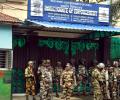
The Supreme Court of India has repeatedly criticized the Enforcement Directorate (ED) for exceeding its authority and misusing its powers. The latest rebuke came on Thursday, when the court accused the agency of 'crossing all limits' in a money laundering probe against a Tamil Nadu state-run liquor retailer. This follows a string of similar observations by the Supreme Court and high courts across India, raising concerns about the ED's investigative practices and the potential for misuse of its powers.

The Supreme Court of India has quashed a fine imposed on political analyst Tehseen Poonawalla by the Punjab and Haryana High Court for mocking Jain monk Tarun Sagar. The top court criticized the high court for engaging in "moral policing" and imposing a fine despite acquitting Poonawalla. The high court had argued that the fine was necessary to deter others from mocking religious leaders. The Supreme Court disagreed, stating that courts should not be involved in moral policing.

Videos of the moments of turbulence shared on social media showed panic-stricken passengers could be heard making religious supplications as the plane swayed.

A bench of Justices Ujjal Bhuyan and Manmohan asked the Madras high court chief justice to transfer the cases involving the ADGP to another bench as it set aside the directive of the high court asking the police to take Jayaram into custody.

The Rajya Sabha secretariat has verified the signatures of 44 of the 55 MPs who had signed a notice to bring a motion for the removal of Allahabad high court Judge Shekhar Yadav over his 'hate speech' even as Kapil Sibal and nine others were yet to verify their signatures.
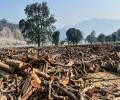
A bench of Justices Abhay S Oka and Ujjal Bhuyan made the observation while rejecting the plea of a man who had chopped down 454 trees in the protected Taj Trapezium Zone.

The Supreme Court of India has ruled that maternity leave is a fundamental right and cannot be denied to a woman based on the number of children she has from previous relationships. The court overturned a Madras High Court decision that had denied maternity leave to a Tamil Nadu government school teacher who had two children from a previous marriage. The Supreme Court emphasized the importance of reproductive rights, including maternity benefits, as part of international human rights law. The court also highlighted the right to life under Article 21 of the Indian Constitution, which includes the right to health, dignity, and reproductive choice. The decision has significant implications for women's rights and reproductive healthcare in India.
The Supreme Court of India has criticized the Enforcement Directorate (ED) for focusing solely on its own fundamental rights while pursuing a money laundering case related to the Nagrik Apurti Nigam (NAN) scam in Chhattisgarh. The court questioned the agency's attempt to transfer the case to New Delhi, noting that the agency's petition under Article 32 of the Constitution is typically reserved for individuals seeking redressal for fundamental rights violations.
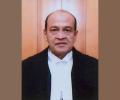
The Supreme Court will hear a plea on Friday seeking a direction to Delhi Police to lodge an FIR over the alleged discovery of semi-burnt stash of cash from the official residence of High Court judge Yashwant Varma. The plea was filed by lawyer Mathews J Nedumpara and three others on Sunday. It challenges the 1991 judgement in the K Veeraswami case, in which the top court ruled that no criminal proceedings could be initiated against a judge of the high court or the top court without the prior nod of the Chief Justice of India. The alleged cash discovery happened following a fire at Varma's Lutyens Delhi residence on March 14, prompting the fire officers to rush to the spot. A Supreme Court-appointed in-house committee visited the residence of Justice Varma on Tuesday to commence its inquiry in the matter. Justice Varma denounced any insinuation and said no cash was ever placed in the storeroom either by him or any of his family members.

The Supreme Court of India has ordered a progressive reduction in the deputation of Indian Police Service (IPS) officers to Central Armed Police Forces (CAPFs) over the next two years, citing concerns over the delayed promotions of cadre officers. The court's decision aims to address the long-standing grievances of CAPF officers who feel their promotional prospects are hampered by the presence of IPS officers in higher ranks. The ruling also mandates a cadre review of the CAPFs to be completed within six months, addressing the issue of stagnation in the service hierarchy. The court's decision acknowledges the valuable contributions of CAPF officers while also recognizing the need to balance their promotional prospects with the operational requirements of the forces.
 © 2026 Rediff.com - Advertise with us - Disclaimer - Privacy Policy - Sitemap - Feedback - About us - Terms of use - Grievances