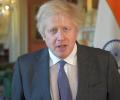
Johnson will instead speak to Prime Minister Narendra Modi later this month to launch their plans for the future UK-India partnership, with their physical meeting expected later in the year.

The NTAGI has also stated that those having laboratory test proven SARS-CoV-2 illness should defer COVID-19 vaccination for six months after recovery, the sources said.

At least two key drugs in the gliptin category have already gone off patent and cheaper variants are crowding the market. Also, several patent expiries are round the corner for the newest category of drugs - SGLT-2 inhibitors or gliflozins.
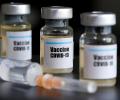
The procurement and distribution will be centralised though the government is yet to take a call on the initial number of doses that will be procured.
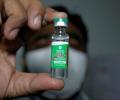
Those who have recovered from COVID-19 respond faster to the Covishield vaccine and reach high antibody levels, says a study, leading to hopes that they may not need a second dose and therefore help widen India's corona immunisation cover.

The pandemic has brutally highlighted the inadequacy of India's administrative systems. And, the government has demonstrated its culpable inability to speed up vaccination in a timely manner, says Jaimini Bhagwati.
Each state has its own weak areas that need attention. Some states have already identified the gaps and sought the Centre's help. Vinay Umarji, Ishita Ayan Dutt, Samreen Ahmad and Sohini Das report.

The president said he had discussed with Prime Minister Modi on when the US would be able to send actual vaccines to India.
By 2022, there is a plan to make an mRNA-technology vaccine, for which it has tied up with Canadian firm Providence Therapeutics.
The approval comes a day after Sinopharm said its vaccine showed 79.34 per cent efficacy and a 99.52 per cent antibody-positive conversion rate in the interim results of the Phase III clinical trials.

Swedish firm Astra Pharmaceutical will buy out the remaining less than 10 per cent stake in its local arm Astrazeneca Pharma India by next year following approval from the Foreign Investment Promotion Board.
Its consulting business clients are pulling back IT spending.

The average rate of COVID-19 vaccination in the country has been 10.8 million per week. At that rate, it will take India till December 2024 to complete two billion doses.
Addressing a press briefing, Union Health Secretary Rajesh Bhushan said healthcare workers and frontline workers need not register themselves as their database has been populated on to the Co-WIN vaccine delivery management system in a bulk manner.

'When there is so much anxiety, the Government of India should assure people on the vaccine issue and help the states demanding more supply that they will be provided the required quantities.' 'Any Centre-state conflict at this point of time is counter-productive and enhances people's anxieties that should be avoided.'

Senior Congress leader Anand Sharma on Sunday raised concerns over India's drugs regulator granting permission for restricted use of Bharat Biotech's COVID-19 vaccine and asked the government to explain why mandatory protocols and verification of data has been dispensed with.

The researchers found that after being exposed to high levels of the novel coronavirus, none of the six monkeys that were given the vaccine developed viral pneumonia. Also, there was no sign that the vaccine had made the animals more vulnerable.
'He came back from the US only to work for his country.' 'He has invested his fortunes to build this company and is married to his work.' 'Rarely does one see such commitment.'

Snooping is one of the oldest peccadilloes of man, observes Ambassador M K Bhadrakumar.
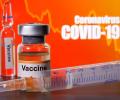
Over the last four days, the Indian arm of US pharmaceutical giant Pfizer, Pune-based Serum Institute of India and Hyderabad-based pharmaceutical firm Bharat Biotech have applied to the Drugs Controller General of India seeking emergency use authorisation for their COVID-19 vaccines.

If the government had paid enough to begin with, or if it had made serious advance purchase commitments that allowed the vaccine producers to mobilise necessary investment, then it is possible to imagine more free or subsidised vaccines such as are available in developed economies, asserts Mihir S Sharma.

The health ID will contain information about medical data, prescriptions and diagnostic reports and summaries of previous discharge from hospitals for ailments. The mission is expected to bring efficiency and transparency in healthcare services in the country.
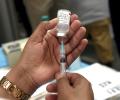
The second phase of Covid-19 vaccination in India will begin from March ,1 in which people above 60 years of age and those above 45 years of age with comorbidities will be vaccinated, Union Minister Prakash Javadekar said on Wednesday.

Students who have received admission to foreign universities are struggling with unexpected delays, additional living costs and scarcity of vaccine supplies.
Responding to another question, Choubey said that the phase-I of clinical trials have revealed excellent safety of the two candidate vaccines indigenously developed by Bharat Biotech in collaboration with Indian Council of Medical Research and Cadila Healthcare Ltd, and now their immunogenicity testing is in progress. Their phase II clinical trials are ongoing.
Phase-I clinical trials have revealed "excellent safety" of the two candidate vaccines indigenously developed by Bharat Biotech in collaboration with Indian Council of Medical Research and Cadila Healthcare Ltd and their immunogenicity testing is now in progress, minister of state for health Ashwini Choubey informed the Rajya Sabha on Tuesday.

Of the 23.9 million vaccinators who provide vaccination under the universal immunisation programme, 15.4 million will be used for Covid vaccination.
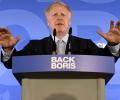
Admitting that a vaccine or drug-based treatment is the only feasible long-term solution, he said the UK has accelerated this with promising vaccine development programmes and a collaboration between Oxford University and pharma major AstraZeneca was a vital step that could help rapidly advance the manufacture of a Covid-19 vaccine when it is ready.
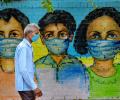
Poonawalla said the price will be around USD 5-6 per dose with an MRP of around Rs 1,000 for the two necessary doses.
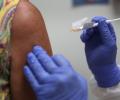
The new vaccine candidate, DIOS-CoVax2, uses banks of genetic sequences of all known coronaviruses, including those from bats, believed to be the natural hosts of many relatives of human coronaviruses.
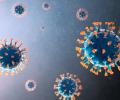
Over time, as more mutations occur, the vaccine may need to be altered.

The aim of the mission is to accelerate the development of at least six vaccine candidates and ensure that they are licenced and introduced in market for emergency use at the earliest.

Johnson will be only the second British leader since Indian independence to attend the annual Republic Day parade in New Delhi as Guest of Honour, after former prime minister John Major in 1993.
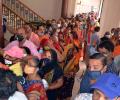
'The reality of this virus is that as long as it is circulating, it can mutate into new variants and by the time you realise that this is a new virus, which is more dangerous, and more transmissible, it is too late.'

COVID-19 has emerged as an important form of diplomatic currency around the world as nations try to showcase their soft power gains. In this race, India has an edge as India is already a pharmaceutical giant having produced some 60 per cent of global vaccines and now justly seeking to strengthen ties and expand its influence in its neighbourhood and beyond, observes Dr Rajaram Panda.
Indian Council of Medical Research Director General Balram Bhargava said the purpose of the COVID vaccine drive would be to break the chain of viral transmission.

'The prioritisation of groups for COVID-19 vaccine shall be based on two key considerations -- occupational hazard and risk of exposure to infection, and the risk of developing severe disease and increased mortality'
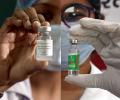
There were apprehensions in the SII about rival Bharat Biotech's 'indigenous' tag, opening up shortcuts for it. One senior person, who was very familiar with the sector, told me, 'The message has gone out from the very top. Somani (V G Somani -- drug controller general of India) has told me "Bharat ka karna hai".' A fascinating excerpt from Abantika Ghosh's Billions Under Lockdown: The Inside Story Of India's Fight Against COVID-19.

Scientists around the world, including in India, suggest it hasn't been tested properly given the time constraint and there may not be enough evidence to prove its efficacy.
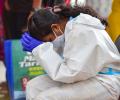
Not to say that India couldn't have handled the situation better, but on average, it didn't do anywhere near as badly as the naysayers make it out argues Rajeev Srinivasan.
 © 2026 Rediff.com - Investor Information - Advertise with us - Disclaimer - Privacy Policy - Sitemap - Feedback - About us - Terms of use - Grievances