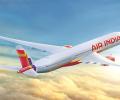
Around 600 non-flying staff of Air India and Vistara are likely to be impacted by the two airlines' mega-merger, and efforts will be made to provide job opportunities to the affected employees within Air India group and Tata companies, sources said on Wednesday. Tata Group-owned loss-making full-service carriers -- Air India and Vistara -- together have more than 23,000 employees.

Indian airlines will operate a total of 23,732 flights every week during the winter schedule, which is more than 8 per cent higher than the year-ago period, amid rising air traffic demand. The winter schedule 2023 -- effective from October 29 to March 30 next year -- for the scheduled carriers has been approved by aviation regulator DGCA. Go First, which stopped flying from May 3 and is undergoing an insolvency resolution process, will not be having any operations during the winter schedule.
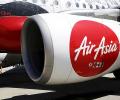
Ending its uncomfortable journey in India after eight years, Malaysia-based AirAsia Group on Wednesday said it has exited AirAsia India by selling its remaining 16.67 per cent stake to Tata Group-owned Air India for Rs 155.64 crore. Later in the day, Air India said it has begun the process of creating a single low-cost carrier subsidiary by merging AirAsia India and Air India Express. A working group consisting AirAsia India CEO Sunil Bhaskaran and Air India Express CEO Aloke Singh has been formed for the two carriers' integration, which is expected to take approximately 12 months, it added.

Air India Express on Thursday cancelled 85 flights or around 23 per cent of the total daily capacity as the disruptions due to the cabin crew shortage continue and said Air India will operate services on 20 of its routes to minimise inconvenience to passengers.

This is the third enforcement action against a Tata Group airline in over a month.

The reported buyback of Temasek's 20 per cent stake in Tata Play by Tata Sons will be the third instance of Tata Group providing an exit to a foreign partner in recent years. In 2018, Tata Sons paid $1.27 billion to DoCoMo to buy back 26 per cent of the group's telecommunication venture, Tata Teleservices. This was followed by Tata Sons acquiring AirAsia Berhad's 49 per cent stake in AirAsia India in two tranches to make it a wholly owned subsidiary.
India's domestic air passenger traffic nearly doubled to 1.25 crore in January compared to 64.08 lakh recorded in the year-ago period, according to official data released on Monday. In January, IndiGo saw its domestic market share decline for the fifth consecutive month at 54.6 per cent. It carried 68.47 lakh passengers last month.
Domestic air traffic rose 4.8 per cent on an annual basis to 126.48 lakh in February, while more than 1.55 lakh passengers were affected by flight delays during the same period, according to official data released on Friday. In February, Air India's market share rose to 12.8 per cent from 12.2 per cent while that of IndiGo marginally dipped to 60.1 per cent from 60.2 per cent in January. The domestic air traffic climbed to 126.48 lakh in February compared to 120.69 lakh in the year-ago period, the Directorate General of Civil Aviation (DGCA) said.

Both parties will discuss the issues and there will be a meeting again on May 28, he said.
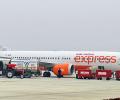
Discontent has been brewing among a section of the cabin crew at the low-cost carrier for some time now, especially after the start of the process of merger of AIX Connect, formerly AirAsia India, with itself.

Domestic airlines flew 1.29 crore passengers in April, a rise of more than 22 per cent compared to the year-ago period, according to official data released on Friday. However, the domestic air traffic number last month at 128.88 lakh was marginally lower than the 128.93 lakh recorded in March. In April 2022, the number of passengers carried by airlines stood at 105.47 lakh.

The bench of Chief Justice N V Ramana and Justice Pradeep Nandrajog issued notices to the Centre, Foreign Investment Promotion Board and Commerce and Civil Aviation ministries and sought their responses by October 30.

Akasa Air's plane occupancy, or load factor, improved the most among all major carriers in April compared to the last month. Load factor signifies the percentage of seats that the airline has been able to fill in its planes. The Vinay Dube-led carrier, which started commercial flights in August last year, saw its load factor jump by more than 11 per cent in April, according to the Ministry of Civil Aviation's data
Air India will require more than 6,500 pilots to operate 470 aircraft that are to be supplied by Airbus and Boeing in the coming years, according to industry sources. Seeking to expand fleet as well as operations, the airline has placed orders for acquiring a total of 840 aircraft that includes an option to buy 370 planes. This is one of the largest aircraft order by any airline. Currently, Air India has around 1,600 pilots to operate its 113 aircraft fleet and in recent times, there have been instances of ultra-long haul flights getting cancelled or delayed due to shortage of crew.

Singapore Airlines (SIA) is engaged in confidential talks with Tata Sons for merging Vistara with Air India, the flagship carrier of the Republic of Singapore informed the stock exchange in the Southeast Asian nation on Thursday in a first acknowledgement of a possible integration of the two airlines. "In line with its multi-hub strategy, SIA is currently in confidential discussions with the Tatas to explore a potential transaction in relation to the securities of Vistara and Air India. "The discussions seek to deepen the existing partnership between SIA and Tatas and may include a potential integration of Vistara and Air India," SIA said in a notification to the Singapore stock exchange. SIA owns 49 per cent stake in Vistara and is among the four airlines run by Tata Group.
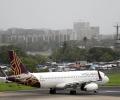
Singapore Airlines on Tuesday said Vistara will be merged with Tata group-owned Air India. Tata group owns a 51 per cent stake in Vistara, and the remaining 49 per cent shareholding is with Singapore Airlines (SIA). As part of the transaction, SIA will also invest Rs 2,058.5 crore in Air India.
The Air India Group has started vacating its offices, which are currently being operated from government-owned properties, from this month, as part of its strategy to consolidate workspaces across the country. The loss-making Air India and its international budget arm Air India Express were taken over by the Tata Group on January 27 this year, after successfully winning the bid for the airline on October 8, last year. Besides these two airlines, Tata Group also holds a majority 51 per cent stake in Vistara, its joint venture airline with Singapore Airlines (SIA), and a 83.67 per cent stake in budget carrier, AirAsia India.
Indian carriers transported 12.8 million domestic passengers in March 2023, a year-on-year growth of 21.41 per cent. India's largest carrier IndiGo shored up its domestic market share from 53.8 per cent in Q4 of FY22 to 55.7 per cent in Q4 of FY23, according to the Directorate General of Civil Aviation (DGCA) data released on Monday.

On July 25 and 26, the regulator's team carried out the surveillance of Air India in the areas of internal audit, accident prevention work and availability of required technical manpower.

AirAsia India, whose top officials have promised to offer low and competitive airfares, will focus on connecting tier-II cities.

Budget airline AIX Connect has removed its manager from duty at Bengaluru airport following the incident of a flight taking off without Karnataka Governor Thaawarchand Gehlot last week, a source said on Monday.
The Tata Group-owned Air India has readied a five-year transformation plan, which is expected to take its domestic market share to 30 per cent, up from 8.4 per cent logged in June. IndiGo leads with a market share of 58.8 per cent. The transformation plan--Vihaan.AI-unveiled on Thursday revolves around tripling the domestic market share with investments in new aircraft, technology and improvements in customer service.
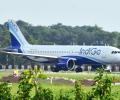
IndiGo's size should be compared with global carriers, and not other domestic airlines, chief executive officer Pieter Elbers said on Tuesday, adding that such benchmarking will help India transform its airports into aviation hubs. Elbers flagged the tendency to scrutinise domestic competition, assess fares on domestic routes, and determine if they are high. "But if we want to build some hubs, we should have a broader look," he said during a panel discussion at a convention organised by All India Management Association (AIMA).
New DGCA rules stipulate airlines have to apply for permit at least 90 days before launch

Tata Sons will increase its stake in budget carrier AirAsia India (AAI) to 83.67 per cent by acquiring an additional 32.67 per cent for $37.66 million from AirAsia Investment Ltd (AAIL), according to a regulatory filing. Currently, AAIL, which is a wholly-owned subsidiary of Malaysia-based AirAsia, holds 49 per cent stake in the Bengaluru-based AirAsia India. In a regulatory filing to stock exchange Bursa Malaysia, AirAsia said, "The board of directors of AirAsia wishes to announce that its wholly-owned subsidiary AAIL and Tata Sons Pvt Ltd, India, on December 29, entered into a share purchase agreement."
What is pretty clear is that Indian carriers will not allow AirAsia to win the tariff game - its USP.

Air India on Monday announced a new compensation structure for its pilots and cabin crew, with a guaranteed flying allowance of 40 hours per month for both categories of staff. While the flying allowance has been doubled for pilots, it has been introduced for flight attendants as part of the new compensation structure. Pilots will earn an additional amount as a reward based on the number of years of service with the airline and get an allowance while undergoing training for command or conversion to another aircraft type.

Due to the group's presence across multiple businesses, it is in a unique position in the aviation industry to bring the best of talents.
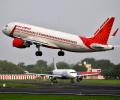
Tata Group-owned Air India, under its new chief executive officer and managing director Campbell Wilson, is optimising its domestic strategy under which the carrier is "densifying" its presence on metro-to-metro routes and exiting from unviable ones, Business Standard has learnt. Wilson took charge on July 25. Air India has increased its flights on metro-to-metro routes such as Delhi-Mumbai, Delhi-Bengaluru, Mumbai-Chennai, Mumbai-Bengaluru, and Hyderabad-Mumbai between June and November this year.
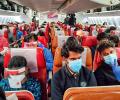
Domestic air passenger volume spiked 70.46 per cent in October to 89.85 lakh over the same month of 2020, DGCA data showed on Thursday. The Indian carriers had flown 52.71 lakh passengers in October last year. It may be recalled that domestic traffic along with international flight services remained shut for two months until May 25, 2020, when scheduled air services were resumed in a graded manner.
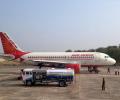
Management and leadership changes, in addition to synchronising operations between all its airlines, are showing visible results for Air India. Data from the Directorate General of Civil Aviation (DGCA) show that there has been a marked improvement in key operational parameters of Air India after the Tata group took complete control of the national airline in January. One of the most dramatic improvements has been noticed in Air India's passenger load factor (PLF) - a crucial metric of capacity utilisation of an airline's fleet that shows how many seats it has been able to fill on every flight.
The company is looking at putting in one plane every month.

Around 1.12 crore domestic passengers travelled by air in December, approximately 6.7 per cent higher than the 1.05 crore who travelled in November, the country's aviation regulator said on Wednesday. Overall, 8.38 crore people travelled on domestic flights in 2021 as compared to 6.3 crore in 2020, showing a jump of 33 per cent, the Directorate General of Civil Aviation (DGCA) stated in its monthly statement. IndiGo -- India's largest carrier -- carried 61.41 lakh passengers in December, a 54.8 per cent share of the domestic market, it mentioned.
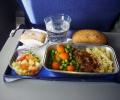
From croissants to Galouti kebabs and Medu vada, Indian carriers, both low-cost and full-service, are revising their in-flight menus to offer passengers a differentiated fare as competition is heating up amid the boom in air travel with the waning of Covid-19. On Monday, Air India, which was taken over by the Tata Group on January 27, unveiled its new domestic in-flight menu comprising gourmet meals, new appetizers, desserts, and local dishes. Air India's economy class passengers would now be served dishes such as Mushroom cheese omelette, Dry jeera aloo wedges, and Garlic tossed spinach and corn for breakfast, and Vegetable biryani, Malabar chicken curry, and mixed vegetable poriyal for lunch.

With cash shortage and plans going awry, the AirAsia owner is looking to cash out of the venture he built with Ratan Tata in 2013.

The letter shared with the media on Saturday comes amid Maharashtra losing several big-ticket projects to neighbouring Gujarat.
The load factor of six major domestic airlines--IndiGo, SpiceJet, Air India, GoAir, Vistara and AirAsia India -- stood between 70 per cent and 64.9 per cent in January.
With better utilisation of slots, foreign flying rights, and greater international connections, the operator of India's largest airport feels a privatised Air India will bring commercial benefit to Delhi airport and help it revive quicker from the pandemic shock. Delhi is the largest hub for Air India, with most of its long-haul flights to the US and Europe being operated from here. The airport plans to give its most modern terminal 3 (T3) exclusively to the Tata Group.
People have said they would be inclined to travel for leisure during the festival and year-end season.
Tata Sons has started the process of due diligence of state-owned Air India and its subsidiary Air India Express. Sources said the group has appointed Bain and Company and Seabury Group for this purpose. Once complete, a financial bid will be submitted and a deal to take over the airline is likely to fructify by end of this year or even earlier, people involved in the process said. Simultaneously, the group has brought in veterans in the aviation business from Delta and United Airlines to prepare a plan for post-merger integration of Air India with its existing airline ventures. Tata Sons operates Vistara - a 51:49 percent joint venture with Singapore Airlines and Air Asia India, in which Tatas hold 83.67 per cent stakes.
 © 2026 Rediff.com - Investor Information - Advertise with us - Disclaimer - Privacy Policy - Sitemap - Feedback - About us - Terms of use - Grievances