
'At present Metaverse is a hype cycle.' 'If it succeeds, then I would like to see TCS there, too.'
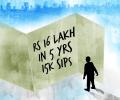
Omkeshwar Singh, head, Rank MF, a mutual fund investment platform, answers your queries:
'There is definitely a skill war, or a talent war going on.'

The Aditya Birla group's decision to merge two companies, each with an existing clutch of diverse businesses, flies in the face of the accumulated wisdom regarding conglomerates, says T N Ninan.

Automobile manufacturers, new and old, as well as ancillary suppliers are set to spend a combined Rs 70,630 crore over the next five years on either entering the electric vehicle segment or stepping up their presence in it. Data culled from announcements made by firms shows India, the world's fifth largest automobile market, is poised to receive one of the biggest capex pushes ever to fuel the transition from internal combustion engines to electric motors and batteries as part of a green drive. The EV push, egged on by the government's emphasis on electric mobility to meet its net zero targets, is expected to yield at least 25 electric vehicles - new ones as well as electrified versions of existing vehicles running on internal combustion engines.

Maybe Modi could ask a patriarch of the stature of the late G D Birla to flesh out the details of a new company to manage government land privatisation.
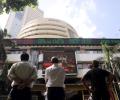
The bulk of the erosion in terms of value took place in India's most-valued firms. For instance, Mukesh Ambani-led Reliance Industries alone has lost Rs 3.8 trillion in m-cap, followed by HDFC Bank, which has seen its value erode by Rs 2.45 trillion and Tata Consultancy Services (TCS), which has lost Rs 1.85 trillion to stand at Rs 6.24 trillion, making it India's most-valued.

It is not the first time the history of the Godrej family is being written. In its centenary year in 1997, film journalist and former editor of Filmfare and Screen B K Karanjia had, at the behest of the industrial family, penned a voluminous two-part history, tracing their trials and tribulations since 1897. So, what made the family want to tell its story again 25 years later? And not through another book, but through a completely different medium?
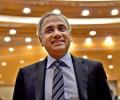
In 2017, when Infosys announced that Salil Parekh would be its next chief executive officer (CEO) and managing director (MD), very few in the industry or the analyst community doubted his ability to bring the company back to a healthy growth trajectory, improve morale within the company and, more importantly, win the promoters' trust and investor confidence. There were reasons for this confidence. He was not only the deputy CEO of the Paris-headquartered IT services major Capgemini, but also one of the only non-European faces on the executive board of the company.

Many investors want to exit equities now and re-enter when they begin to rise. Such timing is difficult to pull off.

Omkeshwar Singh, Head, Rank MF, a mutual fund investment platform, answers your queries.

India's equity markets are on a roller-coaster ride, after delivering spectacular returns for two consecutive years - in 2020 and 2021. The benchmark National Stock Exchange's (NSE's) Nifty50 is down 1.5 per cent in the first nine months of the current calendar year 2022 (CY22) as foreign portfolio investors sold Indian stocks due to rising bond yields in the US and across global markets, including India. The sell-off in the Indian equity markets has, however, not been broad-based and largely limited to sectors facing earnings headwinds from rising interest rates, lower commodity and energy prices, and likely economic recession in advanced economies.

Auto experts from CarJasoos answer all your questions related to buying, selling or maintenance of new cars.

Omkeshwar Singh, head, Rank MF, a mutual fund investment platform, answers your queries.

Consumer stocks remain the biggest laggard on the bourses. The Nify50 weighting of FMCG stocks declined to a decade low of 9.9 per cent at the end of March this year, down 150 basis points from 11.4 per cent a year ago. At their peak in March 2013, major FMCG stocks, such as Hindustan Unilever, ITC, and Asian Paints, together accounted for 15 per cent of the Nifty50. But now together with automobile stocks, the consumer goods sector accounts for only 14.7 per cent of the index, down 200 basis points in the past 12 months and 37 per cent from the record high weighting of 23.4 per cent at the end of March 2014.

'Only if the Budget springs some surprises we may see a halt in the selling.'
The voting rights with the promoter will ensure the interests of the promoter family as well as minority shareholders are protected in future, said corporate governance advocates and corporate lawyers.

Move follows Tata Steel decision to sell its loss-making businesses in Britain

For Mahindra & Mahindra (M&M), which has just started executing a comeback strategy for wresting back ground it lost to rivals, this could not have come at a worse time. The maker of the Bolero Neo and the Thar models on Thursday said it would have to halt production at its automotive plant for a week due to the worsening supply situation of semiconductors.

Ulhas Joshi, Head -- Sales, Rank MF, a mutual fund investment platform, answers your queries.
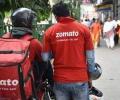
Start-ups don't care that mad-money funding comes to a hard stop after an IPO, observes Debashis Basu. As a listed entity, corporate actions have to take the interests of all shareholders, especially minority shareholders, into account. So far, we are not seeing any sign of it, observes Debashis Basu.

HR Guru Mayank Rautela offers practical advice.

'Children are curious by nature, so I thought of writing these books, which provide creative but convincing explanations and also teach values like sharing is caring,' Sudha Murty tells Chintan Girish Modi.

Automobile company Tata Motors, metals and mining major Vedanta, oil marketing firm Bharat Petroleum Corporation (BPCL), private sector IndusInd Bank, and two-wheeler major Bajaj Auto have witnessed their market cap slip below the Rs 1-trillion mark this year.

It's hard to say because of the winner-take-all nature of new platform and network businesses, but Reliance has not been an efficient user of capital, and Adani numbers are varied, observes T N Ninan.

The central government has agreed in-principle to Air India employees' main demands. It fears an industrial dissension now could impede the process of privatisation. It has agreed to bear the cost of liquidation loss on account of transfer to the Employees' Provident Fund Organisation (EPFO) from company-owned trusts, inclusion of employees in the central government health scheme (CGHS), and encashment of leaves. The template of the Air India process will be followed for other public sector undertakings up for privatisation at a later date.


Bulk of the medicine sales in the $22-24 billion domestic pharma market happens through offline retail chemists. With the entry of online pharmacies, this space has started to witness a shake-up. Sample this: Dawaa Dost, a Rajasthan based digital health start-up, generates medicine orders from 'kirana' stores and women self-help groups (SHGs) that operate in villages, and then service these orders through its affiliated network of pharmacies. Biddano, another health-tech start-up, has a platform that acts as an aggregator for neighbourhood chemist shops.

Oberoi Relaty expect 20-25 per cent premium for tis residential project.

Ola founder and chief executive officer (CEO) Bhavish Aggarwal will step back from day-to-day operations to focus more on engineering functions, team building, and products, apart from focusing on long-term strategic projects, such as two-wheelers, cars, and innovations in quick commerce and international expansion. "I'll be spending more time with all engineering functions, team building, and on products," said Aggarwal in an internal note, adding, "I'll also be increasing my focus on our longer-term strategic projects, including new two-wheeler products, our car project, innovations in quick commerce, electrifying ride-hailing, our cell research and development (R&D), international expansion, building our Pune technology (tech) centre, and Futurefoundry UK." To drive scale, speed, and quality, Aggarwal said he is expanding Ola Group's chief financial officer (CFO) G R Arun Kumar's role to help him steer 'day-to-day operations' across the group.

Sensex may remain under pressure this week due to weak global factors.

Tata Consultancy Services (TCS) on Friday reported a 14.1 per cent rise in consolidated net profit to Rs 9,624 crore in the September 2021 quarter, aided by broad-based growth across geographies and verticals. The Mumbai-based company had logged a net profit of Rs 8,433 crore (excluding adjustment towards a legal claim) in the year-ago period. Its revenue grew 16.7 per cent to Rs 46,867 crore for the September 2021 quarter from Rs 40,135 crore in the year-ago period.

HR Guru Mayank Rautela offers practical advice.

Tata Consultancy Services (TCS) has bagged -- from the Ministry of External Affairs -- the contract for delivering electronic passports (e-passports), according to sources. This deal is in addition to the second phase of implementing the Passport Seva Program, which the company got from the ministry. Players such as Thales India and HP participated in this deal, which is expected to be of Rs 1,000-1,200 crore.

Ajit Mishra, vice president, research, Religare Broking, answers your stockmarket queries.

With the threat of a third Covid-19 wave looming large, companies are scrambling to protect employees and keep operations safe--from a no-jab-no-entry-at-workplace policy to ramping up vaccination, it's an all-out effort to prevent the scale of devastation seen in the first two waves. At least two top steel companies--Tata Steel and ArcelorMittal Nippon Steel India (AM/NS India)--are pushing for vaccination certificates for entry into work premises. AM/NS India, a joint venture between world's leading steelmaker, ArcelorMittal, and Japan's Nippon Steel, is set to make vaccination the certificate a requirement from July 1.

HR Guru Mayank Rautela offers practical advice.

He wants his companies to have speed and agility to adapt to turbulent times

Maruti, which is majority owned by Suzuki Motors of Japan, pays massive tax, generates huge employment (its staff are almost entirely Indians) and also makes its investors extremely rich. JLR, on the other hand, though owned by Tata has its factories in England and China and in every way (sales, employment, technology) has nothing Indian about it.

Omkeshwar Singh, Head, Rank MF, a mutual fund investment platform, answers your queries.
 © 2026 Rediff.com - Investor Information - Advertise with us - Disclaimer - Privacy Policy - Sitemap - Feedback - About us - Terms of use - Grievances