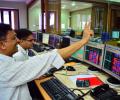
Indian stock markets extended their gains for a second consecutive session, with the Sensex closing 736 points higher, driven by a global equity rally and a significant drop in crude oil prices following the finalisation of a peace deal between the US and Iran to end their 107-day conflict and reopen the Strait of Hormuz.

'Only four or five original companies remain; the rest have been replaced every decade as sectors evolve or leadership shifts.' 'Companies that fail to adapt -- like many textile mills from the 1970s and shipping firms from the 1980s -- disappear.' 'Benchmark indices reward those who reinvent themselves in line with economic demands.'

India's Goods and Services Tax (GST) collections saw a significant 14 per cent increase in June, reaching approximately Rs 1.95 lakh crore. This surge was primarily driven by a substantial 34.6 per cent growth in tax mop-up from imports, alongside a 6.5 per cent rise in domestic supplies, reflecting the country's economic resilience despite global uncertainties.
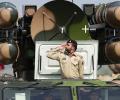
Pakistan has increased its defence budget by 17.6 per cent to PKRs 3,000 billion for the upcoming fiscal year, as announced by Finance Minister Muhammad Aurangzeb. The federal budget, estimated at PKRs 18,771 billion, targets 4 per cent GDP growth, with significant allocations for debt service and pensions. Prime Minister Shehbaz Sharif highlighted economic stability and ongoing discussions with the IMF, while the opposition protested Imran Khan's incarceration during the budget session.

The United Nations has revised downward India's economic growth forecast for 2026 to 6.4 per cent from an earlier 6.6 per cent, attributing the change to global uncertainties and economic shocks stemming from the ongoing West Asia crisis.
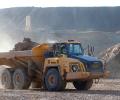
The US and India are collaborating to de-risk global supply chains for artificial intelligence technologies, particularly in semiconductor manufacturing and critical minerals processing. This partnership is facilitated through the US-led Pax Silica initiative, which aims to address over-concentration issues and single points of failure in supply chains, fostering a resilient global economy.

India's finance ministry anticipates inflation will remain relatively contained in the coming months, supported by a correction in crude oil prices and softening input costs following the cessation of the West Asia conflict, despite earlier spikes in wholesale and retail inflation.

Chief Economic Advisor V Anantha Nageswaran stated that India's economy is projected to return to a 7 per cent-plus growth trajectory by 2027-28 (FY28), or sooner if external conditions improve, despite near-term challenges from the West Asia crisis.

IT stocks had their worst first half fall in decades, with the Nifty IT index declining 31% in the January-June 2026 period, its biggest decline in the first six months of a calendar year since 2003.

Prime Minister Narendra Modi has urged states to balance the opportunities presented by artificial intelligence with the need to safeguard against social challenges like cyber fraud and drug abuse. He also warned of the risks posed by El Nino conditions, calling for stronger water conservation measures and emphasising the collective resolve towards a 'Viksit Bharat'.

Why would a country that requires close to $90 billion in net foreign capital annually to create jobs, build productive capacity, and sustain rapid growth permit $30 billion of capital to flow abroad, thereby contributing to pressure on the rupee? asks Debashis Basu.

S&P Global Ratings projects India's economic growth to slow to 6.6 per cent in FY27, down from 7.7 per cent in FY26, citing energy stress and a potential sub-par monsoon.

Lucknow Super Giants are reportedly set to release captain Rishabh Pant, with the wicketkeeper-batter likely to return to his former franchise Delhi Capitals in a major IPL trade, ESPNcricinfo reported.

Your children may always love you but should you expect them to to finance your retirement in today's economy?

The H-1B visa once symbolised the American Dream for Indians, but today's students are increasingly asking whether they need America at all. In 1995, the question was: How do I get to America? In 2026, it may be: Do I need to?

'The flip side of this is that he won't hesitate to call out India if he thinks its policies are hurting US economic interests or border US foreign policy goals.'

Prime Minister Narendra Modi urged US President Donald Trump to prioritise the safety of Indian seafarers in the Strait of Hormuz during the implementation of Washington's proposed Iran peace deal, as both leaders focused on repairing strained bilateral relations at the G7 summit.
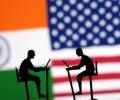
India and the United States have reviewed progress on a proposed interim bilateral trade agreement, discussing market access, digital trade, and non-tariff barriers, as they race to finalise a deal before a temporary 10 per cent US tariff regime expires on July 24.

Aligarh resident Habib Saifi has built a small hut-like structure on his bike to protect himself from direct sunlight during this intense summer.
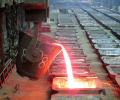
Indian Institute of Technology Bombay has signed a technology licensing agreement with Evergreen Lithium Recycling to improve the extraction of critical minerals from battery reprocessing, aiming to enhance efficiency and reduce costs in battery recycling operations.

'When I look at India's relative valuations, these are by far the lowest I have seen in my 35-year career.' 'The relative 12-month trailing performance is among the weakest I have seen, and foreign investor positioning is at a 16-17 year low.'

India's Women's T20 World Cup campaign ended in another group-stage exit, putting Harmanpreet Kaur's captaincy under scrutiny and exposing issues with team selection, batting approach, bowling balance and fielding that could trigger a major reset.

The chapter, State and Society up to 1000 CE, says the Vedic period is 'often described as a period during which women held a high and respectful position in society'.

Off-spinner Shreyanka Patil has been ruled out of the Women's T20 World Cup due to an ankle injury sustained during a match against the Netherlands. Uncapped leg-spinner Prema Rawat has been named as her replacement, marking a significant setback for the Indian team and a maiden call-up for Rawat.

The primary objective should be to figure out a way to grow at 7 to 7.5 per cent with inflation around 4 per cent. Any policy that can help us get there must be experimented with. Those that work should stay. Those that do not should go, suggests Karan Bhasin.

We who were dreaming of being the third largest economy in dollar terms, have slid back to sixth, thanks to the falling rupee. We are moving about with begging bowls for investments and trade opportunities, which will be a while in materialising, if ever, notes Shreekant Sambrani.
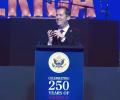
US President Donald Trump reiterated his strong support for India and Prime Minister Narendra Modi, declaring that 'India can count on me 100 per cent' during a celebratory event marking the 250th anniversary of American independence in New Delhi.

A Chinese official stated that India and China should view each other as cooperative partners and opportunities for development, not rivals or threats. This statement came in response to Russian President Vladimir Putin's comments on the independent and strong ties Russia maintains with both nations, emphasising non-interference in India-China relations.

India's banking system liquidity has fallen into a deficit for the first time in nearly three months, prompting the Reserve Bank of India (RBI) to inject 1.41 trillion through a seven-day variable rate repo (VRR) auction to ease the temporary tightness.

Assam emerged as the fastest-growing large state with a remarkable 17.3 per cent nominal GDP CAGR over five years.
Meta has partnered with Reliance Industries Ltd (RIL) to construct its first AI-powered data centre in India, a 168-megawatt facility located in Jamnagar, marking a significant milestone in Meta's global infrastructure expansion and deepening its strategic partnership with Reliance.

India has expressed firm opposition to attacks on merchant shipping amidst the ongoing Iran conflict, revealing that several Indian nationals have died or are missing due to these incidents. The nation also called for restraint, de-escalation, and prioritising civilian safety in the region.

The Sri Lankan government attributes the sharp depreciation of the rupee against the US dollar to the ongoing conflict in West Asia, citing increased costs for essential imports like gas, fertiliser, and oil.

Chinese Foreign Minister Wang Yi met with National Security Advisor Ajit Doval in New Delhi, stressing the importance of respecting each other's "core interests" and implementing leaders' consensus for stable bilateral relations. Wang highlighted that India and China should view each other as partners, not rivals, and properly handle sensitive issues like the border dispute to foster cooperation and accelerate the modernisation of the Global South.

Dhaka and Beijing on Thursday agreed to strengthen cooperation on the management of the Teesta and other rivers and signed 13 agreements to bolster bilateral ties following talks between Bangladeshi Prime Minister Tarique Rahman and Chinese Premier Li Qiang.

The Supreme Court has ruled that national sovereignty takes precedence over personal liberty, particularly in cases involving drug trafficking and psychotropic substances. The ruling came as the court overturned a High Court order granting bail to an accused drug trafficker.
The World Bank has increased India's economic growth projection for FY27 to 6.6 per cent, citing resilient domestic demand, while simultaneously cutting its global economic growth outlook due to the conflict in West Asia.
Real GDP growth surprised on the upside in 2025, but weaker nominal growth, trade uncertainty, and soft demand signal a bumpier road ahead.

Srinagar International Airport will suspend all flight operations for 15 days from October 1 for crucial runway maintenance, raising alarm bells within the tourism industry that fears the shutdown will deal a massive blow to the sector as it directly clashes with the peak Durga Puja holiday season.

History may remember Takaichi Sanae not as the leader who simply accelerated Japanese rearmament, but as one who governed during Japan's transition from an industrial-age security model to a post-industrial strategic member of the global order, points out Varun Arya.
