Jio Platforms Ltd's initial public offering (IPO), anticipated to be India's largest, is scheduled to open for subscription on October 21 and close on October 23, with reservations for employees and Reliance Industries Ltd shareholders.

Online video games are emerging that recreate scenes from the Jantar Mantar protests in Delhi. Games like 'Jantar Mantar Chalo', 'Bhaag Neha Bhaag', and 'Jantar Mantar to Jail' allow players to experience elements of the demonstrations, from gathering crowds and dodging police to collecting 'Accountability' and 'Democracy' coins. Creators, inspired by news and real-life events, developed these games rapidly using AI and coding, gaining significant traction online.

Across all 10 schemes from FY24 to FY26, print media captured 58.8 per cent of the total ad spending, followed by electronic media at 19.5 per cent, digital media at 14.6 per cent, and outdoor media at 7.2 per cent.

Delhi-based travel influencer Jatin Pratap Singh posted a cryptic picture with a caption hinting that he may be a potential wild card contestant for Bigg Boss 20.

A new EY India report highlights how young professionals, women wealth creators, entrepreneurs, ESOP beneficiaries, and digitally active consumers from Tier-2 and Tier-3 cities are fundamentally changing India's wealth ecosystem. This shift is evidenced by increased participation of young and women investors, a rise in disciplined investing via SIPs, and the crucial role of Digital Public Infrastructure in democratizing access to long-term wealth creation. The report predicts over 100 million new investors by 2035.

Economic think tank GTRI has urged the Indian government to withdraw the proposed UPI charges, set to begin on October 15, arguing that the digital payment system should remain free for merchants and consumers. GTRI warns that these charges could lead to higher prices, reduced earnings for small businesses, and weakened household demand, while also benefiting international card networks by eroding UPI's price advantage. The think tank also called for an independent audit of UPI's running costs.

The Delhi High Court has ruled that a private company's provision of email services does not, by itself, make it amenable to writ jurisdiction, even if the account is crucial for a user's business. This decision came as the court dismissed a petition by a media company seeking restoration of access to its Gmail account.

Indian benchmark stock indices, Sensex and Nifty, rallied significantly, with Sensex jumping over 1,500 points and Nifty reaching a nearly three-week high, driven by strong buying in banking, IT, and Reliance Industries stocks, alongside easing crude oil prices.

A new digital political phenomenon, the 'E20 Janta Party', is gaining traction on Instagram, mobilising Gen Z against the government's mandatory 20% ethanol-blended petrol (E20) and demanding Union Minister Nitin Gadkari's resignation.

An IIT Madras study reveals that financial cybercrime victims in India are often highly educated professionals, challenging the notion that only careless or financially unaware individuals are targeted. The research highlights that digital literacy doesn't guarantee protection, as fraudsters exploit stress and emotional vulnerabilities.

India's GST Council has approved changes allowing small online sellers to register in states without physical premises by using an e-commerce operator's warehouse as their principal place of business, aiming to boost national sales for small businesses.

The National Payments Corporation of India (NPCI) has deferred the implementation of a 0.4 per cent Merchant Discount Rate (MDR) on Person-to-Merchant (P2M) UPI payments above Rs 2,000, originally set for October 15, until after Diwali.

Mercedes-Benz India's Managing Director & CEO Santosh Iyer stated that demand continues to outstrip supply, particularly for the CLA electric vehicle, with over 1,000 orders and deliveries extending to March-April 2027. The company could have sold an additional 1,000 vehicles if supply had been adequate.

Meghalaya has shown significant progress in digital transactions and financial inclusion, recording 32.76 crore digital transactions and nearly 10 lakh Jan Dhan accounts by 2025-26. Efforts like the JAM Trinity and financial literacy programmes have expanded banking access, with a high percentage of bank account holders adopting digital modes. The next phase focuses on enhancing financial literacy and cyber resilience, especially in rural areas.

India has secured a spot among the top 10 leading emerging-market performers in artificial intelligence (AI) readiness, with private investment in AI more than tripling to USD 4.1 billion in 2025, according to a new World Bank report.

IIT Madras is hosting the 3rd Digital India RISC-V (DIR-V) Symposium 2026 in partnership with the Ministry of Electronics and Information Technology and RISC-V International. The symposium aims to unite stakeholders from government, industry, and academia to advance India's semiconductor innovation, focusing on indigenous processor technologies, secure computing, hardware innovation, and AI, aligning with the government's vision for India as a global semiconductor hub.

The Kerala Legislative Assembly has passed a motion urging the central government to completely withdraw the proposed Merchant Discount Rate (MDR) on UPI transactions exceeding Rs 2,000. Chief Minister V D Satheesan and CPI MLA K Rajan highlighted concerns that the MDR would increase business costs, harm small businesses, and reduce the appeal of digital payments, while the BJP argued it would not affect general public or small merchants.
Jio Platforms Limited (JPL) believes satellite broadband services are unlikely to achieve significant scale or compete effectively on price in India's highly connected and affordable market, despite developing its own satellite constellation solutions and flagging it as a potential disruptor.

The Supreme Court has directed the Centre to explore a statutory framework to ensure social media intermediaries comply with Indian laws regarding minors, particularly concerning their inability to independently enter into contracts. The court highlighted the need for safeguards to protect children from potential harms on digital platforms, including exploitation and misuse of data, and asked the Solicitor General to examine incorporating these requirements into intermediary rules.

Cathy Li, Head of the Centre for AI Excellence at the World Economic Forum, advocates for integrating AI literacy into India's education curriculum and incentivising AI companies to prioritise child safety. She stresses the need for localised solutions that account for India's linguistic and cultural diversity, as well as varying levels of connectivity and digital literacy, to ensure AI systems are safe and beneficial for children.

The All India Mobile Retailers Association (AIMRA) has announced a nationwide 'No UPI Day' protest on October 2 against the proposed 0.4 per cent Merchant Discount Rate (MDR) on UPI transactions exceeding Rs 2,000. Retailers argue that this charge will burden small businesses and impact their already thin profit margins, urging policymakers to withdraw the proposal.

Bandhan Bank has launched a new digital Provident Fund (PF) payment service, integrated with EPFO, allowing business customers to make statutory PF payments via the bank's internet banking platform. This service aims to streamline payments, optimise cash flows, and ensure timely compliance for businesses.
A new report by TeamLease Digital highlights a significant AI-ready talent gap in India's technology industry, with shortages of 53-60 per cent in Generative AI and cloud skills. The report indicates that only 16 per cent of IT professionals possess AI skills, leading to rising salary premiums for AI-core roles and a projected demand for over 10 lakh GenAI roles by 2026.

Reliance Industries Ltd (RIL) has publicly welcomed competition from Elon Musk's Starlink in the satellite communications sector, asserting that all players, including Jio, must abide by Indian laws and policies.

Jio Platforms, the digital arm of Reliance Industries Ltd (RIL), is launching its initial public offering (IPO) with a price band of 1,065-1,119 a share, aiming to make RIL a net-debt-free company and create long-term shareholder value.
Indian telecom gear maker Signaltron and semiconductor firm Signalchip have partnered with Indonesia's sovereign research body PRT BRIN to develop and deploy advanced telecom technologies, including 4G, 5G, and future 6G, specifically tailored for Indonesia's unique archipelagic geography to connect underserved regions.

Infosys CEO Salil Parekh stated on Tuesday that the company's AI services, currently contributing over 8% of revenue, are growing rapidly and could account for almost half of its work within two to three years. He highlighted the strong demand for AI services, the company's hiring and training efforts for graduates in AI, and discussed potential risks like infrastructure challenges and societal backlash.

A two-day weekend would help employees recover physically and mentally. They would return better prepared for branch work that demands patience, judgment, and accuracy, asserts Tamal Bandyopadhyay.
The National Payments Corporation of India (NPCI) has deferred the implementation of a 0.4 per cent Merchant Discount Rate (MDR) on Person-to-Merchant UPI transactions above Rs 2,000. Originally set for October 15, the new date will be announced after Diwali, providing relief to users and merchants, especially during the festive season. The decision came amidst opposition concerns about the levy burdening consumers.

The Supreme Court has declared that children have a fundamental right to access and use the internet, directing the Centre to establish a national database for detecting and removing child sexually explicit visual content. The ruling, stemming from a plea by NGO Just Rights for Children Alliance, emphasises the internet's value for learning and expression while acknowledging the need for safeguards like parental consent and a "child mode" for accounts, rather than blanket restrictions.

Jio Platforms (JPL) is preparing a capex-light strategy to commercially launch 6G services in the early 2030s through software upgrades, rather than fresh infrastructure investments, according to Akash Ambani, managing director of JPL.

Bajaj Finance reported a strong Q1 FY27 performance with 24 per cent year-on-year AUM growth and a 28 per cent rise in consolidated profit after tax, driven by significant increases in consumer financing, gold loans, and commercial vehicle loans, alongside a strategic focus on digital transformation and AI.

India is developing a 'Gross Domestic Knowledge Product' (GDKP) to identify and define its knowledge assets, a move aimed at safeguarding them amidst global efforts to monetise and 'weaponise' knowledge, according to NITI Aayog member R Balasubramaniam.

Mobile phone retailers across India, represented by AIMRA, are protesting the 0.4% Merchant Discount Rate (MDR) on UPI transactions exceeding Rs 2,000 for merchants. They plan to observe 'No UPI Day' on October 2, 2026, arguing that this fee will significantly impact their income and burden small businesses, advocating for a continued Zero MDR structure for UPI merchant payments.

The National Company Law Tribunal (NCLT) approved a record 107 resolution plans in the second quarter of financial year 2026-27 (Q2FY27), its highest quarterly performance, despite ongoing challenges such as member vacancies and infrastructure constraints.

India's Para Asian Games contingent received a formal send-off in New Delhi, with Sports Minister Mansukh Mandaviya launching the new Team India jersey. Prominent para-athletes, including flag bearer Pramod Bhagat, attended the ceremony. Mandaviya encouraged the athletes to win medals, assuring them of government support. Head coach Satyanarayana expressed confidence in medal prospects despite a reduced quota, while athletes like Suvarna Raj and Pramod Bhagat voiced their determination to secure medals.

Apple has officially launched its Apple Pay service in India, initially partnering with Axis Bank for Visa and Mastercard credit card users. The service allows secure, cashless transactions via iPhone, iPad, and Apple Watch using NFC technology, without requiring PINs or OTPs. This move is set to intensify competition in India's digital payments market, currently dominated by UPI and local players, with Apple planning to onboard more banks and expand merchant networks.
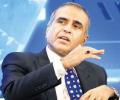
'The Rs 35,000 crore of capex every year, I don't get to sign 35 paise out of this.'

On the third day of the Ranji Trophy Elite Group C matches, Delhi trailed Bengal by 88 runs, with Bengal having posted 429. Kerala faced a significant deficit against Jharkhand, while Gujarat took a first-innings lead against Odisha, who now hold a slender four-run lead in their second innings. Maharashtra led Services by 172 runs despite a shaky start to their second innings.

Google Cloud India's Managing Director, Sashikumar Sreedharan, has resigned to pursue a new opportunity. Amit Kumar, previously MD for Digital Natives, has been appointed as the interim head of India operations. The transition was announced by Karan Bajwa, President of Google Cloud Asia Pacific, who highlighted the company's strong momentum in India.
