
The Allahabad High Court has ruled against compelling employees to wear Santa Claus red caps, stating such actions can hurt religious sentiments and are not permitted in India's democratic system. The court partly allowed a plea challenging criminal proceedings against an individual accused of forcing subordinates to wear the caps, clarifying how such cases should be treated under law.

Civil Aviation Minister K Rammohan Naidu announced that the government will not impose a cap on airfares during the upcoming festive season. Instead, airlines will be advised to maintain reasonable prices, considering the rising operating costs primarily due to increased Aviation Turbine Fuel (ATF) prices, exacerbated by the West Asia crisis.

Italian Prime Minister Giorgia Meloni has announced a series of significant educational reforms, including a proposed ban on face coverings like burqas and niqabs in schools, a legal cap on the number of foreign students per classroom, and a requirement for parents of foreign students with integration issues to learn Italian. Meloni stated these measures aim to ensure immigrants learn Italian language and culture, and respect national rules, emphasising gender equality as non-negotiable. Additionally, she revealed plans to scrap the multiple-choice entrance test for medical school admissions.

'The number of airport bundles that may be awarded to a single bidder would be capped.'

Hardeep Singh Brar, President and CEO of BMW Group India, has urged state governments like Delhi to remove price caps on road tax benefits for electric vehicles (EVs), arguing that such limits deter luxury-car buyers and hinder the transition to cleaner mobility in pollution-affected regions.

'Indian private sector hospitals provide quality healthcare at a fraction of the global cost.'

Flexi-cap mutual fund schemes have attracted nearly Rs 50,000 crore in net inflows during January-July 2026, a 27 per cent increase year-on-year, as investors increasingly favour dynamic equity strategies.

Equity mutual fund schemes in India attracted a net inflow of Rs 29,329 crore in August, marking the highest in four months, primarily fuelled by strong investor interest in mid-cap and small-cap funds.

'Having analysed the break up of the hospital billing structure the committee believes that rationalising of room charges needs to be done on an emergent basis.'

The All India Tennis Association (AITA) has voted to cap the age for eligibility to its Executive Committee at 70 years, aligning its constitution with the National Sports Governance Act. This decision, approved by a narrow margin, allows elected members to complete their full four-year term even if they cross 70 during their tenure. The move is part of a broader constitutional overhaul overseen by the Delhi High Court, which also includes new tenure provisions and the election of Sportspersons of Outstanding Merit.

Abhijeet Dipke, convenor of the Cockroach Janta Party (CJP), has initiated the 'School Thik Karo' campaign from his native village in Hingoli, Maharashtra, to address the alleged neglect of government schools and advocate for a fee cap on private educational institutions.

Foreign institutional investors have withdrawn nearly $40 billion from Indian equities in the last two years and, according to Bernstein analysts, have 'little reason' to invest for the long-term, though they may 'return to trade'. The brokerage highlights challenges such as struggling large-caps, disruption from new technologies, and difficulties accessing small- and mid-caps (SMIDs) at an institutional scale.

Saransh Jain, India's Test cap No. 320, prioritised red-ball cricket over an IPL contract, a decision lauded by his coach Chandrakant Pandit, which ultimately led to his Test debut against Sri Lanka.
rediffGURU Ulhas Joshi answers your mutual fund queries.
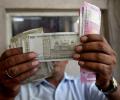
Government sources clarify that the 0.4% merchant discount rate (MDR) on UPI transactions above Rs 2,000, effective October 15, will not be passed on to consumers. The charge, paid by merchants, aims to create a sustainable revenue framework for the digital payments ecosystem, with funds shared among banks and UPI entities. Small merchants using QR codes for up to Rs 1 lakh monthly are exempt.

At a valuation of around Rs 10 trillion, Tata Sons would rank among India's 10 largest listed companies and could qualify for inclusion in key indices such as the Nifty 50, Sensex and the Nifty 100.

Colombian football icon James Rodriguez has announced his retirement from international football, concluding a career that saw him earn 131 caps, score 31 goals, and lead his country to the 2014 World Cup quarter-finals. He expressed gratitude for the honour of representing Colombia and reflected on his achievements, including winning the Golden Boot at the 2014 World Cup.

The Indian women's hockey team secured a dominant 19-0 victory over Uzbekistan in their opening Pool B match at the Asian Games. Deepika was the star performer, scoring eight goals, as India showcased their superior skill and relentless attack against a struggling Uzbekistan defence.

Trade and business associations across India are organising a 'No UPI Day' on October 2 to protest the upcoming 0.4 per cent merchant discount rate (MDR) on Unified Payments Interface (UPI) transactions exceeding 2,000, effective from October 15.

Students who missed out on securing a seat through the CAP can now apply for master of management studies 2026-27 at WeSchool, Mumbai.

The Indian government has introduced a 0.4 per cent charge on UPI payments exceeding Rs 2,000 made to merchants, with a cap of Rs 300 for transactions of Rs 75,000 and above. This policy shift ends the zero-MDR regime, which was previously criticised by financial institutions. While essential sectors and capital markets have specific fee structures, small merchants with monthly UPI QR code earnings up to Rs 1 lakh remain exempt. Person-to-person transfers are unaffected, and measures are in place to prevent merchants from passing these costs to customers.

New Zealand all-rounder Rachin Ravindra is a doubtful starter for the upcoming T20 series against India due to a dislocated shoulder sustained during a promotional shoot. While initial medical assessments show no major structural damage, his return depends on rehabilitation. New Zealand Cricket and coach Rob Walter have indicated they will not rush his recovery, especially with a demanding schedule ahead.

The NCP (SP) has demanded a complete rollback of the 0.4 per cent Merchant Discount Rate (MDR) on UPI transactions above Rs 2,000, effective October 15. The party termed the move a "direct assault" on small traders and shopkeepers, accusing the Modi government of "double standards" by burdening small merchants while large industrialists benefit from loan write-offs.

A new Merchant Discount Rate (MDR) on UPI transactions above Rs 2,000, effective October 15, could force small merchants and price-sensitive consumers to revert to cash, according to economic think tank GTRI. The move, which introduces a 0.4 per cent MDR with a Rs 300 cap and concessional rates for specific categories, is questioned by GTRI founder Ajay Srivastava, who suggests it's not a revenue issue for the government but potentially a response to US pressure regarding UPI and RuPay's preferential market position.

A federal judge has temporarily blocked a Trump administration rule that sought to cap the stays of foreign students, journalists, and exchange visitors, citing potential 'catastrophic' damage to the US economy and higher-education system.

Shares of fintech firms, particularly Paytm, saw significant movement after the Indian government introduced a 0.4 per cent fee on UPI transfers exceeding Rs 2,000 made to merchants, effective October 15.

'And now since Lakshmi Mittal owns Rajasthan Royals, he will never let Vaibhav Sooryavanshi go anywhere. And if it ever happens, not just me... the entire IPL world of owners are waiting.'

Former NITI Aayog vice-chairman Rajiv Kumar has urged the government to maintain zero-fee UPI transactions for several more years, arguing that the benefits of UPI as a public good outweigh the costs. This comes amidst the government's recent decision to introduce a 0.4% fee on person-to-merchant UPI transactions above Rs 2,000 from October 15, a move that has drawn criticism.

EPF wage ceiling rising to Rs 25,000 could increase employer statutory contributions by Rs 1,200 monthly per employee.

'UPI has been free since Covid, so why is the government charging us now?'
The Indian government has introduced a 0.4 per cent Merchant Discount Rate (MDR) on UPI payments exceeding Rs 2,000 made to merchants, effective from October 15, with a comprehensive framework set to take full effect by October 15, 2026. This policy aims to regulate transaction fees while protecting small merchants and person-to-person transactions.
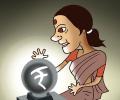
Industry body Assocham has welcomed the new UPI framework for large-value merchant transactions, effective October 15. This framework introduces a 0.4 per cent Merchant Discount Rate (MDR) on person-to-merchant UPI payments exceeding Rs 2,000, with a cap of Rs 300 for transactions over Rs 75,000. The move aims to enhance UPI sustainability, support innovation, and mitigate fraud, while protecting small merchants and ensuring most everyday transactions remain free.
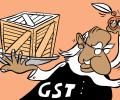
The GST Council is set to discuss the application of GST on merchant fees for UPI transactions exceeding Rs 2,000. This comes as a new Merchant Discount Rate (MDR) of 0.4% (capped at Rs 300) is effective from October 15 for such transactions, which, as a service, would typically attract an 18% GST levy. The Council's decision is anticipated to consider consumer interests, with merchants potentially able to claim Input Tax Credit.

A Public Interest Litigation has been filed in the Supreme Court challenging the Centre's decision to impose a 0.4 per cent Merchant Discount Rate (MDR) on UPI person-to-merchant transactions exceeding Rs 2,000. The plea argues that the levy was introduced without adequate statutory safeguards, transparency, or public consultation, and questions its constitutional validity and potential adverse effects on merchants and consumers.

Most Indian investors start their investment journey with the wrong question. They ask, "Which fund will give the highest return?" instead of "How do I structure my investments so that I pay less tax, manage risk effectively, and still compound wealth over time?"

The Finance Ministry has clarified that the decision to impose a 0.4% Merchant Discount Rate (MDR) on UPI transactions above Rs 2,000 was made independently, refuting claims of foreign influence. The ministry stated the policy aims to build a self-sustaining digital payments ecosystem, with MDR funding infrastructure and supporting small merchants.

Indian benchmark indices, Sensex and Nifty, saw an early rebound after significant losses, driven by value buying, though elevated oil prices and anticipation of the US Federal Reserve's policy decision tempered gains. Track Sensex, Nifty on September 16.

A member of the National Traders' Welfare Board (NTWB) has urged the central government to withdraw its decision to impose a 0.4 per cent Merchant Discount Rate (MDR) on UPI transactions exceeding Rs 2,000, effective from October 15. He warned that the new charge, which will be borne by merchants, could negatively impact business growth and lead to higher prices, contradicting the government's 'ease of doing business' policy.
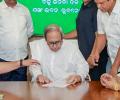
BJD chief Naveen Patnaik has voiced concerns over the Centre's decision to introduce Merchant Discount Rate (MDR) charges on UPI transactions above Rs 2,000 from October 15, urging protection for small traders and common people. This move has sparked a political debate, with the BJP defending the charges as beneficial for digital infrastructure and largely not impacting consumers, while the Congress and traders' associations criticise it as an additional burden.

Samajwadi Party president Akhilesh Yadav has criticised the BJP government's proposed Merchant Discount Rate (MDR) on high-value UPI transactions, calling it a "chungi" (tax) on digital payments. He alleged the move was an attempt to extract money from people's transactions, contradicting the government's goal of a trillion-dollar economy. The new UPI framework will impose a 0.4% MDR on person-to-merchant transactions above Rs 2,000 from October 15, with certain sectors having a flat Rs 5 MDR.
