
The United States' historical strategic alignment with Pakistan, dating back to the Cold War, has consistently aimed to create a political and military parity with India, despite India's significantly larger size and resources. This long-standing relationship continues to influence regional dynamics, particularly in West Asia and the Indo-Pacific.

'Nehru was an idealist, he was certainly a visionary in one way, but Mao Zedong was not. Mao Zedong was a very down-to-earth strategist. He wanted to take Tibet, to take the plateau, to take the rivers, to take the minerals.'
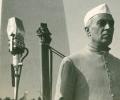
On Jawaharlal Nehru's 61st death anniversary, Utkarsh Mishra recalls how India's first prime minister cultivated a unique role for the newly independent country on the world stage.
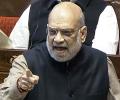
Home Minister Amit Shah defended the Special Intensive Revision (SIR) of electoral rolls in Lok Sabha, accusing the opposition of spreading falsehoods and questioning the safety of democracy if leaders are chosen by infiltrators.
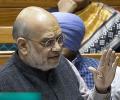
Leader of Opposition in the Lok Sabha Rahul Gandhi on Wednesday challenged Home Minister Amit Shah to debate with him on his three press conferences in which the Congress leader alleged 'vote chori' by the Bharatiya Janata Party in collusion with the Election Commission.
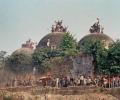
Defence Minister Rajnath Singh claimed Jawaharlal Nehru wanted to build the Babri Masjid using public funds, but Sardar Vallabhbhai Patel prevented it. He also lauded Patel's contributions and criticized Nehru's approach to national issues.
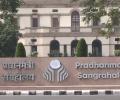
Nripendra Misra, chairman of the Prime Ministers Museum and Library Society, said the Nehru Memorial Museum was converted to the Prime Minister's Museum because it was felt that the earlier building was not "democratic." Misra said Prime Minister Narendra Modi wanted to ensure an "element of equity" in the treatment of each prime minister at the museum and that it should display the achievements of all prime ministers.

After the 1962 War with China, there was a demand to forge greater defence cooperation between India and the West. One such voice was that of Sudhir Ghosh, a distinguished MP, to tie up strategic cooperation with the USA immediately after the Chinese attack on India, recalls Rup Narayan Das.
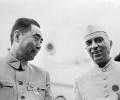
The Indians felt that if they acceded to Chinese claims in Ladakh, Beijing would simply be emboldened to press for further concessions in the future. A revealing excerpt from India And The Cold War.

External Affairs Minister S Jaishankar on Tuesday targeted Jawaharlal Nehru and claimed that past mistakes were responsible for the problems such as Pakistan Occupied Kashmir (POK) and occupation of some parts of the Indian territory by China.
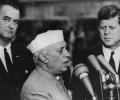
On Jawaharlal Nehru's 134th birth anniversary, Utkarsh Mishra recounts incidents where the first prime minister showed exemplary courage, bravery and integrity.

Former prime minister Jawaharlal Nehru had sought American assistance and wrote to the then US president John F Kennedy to provide India jet fighters to stem the Chinese tide of aggression during the 1962 Sino-India war, according to a new book.

During the day-long debate, the lines between science and religion often got blurred with many invoking religious texts and the contribution of 'rishi munis' to highlight India's tryst with the extra-terrestrial world.

Public intellectuals who frame the ideological antipathy between the RSS & Co and Jawaharlal Nehru in the light of Mahatma Gandhi's assassination and Hindu Raj alone, miss the point by a yard, argues Shaan Kashyap.

'The military advantage the Indian Army had gained by the Special Frontier Force occupying the heights of the Rezang La-Rechin La ridge on the Kailash Range is lost without the PLA withdrawing to east of the Khurnak Fort line.'
Count among The Light of Asia's many, many admirers over 132 years: Gandhi, Tagore, Vivekananda, Nehru and Ambedkar, Tolstoy and Kipling, Yeats and Eliot, Alfred Nobel, Dmitri Mendeleev and C V Raman. Jairam Ramesh reveals why he decided to write a book on Edwin Arnold, who wrote The Light of Asia.

When Nehru came in active contact with Gandhi 100 years ago, he was a Westernised rationalist while Gandhi was deeply soaked in the Indian ethos and spirituality, notes Rasheed Kidwai.

The Indian Army has been slow to react. Indian troops have deployed in the vicinity of PLA incursions, but there are no attempts to outflank Chinese positions.

Narrowing of differences on competing territorial claims along the un-demarcated LAC might take weeks, if not months, of hard-nosed negotiations. Without some give and take on both sides, the impasse will be hard to resolve, observes Virendra Kapoor.
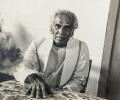
'The Congress party hated him because he had not gone to jail, he was not lathi charged, he had not gone on hunger strike.' 'They felt he had lived in London all his life and then he came to India and became an MP and a minister.'
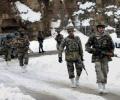
'The Chinese have been moving in step by step; inch by inch for the last 40 years.'

'Given the way in which the PLA operates today, I don't believe local commanders were necessarily acting without approval of higher levels.' 'They were acting in a way which they believed they were carrying out the intent of the higher levels.'

Arpi deserves to be complimented for the commitment and hard work that have gone into this production. The frustrations of seeking reliable documentation from the catacombs of the Indian bureaucracy did not deter him from going after the best information available, and the result is one that he can take much satisfaction in. Ambassador Prabhat P Shukla, Member Advisory Council, Vivekananda International Foundation, reviews Claude Arpi's The End of an Era: India Exits Tibet.

With a decelerating economy that weakens India's hands on geopolitical issues, it will be interesting to know which way this trip will go.

'His secularism merely declared the equality of all religions in India under fundamental rights.'

'The Dalai Lama is in a tearing hurry.' 'The 'reincarnation' card remains unplayed, and time is running out.' 'Is something big being planned for the event of Tibetan Buddhist leaders in Leh in November?' asks Ambassador M K Bhadrakumar.
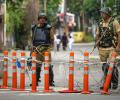
'As of now, this one move seems to have precariously altered the balance of forces on the volatile ground, between separatists and the mainstream. 'The landscape today presents a fearsome picture of the future of mainstream politics in Kashmir. 'Conversely, the separatist ideology looks to have got an unearned boost,' points out Mohammad Sayeed Malik, the veteran commentator on Kashmir affairs
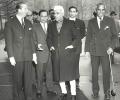
'Rightly or wrongly, 1962 got ascribed to Krishna Menon and him alone. That's unfair.' 'Certainly, he was one of the guilty men, but he was not the only guilty man. Mistakes were made all around.'

'It is perhaps a sense of intellectual inadequacy, of an ingrained inferiority complex born of the years when the BJP languished in the margins of Indian politics and society that, when faced with the soaring ideas about Indian pluralism, the Hindutva camp turns its face so resolutely against Nehru,' says Amulya Ganguli.

'The objective is not to make India into a one religion place, but to ensure that there is harmonious and peaceful co-existence of all faiths with each of them having their cultural personality.'

Nehru's faith in science and technology, his genuine respect for Bhabha, and their burning ambition worked synergistically to place India on the nuclear map of the world. Atomic energy developed and prospered because of Nehru's vision fulfilled by Bhabha's mission, recalls K S Parthasarathy, former secretary of the Atomic Energy Regulatory Board, on the occasion of India's first prime minister's 119th birthday today.
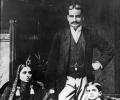
Of the 15 people who led the 132-year-old party post independence, four have belonged to the Gandhi-Nehru family.

'Most Indians know very little about Patel which is a great shame.'

'Nehru's hegemonic politics has been responsible for many ills, which undoubtedly includes Kashmir'

Mounting an assault on the Bharatiya Janata Party, Congress president Sonia Gandhi on Thursday asked the voters in Maharashtra not to be swayed by the party which "spreads hatred in society". She said BJP and Shiv Sena might have parted ways but in reality they are one.

'Gujaratis, among all Indians, are supposed to be born businessmen, but if more than 80% of them do not have the ability to do basic arithmetic, the future is grim.' 'The big issues are in society and they cannot be changed by an HRD minister no matter how brilliant she may be or think of herself as being,' says Aakar Patel.
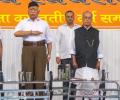
'For the last 10 years the Congress made the RSS an idea of intolerance, anti-minority, especially anti-Muslim, and an idea of fascism.' 'That has been demolished now by Pranab Mukherjee.'

'In Chinese perception, India is strategically getting closer to United States and some Chinese analysts fear perhaps one day it may become a part of American arrangements against China.'

Nehru decided to build The Ashok in New Delhi to host a UNESCO conference. For a prime minister focussed on India building with projects like the Bhakra-Nangal Dam, IITs and factories, "the hotel spoke of the gumption of the country at that time." Manavi Kapur traces the eventful journey of the hotel, which has now completed 60 years.

'Arthur was a charming, quirky, funny, smart journalist who loved all things about films. And he would change my life forever.'
 © 2026 Rediff.com - Advertise with us - Disclaimer - Privacy Policy - Sitemap - Feedback - About us - Terms of use - Grievances