
Casey Wasserman has apologised for emails with convicted sex trafficker Ghislaine Maxwell Games and denied any relationship with late financier sex offender Jeffrey Epstein

The virus was detected in Aedes aegypti mosquitoes after samples from six water bodies in Chikkaballapura were collected and sent for examination.

A seven-year-old girl has been found infected with Zika virus in Palghar district of Maharashtra, the state health department said on Wednesday.
The number of cases due to the mosquito-transmitted disease in the southern state went went up to 14 on Friday following confirmation of 13 additional samples by the National Institute of Virology.
The woman patient who was diagnosed with the infection has recovered completely, the state health department said.
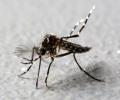
Chief Minister Pinarayi Vijayan said Zika has been reported in Kerala and it was not unexpected as it is spread by the Aedes Aegypte mosquitoes, which causes dengue and Chickungunya.
Of those infected, 45 are men and 21 women, according to officials.

The scare of communicable diseases seems to be gripping the country with Maharashtra reporting 28 Zika cases this year, the highest since 2021.

Twenty-five people, including six Indian Air Force personnel, on Wednesday tested positive for Zika virus here, pushing the number of infected persons to 36 in the district.

Two cases of Zika virus have been reported in the state capital, a senior government official said here on Friday.
Of the fresh cases, two were natives of Anayara in Thiruvananthapuram, where a cluster of the disease had been identified within a three kilometre radius, Health Minister Veena George said.

Water samples from different parts of Pune have been sent to the public health laboratory for chemical and biological analysis.

A woman is suspected to have died of Guillain-Barr syndrome (GBS) in Maharashtra on Wednesday, while 16 new cases of the rare nerve disorder were reported in the state, health officials said.

Global health officials are racing to better understand the Zika virus behind a major outbreak that began in Brazil last year and has spread to many countries in the Americas.

Zika virus outbreak in Brazil does not pose enough of a threat to warrant cancelling or putting off the Olympic Games set to be held in Rio de Janeiro in August, a leading US health official said.

A man suspected to have contracted Guillain-Barre syndrome (GBS) has died in Maharashtra's Solapur district, while the number of cases of the immunological nerve disorder in Pune rose to 110, health officials said on Monday.

High travel volumes from the disease affected areas in the America, presence of mosquitoes capable of transmitting the virus and limited health resources can lead to Zika virus.
The Zika virus has already been found in some mosquitoes taken as samples from Sindhi Camp while few mosquitoes collected from densely populated Shastri Nagar had already been found to be carriers of the virus leading to suspicion they are behind the spread of the infection.

The local organizing committee for the upcoming Olympics in Rio de Janeiro said on Tuesday not a single case of Zika infection has been reported among 17,000 athletes, volunteers and staff during test events in the run-up to the games. As concern over the outbreak grows among the 500,000 visitors expected for the Olympics, the committee's chief medical officer said cooler temperatures, which are less propitious for mosquitos, had already led to a decrease in the number of Zika infections in recent months. U.S. health officials have concluded that Zika infections in pregnant women can cause microcephaly, a birth defect marked by small head size that can lead to severe developmental problems in babies.

We are not going to risk taking Kenyans there if this Zika virus reaches epidemic levels: Kenya Sports authorities across the world are scrambling to find out more about the spread of the mosquito-borne Zika virus in Brazil as they make plans for August's Rio Olympics. Below are the latest announcements:
Those infected with the virus may have mild fever, skin rashes, conjunctivitis, muscle and joint pain or headache.
"According to our mission in Singapore 13 Indian nationals have tested positive for Zika in Singapore," Vikas Swarup, spokesman for the Ministry of External Affairs, said in response to a Reuters inquiry.

Australia captain Steven Smith and his team have been warned about risks associated with the Zika virus ahead of their tour of the West Indies next month.

Pregnant women should avoid traveling to countries at risk of mosquito-borne Zika virus transmission, which is strongly suspected of causing microcephaly, said Indian Medical Association.

The dreaded Zika virus may be of serious concern to some taking part in next month's Rio Olympics, but Indian shot put hopeful Inderjeet Singh just brushed it aside and said that it was unlikely to trouble the country's 100-plus contingent at the Games.

Tennis star Serena Williams says she is concerned about the Zika outbreak ahead of August's Rio Olympics, but has faith in the support team dealing with worries about the mosquito-carried virus.

The Food and Drug Administration says all those areas are currently in compliance with blood screening, but that expanded testing is now needed.

Brazil's Sports Minister Leonardo Picciani expects there to be almost no cases of the Zika virus during the 2016 Rio de Janeiro Olympics, adding that the country is prepared for the Games, despite health concerns and political instability. The World Health Organization's Emergency Committee on Zika will meet in the coming weeks to evaluate the risks associated with the event. More than 150 health experts, in a public letter, have also called for the August Games to be postponed. U.S. health officials have concluded that infections by the mosquito-borne Zika virus in pregnant women can cause microcephaly, a birth defect marked by small head size that can lead to severe developmental problems in babies. However, Picciani, who was appointed by interim President Michel Temer, said the situation had significantly improved. "We hosted 43 test events in Rio with 7,000 athletes and we have not had any case of Zika or dengue," he told
The risk of Zika virus infections at the Olympic Games is both low and manageable, the chief of the World Health Organisation said on Friday, a week before the event kicks off in Rio de Janeiro. Nearly half a million people are expected to visit for the Games, many from the United States. Worries about security, the Zika virus and an economic crisis could deter travelers, with just under a third of event tickets as yet unsold. Brazil has been hardest hit by the disease outbreak, and many physicians, competitors and potential visitors have expressed fears the Olympics could serve as a catalyst to spread the virus globally.
The Zika virus, an alarming and disturbing infection that may be linked to thousands of babies being born with underdeveloped brains, is spreading through the Americas. But what is the virus, how is it spread and how can people minimise the chances of catching it?
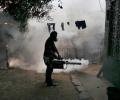
Bharat Biotech started work on developing a vaccine against Zika way back in 2014.

Milos Raonic, the finalist at Wimbledon this year, and women's world number five Simona Halep of Romania have pulled out from next month's Rio Olympics due to fears over the Zika virus.
The United States Olympic Committee told US sports federations that athletes and staff concerned for their health over the Zika virus should consider not going to the Rio 2016 Olympic Games in August.
New Zealand's Olympic athletes and officials have been warned of the risk associated with the Zika virus on Friday, including the possibility that it could be sexually transmitted.
The spread of the Zika virus in Brazil needs to be monitored but is not a threat to the 2016 Rio de Janeiro Olympics, Germany's chief Olympic doctor said.
World Health Organization (WHO) Director General Margaret Chan said on Tuesday Brazil is doing a good job tackling the Zika virus and ensuring that the Olympic games it will host in August will be safe for athletes and visitors. Chan said Brazil's government is doing all it can to mobilize Brazilian society in fighting the "formidable" Aedes mosquito that transmits the virus that has spread rapidly through the Americas since last year. "I want to reassure you that the government is working very closely with the international Olympic movement, with the local organizing committee, supported by the WHO, to make sure we have a very good work plan to target the mosquito, and to make sure that people who will come here either as visitors or athletes will get the maximum protection they need," Chan said. "I am confident the government can do it," she told reporters after meeting with Brazilian President Dilma Rousseff.
More than 100 medical experts, academia and scientists on Friday have called for the Rio Olympic Games to be postponed or moved because of fears that the event could speed up the spread of the Zika virus around the world. Their assessment counters the view of some leading experts of infectious disease who say that as long as the necessary precautions are taken there is no reason to cancel the Games. On Thursday, Dr. Tom Frieden, director of the U.S. Centers for Disease Control and Prevention, declared there was no public health reason to cancel or delay this summer's Games. In a public letter posted online, the group of 150 leading public health experts, many of them bioethicists, said the risk of infection from the Zika virus is too high. The letter was sent to Dr. Margaret Chan, director-general of the World Health Organization, and urged that the Games, due to be held in Rio de Janeiro in August, be moved to another location or delayed.
Postponing the Rio Olympics due to fears that the event could speed the spread of the Zika virus would give a "false" sense of security because travelers are constantly going in and out of Brazil, the chair of the WHO's Emergency Committee said. Extensive travel in a globalised world is the issue, not the Games that start on August 5, said David Heymann, chair of the Health Protection Agency in Britain who also leads the World Health Organization's panel of independent experts on Zika. "The problem is not the Olympics, the problem is other travel besides the Olympics, if there is a problem," Heymann told Reuters in a telephone interview from London on Monday. "People go in and out of Brazil all the time for holiday, for business, for whatever. And the Olympics is much less travel, it would be one-time travel. It's actually in the winter months when hopefully transmission (of the virus) is less."

The Zika virus outbreak in Brazil has led Britain's Greg Rutherford to have his sperm frozen before heading out to defend his long jump title at the Rio Olympics.
Eradicating the Aedes aegypti or developing a vaccine will take years. Genetic modification offers a way out; the question is how to scale it up across continents, says Devangshu Datta.
 © 2026 Rediff.com - Advertise with us - Disclaimer - Privacy Policy - Sitemap - Feedback - About us - Terms of use - Grievances