
Haryana Chief Minister Nayab Singh Saini reports smooth wheat procurement and record arrivals in the state's 'mandis', dismissing opposition claims of farmer hardship due to new measures.

After a slow start, the Central government's wheat procurement scheme picked up momentum in June with the agencies collecting 10.80 million tonne wheat from farmers during the season.

In total, the Centre plans to purchase around 40.7 million tonnes of wheat from farmers this year, which is almost 19 per cent more than last year.
Haryana Congress MLAs will visit 'mandis' to assess and support farmers facing difficulties in wheat and mustard procurement, following a decision made at a Congress Legislature Party (CLP) meeting in Delhi.
As anticipated, the Central government's wheat procurement operations have failed to meet the target and lagged behind last year's purchases.
India's Agriculture Minister Sharad Pawar admitted in the Parliament that the procurement of wheat is slow, and time-consuming.
India's wheat procurement in the ongoing Rabi marketing season has already crossed a record 10 million tonne.

After a ban on wheat exports, India's cereal grain procurement for the central pool was struggling to rise significantly until the middle of last week, informed trade and market sources. Farmers have been holding on to their produce as the price of wheat in the open market recouped some of the losses it suffered in the aftermath of the ban. According to trade estimates, around 18.12 million tonnes (mt) of wheat was procured in the central pool up until May 18. Before the export ban was enforced on May 13, it was 17.96 mt.
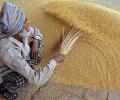
India's wheat and rice reserves in Food Corporation of India (FCI) godowns have surged to 604.02 lakh tonnes as of April 1, nearly three times the mandatory buffer requirement, according to official data.

Senior Congress leader Arun Yadav has criticised the BJP government in Madhya Pradesh, alleging neglect of farmers and the enabling of mafia activities.
Till date, MP has procured around 12.77 million tonnes of wheat, which is expected to reach 13 million tonnes by the time the process ends in the next few weeks.

Former Haryana deputy chief minister Dushyant Chautala has criticised the state government for failing to ensure proper crop procurement arrangements and timely compensation for farmers affected by unseasonal rain.

Former Haryana Chief Minister Bhupinder Singh Hooda has criticised the state government's crop procurement policies, alleging that new conditions are being imposed on farmers instead of procuring crops at MSP. Hooda plans to tour mandis to assess the problems faced by farmers.

Former Haryana Chief Minister Bhupinder Singh Hooda has accused the state government of imposing arbitrary conditions on crop purchases, alleging anti-farmer policies and demanding compensation for weather-related crop damage.
Haryana Chief Minister Nayab Singh Saini released over 2,115 crore directly into the bank accounts of beneficiaries under various welfare schemes, benefiting over 58 lakh eligible individuals.
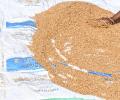
500,000 tonnes of sugar exports allowed on top of an existing 1.5 mt window
Haryana Chief Minister Nayab Singh Saini has accused the opposition of misleading farmers regarding crop procurement, assuring that all produce will be purchased and that the government is addressing any difficulties in grain markets.

The Enforcement Directorate (ED) conducted raids at multiple locations in West Bengal as part of a money laundering investigation into an alleged Public Distribution System (PDS) scam.

The finance ministry has clarified that its letter to state chief secretaries, urging them to align their bonus policy to promote pulses, oilseeds, and millets, was an advisory and not a directive. This clarification comes in response to Tamil Nadu Chief Minister M K Stalin's criticism, who called the advisory a 'treacherous act against farmers'.

The government plans to expand its central bank digital currency (CBDC)-based food subsidy programme to Chandigarh, Dadra and Nagar Haveli, and Daman and Diu by June, following its implementation on a pilot basis in Gujarat and Puducherry, official sources said.

Revenue collection next financial year may be affected, and, along with this, subsidies on food and fertilisers can go up if the war in West Asia drags for long, according to experts.
With government's wheat procurement operations coming to an end, flour mill owners have stepped up their buying from the market, causing a rise in prices of the commodity.

Himachali cuisine is simple and hearty. It's seasonal and robust too, being deeply-rooted in mountain life and shaped by cold climate and slow-cooking traditions.

Israel and the United States had a plan. Iran punched back. And now the Gulf is reeling, the world is beginning to feel the pain and, as on date, no one in Washington or Tel Aviv appears willing to admit that the punch has landed, notes Prem Panicker, continuing his must-read blog on the war in the Middle East.

There has not been a large impact of untimely rain and hailstorm so far in several major wheat-growing areas, and those might have damaged around 3 per cent of the standing crop -- not enough to make a big dent in the expected 112 million tonnes of production in FY24, a senior government official said on Tuesday. Relentless rain pounded most North Indian states all through March. Separately, the chairman of Food Corporation of India (FCI), Ashok K Meena, told reporters the agency was on track to achieve the targeted 34 million tonnes of procurement in FY24 on the back of a strong start to the purchase season from Madhya Pradesh.
If private trade is kept out of the market and farmers don't get higher prices, this year's bumper crop will be a one-time affair.
The government has also swung into action to ensure that it is able to procure adequate quantities and avoid imports at exorbitant rates.
The procurement has already touched 19.8 million tonnes and government agencies continue to procure 200,000-250,000 tonnes daily.

In MP, farmers say sales under new 'Sauda Patrak' method below MSP; Haryana mustard farmers wait for their turn to sell. The annual purchases of major rabi crops in North India largely wheat, mustard and also chana to some extent have been delayed as most cereal mandis were closed in the aftermath of the nationwide coronavirus lockdown.
The government on Monday said there is sufficient wheat stock in the country and that it will take action against hoarders, if needed, to boost domestic supply. The Centre may consider steps like asking for disclosure of wheat stocks by traders and imposing stock limits to augment domestic availability. Addressing the 82nd AGM of Roller Flour Millers Federation of India, food secretary Sudhanshu Pandey said there is no problem of wheat in the country and the Centre has 24 million tonne of wheat in godowns of state-owned FCI. The secretary pointed out that wheat prices have gone up due to "speculative trading".

The Haryana Cabinet has decided to offer wrestler-turned-politician Vinesh Phogat benefits equivalent to those of an Olympic silver medallist under the state's sports policy.

Temperatures in March will be critical to determining the impact of any unusual heatwave conditions on this year's wheat crop in North India. It is that time of the year when the crop enters its vital grain-filling stage, say meteorologists and crop experts. So far, the high day temperatures in the North are not believed to have any significant impact on the final yields since the crop hasn't entered a stage where heat affects yields.

Data compiled by National Collateral Management Services (NCML, a non-government body) shows a 6.3 per cent rise to 109 million tonnes (mt). The Union ministry of agriculture's first advance estimate was 100.5 mt, as compared to 102 mt in last year's fourth advance estimate.
A head of its meeting, the Reserve Bank of India (RBI) can take some solace from the softening food commodity prices. However, the events surrounding the last few weeks show that the fall may not be uniform across all commodities, and cereals like wheat and rice could be the outliers. A Reuters report said that local wheat prices jumped to a record Rs 23,547 per tonne on Wednesday. That is a 12 per cent rise from the recent lows that followed the government's surprise ban on exports on May 14.
The surge in wheat export from India owing to the Ukraine crisis has once again demonstrated how farmers in states that have flexible marketing frameworks and low taxes benefit more from an emerging situation. The bulk of the wheat exported from India, trade and industry sources say, is being sourced at rates significantly higher than the state-mandated price of Rs 2,015 per quintal in Madhya Pradesh (MP), Uttar Pradesh (UP), and Gujarat - states which have low mandi taxes compared to Punjab and Haryana. This is not only benefiting farmers there but could also lead to significant savings for the states in procurement costs in the months to come.

India has put curbs on wheat exports through the government route, starting November last year. This comes amid a surge in domestic prices of the cereal. In December, India exported 391 tonnes of wheat to Bangladesh and Bhutan. In November 2022, it had exported 375 tonnes of wheat only to Bhutan.
India's wheat exports could touch a new record of 10 million tonnes in 2022-23, up from a record seven million tonnes in the current financial year, if global market conditions remain choppy and no curbs are imposed on outbound shipments. That is the bullish estimate by officials from global trading firms and market watchers who say the Russia-Ukraine crisis has not only attracted global buyers to India but also pushed the price of Indian wheat from around $320 per tonne (FOB) to over $360 per tonne in less than 10 days. Food secretary Sudhanshu Pandey told reporters that wheat exports till February-end have already reached 6.6 million tonnes and by the end of March, outbound shipments will reach seven million tonnes.
India has banned wheat exports with immediate effect as part of measures to control rising domestic prices, according to official notification. However, the export shipments for which irrevocable letters of credit (LoC) have been issued on or before the date of this notification will be allowed, the Directorate General of Foreign Trade (DGFT) said in a notification dated May 13. "The export policy of wheat ... is prohibited with immediate effect...," the DGFT said. It also clarified that wheat exports will be allowed on the basis of permission granted by the Government of India to other countries to meet their food security needs and based on the request of their governments.
India's opening stocks of wheat in the central pool are expected to be 19.5-20 million tonnes as on April 1, 2022, the lowest in the last three years, but much higher than the normative level required for maintaining a buffer and strategic reserve, trade and market sources said. In accordance with the buffer and strategic reserve norms, India should have a wheat stock of 7.5 million tonnes in the central pool as on April 1 each year and this year's stocks, though the lowest in the last three years, will still be over 160 per cent more than what is required. On the export front, both government and trade sources are unanimous that this year (FY22) they will be 7-7.25 million tonnes, a record, while in the next financial year, they might touch even 10 million tonnes if the current momentum is maintained.
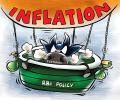
The Reserve Bank of India on Friday retained its projection for retail inflation at 4.5 per cent for the current fiscal assuming a normal monsoon, while emphasising that uncertainties related to food price outlook warrant a close monitoring. Consumer Price Index (CPI)-based retail inflation has been projected at 4.5 per cent with quarter-wise projections at 4.9 per cent in Q1 (April-June), 3.8 per cent in Q2, 4.6 per cent in Q3, and 4.5 per cent in Q4.
