
The broader NSE Nifty too fell below the 10,100 level by dropping 100.10 points to end at 10,094.25

At a time when the whole world is going ga-ga over stocks and debt is too easy to borrow, do not forget gold, says Anil Rego.

A gradual increase works best for the US, as well as global markets, says Nizam Idris managing director, head of strategy (fixed income and currencies), Macquarie Bank.

On the gaining side, Hero Moto, SBI, HDFC, HUL and L&T have gained between 1-1.4 per cent.

According to the global financial services major, the Consumer Price Index based inflation is peaking off and is expected to be around 7.5-8 per cent in September.

The S&P BSE Midcap and the S&P BSE Smallcap indices under-performed to lose 0.8% and 1.6%

Ravi Gopalakrishnan, head-equities, Canara Robeco Mutual Fund, tells Ashley Coutinho that earnings growth will pick up once the benefits of reform initiatives accrue.

In worldwide trade, the US dollar retreated from its recent multi-year highs to trade subdued against major rival currencies

Total foreign investment in the stock market has reached Rs 90,715 crore so far in 2013.

This flight of capital began in early August due to risk-aversion created first by rising geopolitical tensions due to North Korean aggression and second by the US Fed's decision to shrink its balance sheet
The CAD has been narrowing since 2012 to an estimated 1.6% of GDP in 2014

Frantic dollar demand from corporates along with an aggressive hedging strategy adopted by importers in the wake of the currency volatility predominately took a toll on the domestic unit despite moves by the central bank to stabilise the currency.

'Macro headwinds are rising for Indian equities in the form of rising commodity prices, especially oil, depreciating rupee, fiscal challenges, election-related uncertainty and upside risks to inflation'

In the broader market, the S&P BSE Midcap and the S&P BSE Smallcap indices gained 0.5% and 0.4%, respectively.

Top 5 losers include Lupin, Cipla, Sun Pharma, Dr Reddy's Lab and GAIL down 1.6%-11%.

The rupee's recent decline is sharp, yes, he says, but the tale would be scary if India was like the Asian crisis countries of 1997-98, or even Argentina in 2001, when large amounts of debt was denominated in foreign currency. According to him, India's percentage of external debt to GDP was around 20
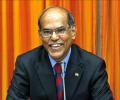
In a forthright "last public lecture" before he retires next week, RBI Governor D Subbarao was on Thursday sharply critical of the government, blaming its "loose fiscal stance" for the current economic woes, and warned that the root cause of rupee depreciation is "domestic structural factors."

If indeed we want the board to manage the RBI, probably the government should take a close look at the US Federal Reserve system which has a two-part structure - a central authority in Washington, DC, and a decentralised network of 12 Federal Reserve Banks located throughout the country, says Tamal Bandyopadhyay.

Broader market outperformed the frontline indices and also hit their respective all-time highs

Investor wealth slumped by Rs 1.55 lakh crore on Thursday today, dragged down by massive selling in the stock markets where nearly seven out of ten shares closed lower.

Risk sentiment is likely to be favourable if oil prices stay benign, global growth sentiment remains robust and the dollar index does not break out, says B Prasanna.
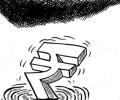
The rupee has dropped by 60 paise or 0.89 per cent in the last three trading days.

The rupee snapped its two-day winning run against the dollar.
Robust foreign capital inflows into upbeat domestic equity markets on the back of better macro fundamentals helped the rupee to gain

Most markets have seen significant erosion in investors' wealth this year

RBI will take a cue from the Fed policy statement.

'China's economy continues to slow and the US Fed may still hike rates before the end of the year.'

RBI will review the monetary policy again on September 29.
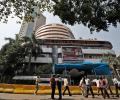
Of the 30-share Sensex pack, 15 today closed in the red

India Ratings has in its latest report has maintained a bearish outlook for gold prices for the current financial year.

The RBI's next policy review is set for Sept. 29.

'One way to deal with these is to address these quickly and have rapid reaction teams in New Delhi, the state capitals and wherever possible.'

Despite the rally, on the basis of valuations, Indian markets aren't too expensive, says Christopher Wood, managing director and equity strategist at CLSA.

A delay in US Federal Reserve's quantitative easing tapering, coupled with better-than-expected September quarter earnings, ensured FIIs kept foreign money flowing into Indian equities.

According to HSBC, the 'storm has abated' for the Indian markets as the US Fed has deferred tapering of its quantitative easing stimulus, and as the new Reserve Bank of India Governor Raghuram Rajan has taken steps to contain the rupee fall.
.jpg)
Some analysts believe that markets are expected to remain unclear and would have to wait until tomorrow's US non-farm payrolls data.

The rupee weakened to 62.58 against the US dollar in the early trade on Thursday.

The US Fed's rate cycle is set to turn later this year, but India is in a much better position than it was in 2013.
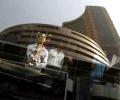
Market players said the sell-off was triggered by pessimism that the government may not be able to balance growth with macro-stability.

The country must get its act on global alliances right in order to feed its fuel-hungry economy, points out Subhomoy Bhattacharjee.
 © 2026 Rediff.com - Advertise with us - Disclaimer - Privacy Policy - Sitemap - Feedback - About us - Terms of use - Grievances