
Whether it is Sri Lanka, Maldives, or Nepal, quietly but steadily, India has been reclaiming some of the ground it had lost to China, observes Aditi Phadnis.

'Given this dissonance between India's age-old multicultural tenets and the anti-minority temper of the present times, it cannot be easy for the BJP to maintain its balancing act to convince the world that all is well,' observes Amulya Ganguli.

Subrahmanyam Jaishankar's worldview sets him apart
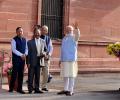
'Modi personally provides the higher direction of the ministry and the minister then works with bureaucrats on implementation,' points out Aakar Patel.

'This speech is going to be more of a punishment. I spoke too much this afternoon' A tireless Prime Minister Narendra Modi left over 700 notable luminaries in peals of laughter with his quick wit and sense of humour during a dinner and reception hosted by Indian Ambassador Subrahmanyam Jaishankar at the Taj-owned, The Pierre Hotel. In the presence of the who's who of desi Americans and US lawmakers, Modi once again thanked the Indian-Americans for their contributions and discussed his plans of developing India and the ties he hopes to nurture with America. Aziz Haniffa/Rediff.com presents a sneak-peak into the festive, grand dinner.

More than India's alignment with the Quad, India's defence cooperation and partnership with the USA is of critical importance, notes Rup Narayan Das.

Among the other names tipped to make it to the Cabinet are Jyotiraditya Scindia, Sarbananda Sonowal, Baijayant Panda.
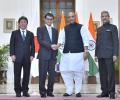
The India-Japan 2+2 dialogue added strategic heft to the special relationship in the wake of growing Chinese assertiveness on regional affairs, points out Dr Rajaram Panda.

India has realised that one can only deal with China from a position of strength and that is not palatable to Beijing, observes Dr Rup Narayan Das.

"The 21st century peacekeeping must be anchored in a strong ecosystem of technology and innovation that can facilitate UN peacekeeping operations in implementing their mandates in complex environments," India's external affairs minister S Jaishankar said
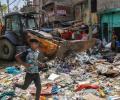
Many of the stories, the pictures going out of India worldwide lately with these provocative processions, taunting of Muslims, bulldozers targeting mostly their properties, the sweeping 'othering' of a community of 200 million are painting the front pages and TV screens in the democratic world. That is where most of the friends we covet lie. Soon enough, these will also make our vital friends among the Muslim nations, from Bangladesh to Saudi Arabia and the UAE, uneasy. The best time for course correction is now, asserts Shekhar Gupta.

Describing America as India's "natural global partner", Prime Minister Narendra Modi arrived in New York on Friday on a five-day visit to the US, holding out an assurance that India is "open and friendly" for business and innovations.
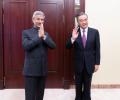
External affairs minister S Jaishankar has told his Chinese counterpart Wang Yi that the two sides should work for an early resolution of the remaining issues along the LAC in eastern Ladakh to restore peace and tranquility in the border areas as this has been an essential basis for progress in Sino-India ties.
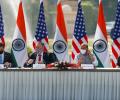
Henry Kissinger once said, 'It may be dangerous to be America's enemy, but to be America's friend is fatal.' India will have to wait and see, observes Rajeev Srinivasan.
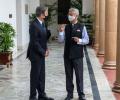
We do not know, because there has been no discussion, no transparency and most likely no real thinking on this matter at our end, observes Aakar Patel.
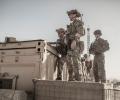
The Biden administration expects the Modi government to continue to remain as its loyal camp follower even as Washington continues to act in self-interests, observes Ambassador M K Bhadrakumar.
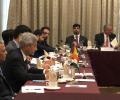
Jaishankar was among the first ministers to arrive for the SAARC ministerial meeting. He was in the meeting for over 45 minutes and then left.

'Frankly, India has no role to play.' 'This is a showdown between the US and NATO on one hand and Russia on the other.' 'That said, the outcome of this titanic struggle in Central Europe will remould the world order and affect India profoundly,' argues Ambassador M K Bhadrakumar.
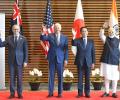
India has the ability in all respects to be a great power and address our security challenges in the best national interests, says Commodore Venugopal Menon (retd).

'India has to prepare for future warfare where kinetic use of force at the border will be limited. War will take place in the realms beyond the border.'

The Blinken visit indicated that the Biden administration is still somewhat tentative about the specifics of its relations with India, observes Ambassador T P Sreenivasan, who has served multiple stints at India's embassy in Washington, DC.
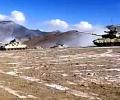
Once the tanks roll back, a zero-based assessment of future equations with China is necessary. Given the conflict situations that China is imposing on India time and again, the red, amber and green lines of interactions with China need to be laid down and communicated in no uncertain terms, asserts Srikanth Kondapalli, the leading China expert.
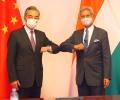
'We've never really been in the situation of having a difficult time with the Chinese and an increasingly difficult time with the Russians along with a relationship with the Americans which is important.'
'I am not minimising either the seriousness or the complex nature of the current situation.' 'Naturally, we have to do what it takes to secure our borders.' 'We are talking to the Chinese, both through military channels and diplomatic ones.'
'In fact, they work in tandem.' 'When it comes to finding a solution, this must be predicated on honouring all agreements and understandings.' 'And not attempting to alter the status quo unilaterally.'

This visit has ended on a vastly different note in comparison with Modi's previous visits. Call it a rebuke, call it a censure, call it a distancing from Modi, the sharp message would have gone home, observes Ambassador M K Bhadrakumar.

US Secretary of State Antony Blinken was asked by US Congressmen if the US had explore the possibility of northwest India for counter terrorism capabilities in Afghanistan. Blinken's remarks on India assume great importance, observes Ambassador M K Bhadrakumar

Strengthening the portfolios of the home minister and the finance minister is a message that should not be missed, points out A K Bhattacharya.

It is difficult to recall an Indian minister in modern times pushing back at the US publicly, observes Ambassador M K Bhadrakumar.

The elephant in the room will permeate the conversations, predicts Rup Narayan Das.

'Galwan has turned everything.' 'The casualties on both sides alerted the Chinese to the fact that Indians are not going to take it lying down.'
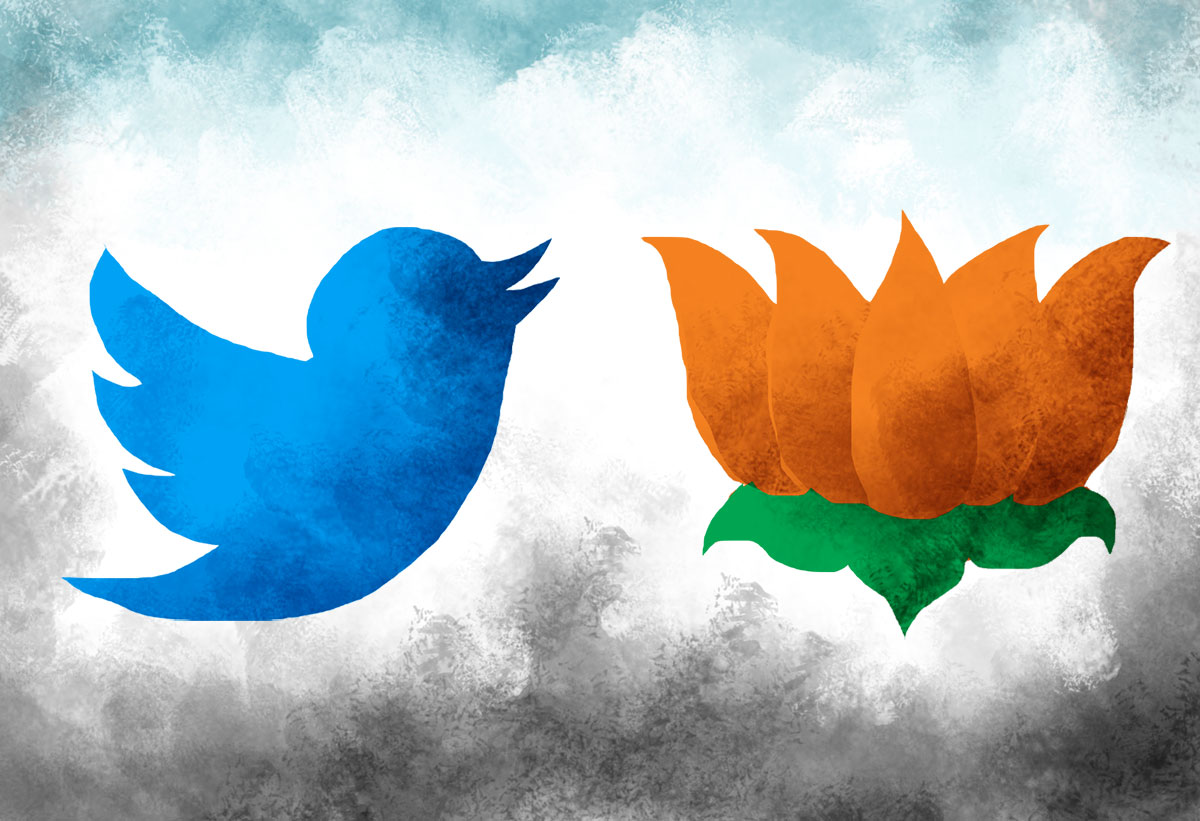
It was amusing to hear Minister Jaishankar's argument of tech companies being influential non-State actors. If only he looked at his own party before saying what he did, notes Shyam G Menon.
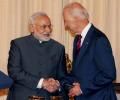
US-India defence cooperation must not adversely affect the India-Russia interface, which has its own strategic meaning and content, asserts Vice Admiral Premvir Das (retd).

China remains the elephant in the room and has to be tamed, which the United States alone is unable to do and therefore calls allies to come on board.

Colombo seems to be veering to the middle path between China and the US on global matters, but in regional matters of strategic security, it is increasingly identifying with India, points out N Sathiya Moorthy.
A wise politician would disarm his critics, try to take them along, co-opt them, or, at least, take the criticism in his stride. Developing a thick skin ought to be an essential part of any politician's toolkit, notes Virendra Kapoor.
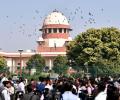
'Do the Muslims of India think that they are receiving justice from their nation and particularly from the Supreme Court?'
Prime Minister Modi has entrusted Amit Shah with the task of coordinating all the agencies with their power to monitor movement and phone calls, says R Rajagopalan.

Jaishankar is the first foreign secretary to head the Ministry of External Affairs as minister.

AIADMK coordinator O Panneerselvam is said to be upset at his son Raveendranath Kumar, a Lok Sabha MP, being denied a ministerial chance for a second time in a row, beginning with the formation of Modi 2.0 in 2019, reveals N Sathiya Moorthy.
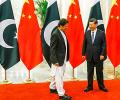
If and when India and Pakistan bilateral talks take place any issues concerning Jammu and Kashmir will not be on the table. Any future talks with Pakistan will be only about PoK, tactically or otherwise.
 © 2026 Rediff.com - Investor Information - Advertise with us - Disclaimer - Privacy Policy - Sitemap - Feedback - About us - Terms of use - Grievances