
'The question now is how long the exercise in perfection he created will last once his influence isn't there any longer,' says Sunanda K Datta-Ray.
.jpg)
The eternal question remains unanswered, what price security and what cost liberty, says Vikram Sood.

India needs to have a re-look of whole gamut of its relations with major powers and also prepare for a more turbulent neighbourhood. But such is the tyranny of Indian status quo mindset that any talk of re-look at nuclear doctrine or foreign relations is treated as blasphemy, says Colonel (retd) Anil Athale.

The choice before the next government is not between being a soft State and a tough State; it is between being a smart State and a dumb State, says former foreign secretary Shyam Saran.

The US needs to do three things to help the newly elected Nawaz Sharif government in Pakistan, says Stanley A Weiss

'Pakistan's military leaders have to accept that the policy of proxy wars has damaged Pakistan more than it has damaged the enemy,' says former R&AW chief Vikram Sood.

A double-quick analysis of the Lankan election results would show that the relatively narrow victory margin of challenger Maithripala Sirisena was made up by the three minority communities of Tamils, Muslims and Christians, says N Sathiya Moorthy.

'The Modi regime, after experimenting with its own versions of neighbourhood policy for 18 months, has now reached the exact stage where the Manmohan Singh government had left it in so far as our Pakistan policy is concerned,' says former senior RA&W officer Vappala Balachandran.

How will the return of a majority government at the Centre, the new India-US friendship and the Mangalyaan triumph change India?

'There is perfect coordination between them,' Vice-President Hamid Ansari said when Rediff.com asked what differences he had noted between Raul Castro and his elder brother. 'Commandante (Fidel Castro) remains the undisputed leader of the revolution.'

The external affairs ministry's files, as distinct from those of the ministry of defence or the agencies, at least from before 1974 should be declassified. And if select files that are more than 40 years old are not to be declassified, the ministry should follow explicit guidelines to justify taking such a view, says Jaimini Bhagwat.

It is unconscionable to choose between Sardar Patel, who united India physically, and Indira Gandhi, who gave meaning, content and pride to the unity of the nation and became a martyr at the altar of national unity, says Ambassador T P Sreenivasan.

'In her insecurity, she destroyed the institutions of democracy.' 'She packed Parliament with her supporters with loyalty being more important than ability; she superseded judges; she corrupted the civil service.' 'She knew how to use people against each other and was quite a master of that.' 'She would do this with calculated skill and in the bargain cause enmity between brothers, split up families.'

'The biggest advantage for India was its seasoned and experienced political leadership who had spent decades struggling against the Raj and had spent years behind bars.' 'Not a single prominent leader of the Muslim League spent one day in jail.' 'Gandhiji, Nehru and Sardar Patel were intelligent, shrewd men with their hands on the popular pulse.'
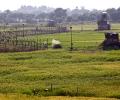
'The incidents have remained confined to the paramilitary forces on both sides with both the armies scrupulously avoiding getting involved. While this incident has been going on, the LOC has been reasonably quiet. Cross border firing achieves no tactical or strategic aims and is more a symptom of hostility. Unfortunately, India has to learn to live with this. Like Israel, we must construct shelters for the border populations and be ready to retaliate in kind,' says Colonel Anil A Athale (retd).

Incisive Editor, brilliant scholar on Islam, and now BJP leader, M J Akbar is at his intellectual best when he dissects the Muslim world and its problems, and offers up a solution from his unique perspective, as he did in this recent speech at the 10th R N Kao Memorial Lecture in New Delhi.
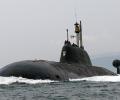
'We have been found seriously wanting in addressing our undersea warfare capability and China's emergence is a cause for concern.'

India needs to build its Grand Narrative, and its cultural power, which conquered all of ASEAN (then known as Indo-China), needs to be forcefully projected while simultaneously hard economic and military power are also emphasised, says Rajeev Srinivasan.

'It is imperative to restore the dignity and authority of the services chiefs. Erosion of this has resulted in lowering of service efficiency. It is also time to end the practice of taking seniority as the sole criterion for appointing chiefs.'

Here's a glimpse at what happened around the world last week


'What we need from the civilian and military authorities are clear strategies rather than an emotional decision to hang terrorists on death row.'

Prime Minister Narendra Modi gave the vote of thanks to the President's speech on the opening day of the Budget session.

ACN Nambiar's life was extraordinary and intricately linked to momentous turns in history. Having lived in Europe for five decades, he was witness to and entangled with what we today -- with the benefit of hindsight -- call recent history.

The US foreign and security policy establishment, says Ambassador M K Bhadrakumar, apprehends that Trump may compel them to exorcise the 'unipolar predicament', and bring foreign and security policies to reflect the desires and priorities of the American public.

'For a long time Pakistan dreamt that India would break up and that it would be the predominant power in the region,' says Colonel Anil A Athale (retd).

'India cannot expect to be insulated from the crisis. Europe is India's biggest trading partner with two-way trade of E72.5 billion or Rs 530,000 crore last year,' says Paranjoy Guha Thakurta.

'India stands on the broad shoulders of an extraordinary civilisation. In some ways it is quite surprising that it hasn't fully embraced the power of that.' 'The prime minister speaks about Make in India. Let's remind ourselves also of Made in India. What made India great. What are the great things of the past which will help us make India even greater.' 'India stands on the broad shoulders of an extraordinary civilisation. In some ways it is quite surprising that it hasn't fully embraced the power of that.'
'Why not ask for a change of leadership in Qatar, Bahrain or Saudi Arabia? Is there a constitution in Saudi Arabia? Are there elections in Saudi Arabia? Why no talk of democracy in these countries?' 'America said change the leader now, but is now ignoring the feelings of the Syrian moderate majority. Is that democracy,' asks H E Dr Riad Abbas, Syrian ambassador to India, in an interview to Cleo Paskal.

Despite a lot of lip service to national unity, functional relations between the Han Chinese immigrants and the Uyghur regional majority have not developed on equitable basis, says R Hariharan

'Obama's decision to end the US military involvement in the Afghan civil war needs to be welcomed as a positive development for regional security and stability. India, too, has a great opportunity opening up here if it plays its cards in sync with the spirit of the times rather than continuing to view the Afghan problem in zero-sum terms,' says Ambassador M K Bhadrakumar.

'If you invest your entire capital in talks, you cannot abruptly change gear and decide on war.'

'What hurts people most is dynastic impulses and corruption under a family-ruled Congress party -- and Nehru has borne the brunt of it... I cannot be blinded by how the Nehru family has functioned but just as Gandhi can't be judged by his descendents, why should Nehru?' asks political scientist Ashutosh Varshney.

Music composer-singer Bappi Lahiri offers a sneak peek into what to expect in his US concerts this month.
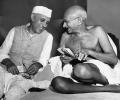
'How come with Nehru at the helm, India missed so many buses? He had such unchallenged power that he could have taken the country in any direction he wanted. The sad conclusion is inescapable that Nehru let things drift in true Hamletian ambivalence,' says B S Raghavan.

'Clearly, from the Indian viewpoint, the US retrenchment from Asia cannot be happening as good news.' 'The abandonment of the US' pivot to Asia exposes the US-Indian partnership to be a mere transactional relationship,' says Ambassador M K Bhadrakumar

Minister for External Affairs Salman Khurshid speaks about the importance of the fourth edition of the India-US Strategic Dialogue, which he co-chaired with United States Secretary of State John Kerry in New Delhi

Rajeev Srinivasan on the disastrous after-effects of a made-up spying incident

Lieutenant General J F R Jacob, Chief of Staff, Eastern Army Command during the 1971 war, revealed how, armed with only a draft surrender document and an aide, he made the Pakistani army led by Lieutenant General A A K Niazi surrender.
Lieutenant General J F R Jacob, Chief of Staff, Eastern Army Command during the 1971 war, revealed how, armed with only a draft surrender document and an aide, he made the Pakistani army led by Lieutenant General A A K Niazi surrender.
