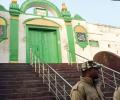
The Uttar Pradesh government has informed the Supreme Court that the disputed "private well" near the Mughal-era Jama Masjid mosque in Sambhal was situated on public land. The state government said the petitioner failed to disclose there was a well within the boundary walls of the mosque known locally as "yagna koop". The committee, in a spot inspection, found that the well was situated outside the mosque boundary wall, the report said. The report said the state was committed to ensuring peace and harmony in the region and any restraint on the use of such public wells by the community at large may not help in achieving that goal.

Efforts to resolve three major religious site disputes in Uttar Pradesh - Gyanvapi, Sri Krishna Janmabhoomi-Shahi Eidgah, and Sambhal Shahi Jama Masjid - through out-of-court settlements have failed, with all parties insisting on judicial adjudication.
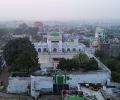
The Allahabad high court on Wednesday stayed further proceedings before a civil court hearing the dispute over Jama Masjid in Uttar Pradesh's Sambhal.
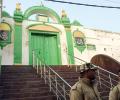
The Committee of Management, Shahi Jama Masjid, moved the high court challenging the suit and the Sambhal court order which directed the survey through an advocate commissioner.
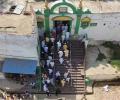
Three men from Delhi were detained in Sambhal, India, for allegedly attempting to perform Hindu rituals, including a havan and puja, at the Shahi Jama Masjid. The incident occurred on Friday, with police citing concerns about public order and potential disruption to communal harmony. The mosque is a site of ongoing religious tensions, with four people having died in violence last year related to a court-ordered survey. The detainees claimed they were attempting to perform rituals at a nearby Vishnu Harihar temple.

The Supreme Court of India will hear a petition challenging a district court's order to survey a Mughal-era mosque in Sambhal, Uttar Pradesh. The petition alleges that the hasty survey has led to communal tensions and violence, resulting in deaths and injuries. The petitioners argue that the survey was ordered without proper notice or hearing, and they seek a stay on the proceedings and a directive to prevent such surveys from being ordered as a matter of course in cases involving disputes over places of worship.
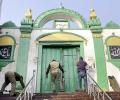
With the Uttar Pradesh Assembly polls scheduled for 2027, political experts are observing an increasing trend of temple-mosque disputes in the state, leading to heightened polarization. Recent bypolls saw the use of divisive slogans, and analysts believe this trend will intensify as the 2027 elections approach. The recent surge in claims about the existence of Hindu temples at the sites of mosques in various cities has fueled this polarization. The BJP-led government has been accused of promoting communal polarization, while opposition parties like the SP have criticized the ruling party's actions. The RSS chief has called for restraint in raising new temple-related disputes. Experts predict that communal polarization is likely to escalate in the coming days.
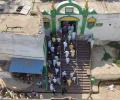
The Allahabad high court on March 12 directed the Archaeological Survey of India (ASI) to undertake and complete the whitewashing at the mosque within one week.
The Sambhal administration in Uttar Pradesh has stated that no work should be carried out on the Shahi Jama Masjid without the approval of the Archaeological Survey of India (ASI). This decision comes after the mosque's management committee sought permission to redecorate the mosque ahead of Ramzan. The matter is currently pending in court, and the property belongs to the ASI. The administration has emphasized that no tampering with the mosque is allowed until the ASI grants permission.
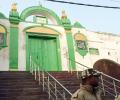
An Archaeological Survey of India (ASI) team on Thursday carried out measurements and assessments ahead of the planned whitewashing and renovation work of the Shahi Jama Masjid, officials said.

A day after the Uttar Pradesh assembly tabled the judicial commission's report on the November 2024 Sambhal violence, court commissioner Ramesh Raghav alleged that the mob had intended to attack the survey team and prevent the court-ordered exercise, while the Hindu side called for a detailed debate on the panel's findings in the House.

Both Hindu and Muslim parties involved in the Gyanvapi dispute have rejected the Supreme Court's mediation initiative, stating that the matter should be resolved through judicial adjudication. This decision came during a session at a Varanasi court, where both sides expressed their preference for a court verdict over an out-of-court settlement.

The Allahabad High Court has criticised Uttar Pradesh officials for restricting the number of people allowed to pray at a mosque in Sambhal, stating that officials should resign if they cannot enforce the rule of law.
The latest issue of "Organiser", an RSS-linked magazine, has argued that the ongoing dispute over the Shri Harihar Mandir in Sambhal, Uttar Pradesh, is not about religious supremacy but about seeking "civilisational justice" by uncovering historical truth. The editorial, penned by Prafulla Ketkar, editor of "Organiser", contends that the debate should not be limited to a Hindu-Muslim perspective but should encompass a wider discussion on historical truths and social justice. The magazine further criticizes the Congress's handling of caste and religious issues, accusing it of whitewashing historical injustices and promoting a false narrative about Mughal rulers.
A judicial commission has submitted its report to Uttar Pradesh Chief Minister Yogi Adityanath regarding the violence that occurred in Sambhal in November 2024 during a survey of the Shahi Jama Masjid. The report addresses the events leading to the violence and potential demographic shifts in the region.
'Unless Justice Chandrachud's judgment is (over)turned, there is no end to it.'
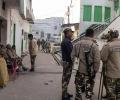
A four-member team from the Archaeological Survey of India (ASI) conducted a survey of the recently-discovered Shri Kartik Mahadev temple, five pilgrimage sites, and 19 wells in Sambhal, Uttar Pradesh, India. The survey followed the discovery of three damaged idols inside a well of the Bhasma Shankar temple, which was reopened after being shut for 46 years. The Shri Kartik Mahadev temple, also known as the Bhasma Shankar temple, was reopened on December 13 after authorities found the covered structure during an anti-encroachment drive. The temple houses an idol of Lord Hanuman and a Shivling and had remained locked since 1978. The district administration has requested carbon dating of the temple, including the well, from the ASI. Meanwhile, the Supreme Court has restrained courts across India from entertaining new lawsuits or passing any orders in pending ones seeking to reclaim religious places, especially mosques and dargahs, until further notice. This action halts proceedings in approximately 18 lawsuits filed by Hindu parties seeking surveys to determine the original religious character of 10 mosques, including the Gyanvapi at Varanasi, the Shahi Idgah Masjid at Mathura, and the Shahi Jama Masjid at Sambhal, where four individuals died in clashes. The Supreme Court will examine the legality, scope, and boundaries of the Places of Worship (Special Provisions) Act, 1991, which prohibits the conversion of places of worship and ensures the preservation of their religious character as it existed on August 15, 1947.
The Mathura Shahi Masjid Eidgah Committee has approached the Supreme Court, requesting the court to prevent the central government from filing a response to a petition challenging the Places of Worship Act's constitutional validity. The committee accuses the BJP-led government of intentionally delaying its response. The court had previously issued a notice to the government in March 2021, but the government has yet to submit its reply despite numerous opportunities. The committee argues that the government's delay is intended to obstruct those opposing the challenge to the Places of Worship Act from filing their own responses. The petition also states that the pleas challenging the law's validity are scheduled for hearing on February 17, and closing the government's right to respond would serve justice. The Supreme Court previously issued a ruling in December 2022 that stopped courts from entertaining new lawsuits or issuing interim or final orders regarding the reclaiming of religious places, particularly mosques and dargahs. The ruling halted proceedings in 18 lawsuits filed by Hindu groups seeking surveys to confirm the original religious character of 10 mosques, including the Gyanvapi Masjid in Varanasi, the Shahi Idgah Masjid in Mathura, and the Shahi Jama Masjid in Sambhal. This decision was made in response to six petitions, including one filed by lawyer Ashwini Upadhyay, challenging various provisions of the Places of Worship Act. The 1991 law prohibits the conversion of places of worship and guarantees the preservation of their existing religious character as it stood on August 15, 1947. Notably, the dispute regarding the Ram Janmabhoomi-Babri Masjid in Ayodhya was excluded from this law. There are also several cross-petitions advocating for a strict enforcement of the 1991 law to uphold communal harmony and maintain the current status of mosques that Hindu groups seek to reclaim, claiming they were temples before being destroyed by invaders.

'The irony of this country is that the party in Opposition and the party in power both depend on Muslims.'
The Act prohibits conversion of any place of worship and provides for the maintenance of the religious character of any place of worship as it existed on August 15, 1947.
The law prohibits conversion of any place of worship and provides for the maintenance of the religious character of any place of worship as it existed on August 15, 1947.

'It was a disaster on his part to give an oral remark which allowed ascertainment of the religious character of places of worship.' 'This disrupted the social harmony of the country.'
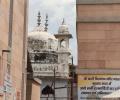
The Supreme Court's 2023 order refusing to stay a scientific survey at the Gyanvapi Mosque complex has sparked claims over several other disputed places of worship across India. This has led to several court cases, including one in Mathura where a survey of the Shahi Idgah Mosque complex was ordered, and another in Ajmer where a claim was made that a Shiva temple existed within the dargah of Sufi saint Moinuddin Chishti. The article also highlights a dispute over the Bhojshala in Madhya Pradesh, which Hindus consider a temple and Muslims consider a mosque. The Supreme Court's order has reignited debates about the Places of Worship (Special Provisions) Act, 1991, which prohibits the change of character of religious places as they existed on August 15, 1947.
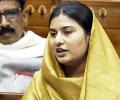
Samajwadi Party leader and Kairana MP Iqra Choudhary has moved the Supreme Court seeking effective implementation of the Places of Worship (Special Provisions) Act, 1991. This move comes amidst several petitions challenging the law's validity, including those filed by the Akhil Bhartiya Sant Samiti and lawyer Ashwini Upadhyay. The Supreme Court, in December 2022, had restrained all courts from examining fresh suits and passing interim orders in pending cases seeking to reclaim religious places. The Act aims to maintain the religious character of places of worship as they existed on August 15, 1947, but the dispute relating to Ram Janmabhoomi-Babri Masjid at Ayodhya was kept out of its purview. The court has listed Choudhary's plea with other pending pleas for February 17.
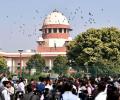
A bench comprising Chief Justice Sanjiv Khanna and Justice Sanjay Kumar also indicated that it may not take up the pending scheduled petitions, heard earlier by a three-judge bench, during the day as it was sitting in a combination of two judges.
The Supreme Court of India is scheduled to hear a batch of petitions challenging the validity of certain provisions of the Places of Worship (Special Provisions) Act, 1991, which prohibits lawsuits to reclaim a place of worship or change its character from what prevailed on August 15, 1947. The pleas, including one filed by Ashwini Upadhyay, argue that these provisions violate the right to judicial remedy and create an arbitrary cut-off date. The matter will be heard in the backdrop of several ongoing cases related to places of worship, including the Gyanvapi Mosque in Varanasi and the Shahi Idgah Mosque in Mathura. The Muslim side has cited the 1991 law to argue that such suits are not maintainable. The Supreme Court had previously sought the Centre's response to Upadhyay's petition, which alleged that the law creates an "arbitrary and irrational retrospective cut-off date" for maintaining the character of places of worship.
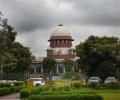
Commencing hearing on pleas challenging the constitutionality of the Places of Worship Act, 1991, the Supreme Court asked the Centre to reply to cross-pleas against or seeking implementation of statute.

A local court in Ajmer has issued notices to the dargah committee, the Ministry of Minority Affairs, and the Archaeological Survey of India on a plea seeking to declare the shrine of Sufi saint Khwaja Moinuddin Chishti a temple. The petition, filed in September, has sparked a heated debate, with politicians and community leaders weighing in on the potentially volatile issue. The dargah committee has declined to comment, but the Anjuman Syed Zadgan, a body representing the caretakers of the dargah, described the petition as a deliberate attempt to fracture society along communal lines. The petition comes just days after four people were killed in Sambhal, Uttar Pradesh, following a local court ordering survey of a Mughal-era shrine. The Places of Worship (Special Provisions) Act, 1991, which fixed August 15, 1947, as the cut-off date for status quo on the character of religious places, is at the centre of much of the debate. Several politicians, including Union minister Giriraj Singh and PDP chief Mehbooba Mufti, have weighed in on the issue. The Communist Party of India (Marxist) has called the civil court's decision to entertain the petition unwarranted and has asked the Supreme Court to immediately intervene.

'How can someone who has never been associated with the movement and never had darshan of Ram Lalla mediate on the matter of temple construction? We have gone to jail for it, faced house arrest and have been fighting court cases. Sri Sri does not qualify to mediate on the matter.'
