
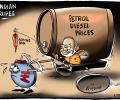
RBML - the joint venture of Reliance Industries Ltd and supermajor BP - has told the government that fuel retailing for the private sector in India has become unsustainable after market-controlling public sector firms frequently froze petrol and diesel prices at rates way below the cost, sources said. Despite a surge in oil prices, state-owned Indian Oil Corporation (IOC), Hindustan Petroleum Corporation Ltd (HPCL) and Bharat Petroleum Corporation Ltd (BPCL) first froze petrol and diesel rates for a record 137 days beginning early November 2021 when five states including Uttar Pradesh went to the polls, and last month again went into a hiatus that is now 47 days old. "They (Reliance BP Mobility Ltd) has written to the petroleum ministry over the fuel pricing issue," a highly placed source in the government, who didn't want to be quoted, told reporters.

Global energy supermajor BP plc on Thursday said it is about to open its first 'Jio-bp' branded petrol pump in partnership with Reliance Industries near Mumbai.
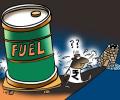
The windfall tax on oil produced within India and fuel exported overseas will make up for more than three-fourths of the revenue that the government lost when it cut excise duty on petrol and diesel to cool soaring inflation, industry sources said. India on July 1 joined a select league of nations globally that have taxed windfall gains accruing to oil companies from soaring energy prices. The government slapped a Rs 6 per litre tax on the export of petrol and jet fuel (ATF) and Rs 13 a litre on the export of diesel effective July 1. Additionally, a Rs 23,250 per tonne tax was levied on crude oil produced domestically.

The surge in deal value is largely due to the $12.9 bn Essar-Rosneft deal
On Tuesday, Petroleum Minister Dharmendra Pradhan met Russian oil giant Rosneft's chief executive officer Igor Sechin and discussed raising crude imports from that country, in addition to talks about going for more acquisitions.

The sale of Essar Oil was India's biggest deleveraging exercise undertaken by any debt-heavy group
Experts say local demand, government policies in retail and refining sector are attracting foreign players.

India may see a structural shift in supplies of crude oil with Russia emerging as a key source of fuels, a development that reduces New Delhi's dependence on West Asian oil, gives Indian refiners better bargaining power with price-setter Saudi Arabia, and improves overall energy security. The unexpected surge in supplies of Russian crude in the last few months, unthinkable until the war in Ukraine, may also deliver other unforeseen gains such as boosting exports of refined fuels to Europe, which historically has counted on Russian shipments. India has jumped on to the bandwagon of opportunistic buying of Russian crude but if calibrated carefully, Urals crude can be a long-term asset for India refiners.

Russia has promised India four to five million tonnes of crude oil annually from its Far East Siberian oil fields if it fails to accommodate ONGC Videsh Ltd in Yuganskneftegaz, the core asset of Yukos that has been acquired by Russian state-owned Ros
ONGC on Monday said it was still in reckoning for the confiscated assets of Russian oil firm Yukos and added Moscow may give it a stake in Rosneft's Vankor oil and gas field if the deal falls.

Stocks of Indian companies with exposure to Europe fell on Tuesday amid concerns about the impact on their sales in case the Russia-Ukraine crisis worsens and the US and its allies impose economic sanctions on Russia. While top conglomerates, including Reliance Industries, the Tata group, and Aditya Birla Group, said they did not have any significant exposure to Russia, executives of some of the oil and gas, pharmaceutical, and tea companies said they were monitoring the situation closely as they earned substantial income from the region. Russian President Vladimir Putin on Monday ordered troops into two breakaway regions of eastern Ukraine after announcing that Russia would recognise their independence.

Last June, the group had delisted Essar Energy from the London Stock Exchange as well.

India, the world's fourth-biggest oil consumer, recently offered Saudi Aramco a stake in refineries and petrochemical projects.

Why does the world's fastest-growing major consumer of energy fail to attract investments in oil and gas? This is a question worth pondering after private sector conglomerate Reliance Industries Ltd (RIL) failed to close a $15-billion downstream asset deal with Saudi Arabia's national oil company, Aramco. It's understandable if multi-billion dollar investments in oil and gas projects or deals involving state companies that need to traverse a complex bureaucracy at state and federal levels and the corridors of ministries unravel. However, Mukesh Ambani-run RIL, India's most successful energy company, is not typically known to fumble on closing deals (Ambani closed deals worth around Rs 2 trillion early last year in telecom and retail with blue chip investors).

Russia and China have a broad consensus today on almost all core issues related to global strategic stability, which is unprecedented in modern history, observes Ambassador M K Bhadrakumar.
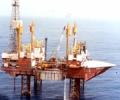
Russia's Gazprom or Rosneft may also join ONGC Videsh, the overseas arm of the state-run explorer, in Iraq's second post-war bid round on December 11-12, industry sources said.
Though OVL has made a solo bid of about $2.5 billion for takeover of Russia-focused Imperial Energy, the overseas arm of state-run Oil and Natural Gas Corporation may rope in a company like Rosneft to win Moscow's approval for the acquisition, London-based investment banking sources said. OVL is mindful that no company can be successful in taking over a company having assets in Russia unless it has the backing of Moscow.

Profit taking in index heavweights RIL and HDFC weighed on sentiment while ICICI Bank surged 7%.
The value of the stake is not immediately known but ONGC Videsh Ltd (OVL) -- the overseas investment arm of Oil and Natural Gas Corporation -- is likely to pay an initial $300 million for drilling operations. Russian company Rosneft, which owns 70 per cent in the project, will be offloading its stake to OVL if the deal goes through. The remaining 30 per cent stake is held by China National Petroleum Corporation.

The move comes days after the Indian Navy also warned of a possible terror attack from the sea side.

The Vedanta group on Wednesday confirmed putting in a preliminary expression of interest (EoI) for buying the government's stake in Bharat Petroleum Corp Ltd (BPCL).
Petroleum Minister Mani Shankar Aiyar will take up Oil and Natural Gas Corp's proposal to acquire 15-20 per cent stake in embattled Russian firm Yukos' core asset, Yuganskneftegaz, when he meets his Russian counterpart in Moscow on February 21.
China on Thursday denied providing any fund for the controversial purchase of Russia's oil giant Yukos but declined to give more information on the mystery deal.
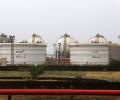
The Essar Oil, Rosneft deal also helped Arpwood Capital, boutique investment bank, co-founded by Rajeev Gupta and Raj Kataria, to grab the second spot in the mergers and acquisitions league table.

Sachin Bansal, who had co-founded Flipkart with Binny Bansal in 2007, would exit the company
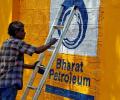
Older workers are headed for the VRS exit in larger-than-expected numbers even as unrest stirs over unrevised wage settlements.

As fuel prices surged in September, the government's decision to ask companies to cut price by Rs1 each on a litre of petrol and diesel came as a dampner for private players.

Putin's visit comes at a time when Russia's economy is stalling as oil prices tumble
.jpg)
India Inc raised various issues to increase trade flows in sectors like pharmaceuticals, banking, energy and infrastructure

In 2007, Essar had said it would set up a $1.8-bn unit in Minnesota, but scaled down from a full-scale taconite steel mill project to pellet plant after the 2008 financial crisis
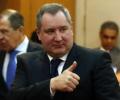
Dmitry Rogozin, deputy prime minister of Russia, in an exclusive conversation with rediff.com's Sheela Bhatt says, what Russia can do and has done for India nobody can do.

Reserve Bank of India Governor Raghuram Rajan took charge of India's central bank when the rupee seemed to be in a tailspin while the country was facing runaway inflation.

Among India's capital-starved local banks, Essar is viewed as too big to fail.
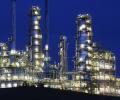
BPCL's impending privatisation and RIL's stake sale to Saudi Aramco raise questions about the future of the West Coast Refinery, once touted as the world's largest.

Prime Minister Modi appreciated the vision of Putin for the welfare for Russia's Far East, saying the Russian President has opened up investment opportunities for India in the region.

Indian companies have made acquisitions of $1 billion so far in January
