
Oil and Natural Gas Corporation is examining investing $3 billion to take up to 5 per cent equity in Russian state oil firm OAO Rosneft, which is making an initial public ofering, Petroleum Secretary M S Srinivasan said on Friday.

At $12-bn valuation, this will be India's largest FDI; deal to be announced on Saturday, says Dev Chatterjee.

Moscow-based OAO Rosneft Chairman Igor Ivanovich Sechin said the agreement was to ship by sea as much as 10 million tons of oil per year to Essar Group.
Rosneft bought a 49 per cent stake in Essar Oil's refinery port and petrol pumps, while Netherlands-based Trafigura Group Pte, one of the world's biggest commodity trading companies, and Russian investment fund United Capital Partners split another 49 per cent equity equally.

The transaction will lead to an open offer for minority holders.

The government on Monday scrapped 30-month old windfall profit tax on domestically-produced crude oil and on export of jet fuel (ATF), diesel and petrol following a decline in international oil prices. Minister of State for Finance Pankaj Chaudhary tabled a notification in Rajya Sabha scrapping the levy on crude oil produced by firms like state-owned Oil and Natural Gas Corporation (ONGC) and exports of fuels done by companies like Reliance Industries Ltd.
India's export of fuels like diesel to the European Union jumped 58 per cent in the first three quarters of 2024, with a bulk of them likely coming from refining discounted Russian oil, according to a monthly tracker report. The EU/G7 countries in December 2022 introduced a price cap and an embargo on the imports of Russian crude oil in a bid to cripple Kremlin's revenue and create a vacuum in its funding for the invasion of Ukraine.
Russian oil supplies to India will continue to flow unhindered and suppliers will come up with ways to sidestep secondary sanctions, a Russian official told Business Standard.

Indian family-run business houses have in recent years seen ugly public spats between owners over control. But metals-to-ports conglomerate Essar's Ruia family seems to be an exception. Three generations of the Ruia family - founder brother Shashi and Ravi Ruia, their children and grandchildren - continue to live under one roof and jointly run the business empire.
The government on Tuesday increased the windfall profit tax on crude oil produced in the country and reduced the levy on exports of diesel. The tax, levied in the form of Special Additional Excise Duty or SAED, on domestically produced crude oil was increased to Rs 9,800 per tonne from Rs 9,050 a tonne, according to an official notification. SAED on the export of diesel was reduced to Rs 2 per litre from Rs 4 a litre and on jet fuel or ATF to nil from Rs 1, the notification said.

The unexpected missile attack on a second India-bound ship carrying Russian crude, just three weeks after the first, has complicated matters for domestic refiners. India now counts the Vladimir Putin-led nation as its biggest oil supplier, according to Paris-based market intelligence agency Kpler, and these attacks come on top of US sanctions since December, where vessels that bring crude to India are facing heightened scrutiny. Panama-registered Pollux, which loaded crude at the Sheshkaris oil terminal in the Russian port of Novorossiysk on January 24, was scheduled to deliver the medium, sour Urals grade to Paradip port on February 28.
The government has cut the windfall profit tax on crude oil produced in the country while the levy on exports of diesel and ATF has been hiked, an official notification said. The tax, levied in the form of special additional excise duty or SAED, on domestically produced crude oil was reduced to Rs 6,700 per tonne from Rs 7,100 a tonne. SAED on the export of diesel was increased to Rs 6 per litre from Rs 5.50 a litre and on jet fuel or ATF to Rs 4 per litre from Rs 2, the notification said.
What is more surprising is that a surge in Russian oil supplies has come after the G7 imposed stringent sanctions on Moscow.
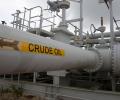
The government has cut windfall profit tax on export of diesel and ATF to their lowest while also reducing the levy on domestically-produced crude in line with softening international oil prices, according to an official order. The levy on crude oil produced by companies such as Oil and Natural Gas Corporation (ONGC) has been cut to Rs 4,350 per tonne from Rs 5,050 per tonne, the order dated February 15 said. Crude oil pumped out of the ground and from below the seabed is refined and converted into fuels like petrol, diesel and aviation turbine fuel (ATF).

The government has raised the windfall profit tax levied on domestically produced crude oil as well as on the export of diesel and ATF, in line with firming international oil prices, according to an official order. The levy on crude oil produced by companies such as Oil and Natural Gas Corporation (ONGC) has been increased to Rs 2,100 per tonne from Rs 1,700 per tonne, the order dated January 2, said. Crude oil pumped out of the ground and from below the seabed is refined and converted into fuel like petrol, diesel and aviation turbine fuel (ATF).
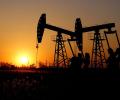
The government has cut windfall gains tax on domestically-produced crude oil to nil while continuing the rate at zero on the export of diesel and ATF. The government has slashed the special additional excise duty (SAED) on crude oil produced by companies such as Oil and Natural Gas Corporation (ONGC) to nil from Rs 4,100 per tonne with effect from Tuesday, an official order dated May 15 said. This is the second time that the levy, which was introduced in July last year in the form of a cess to tax supernormal gains of oil producers and fuel exporters, has been cut to nil for domestically-produced oil.

The government has brought back the windfall profit tax on domestically produced crude oil after international prices firmed up while the levy on export of diesel has been cut to nil, according to an official order. The levy on crude oil produced by companies such as Oil and Natural Gas Corporation (ONGC) is now Rs 6,400 per tonne with effect from Wednesday, the order dated April 18 said. At the last revision on April 4, windfall tax on domestically produced crude oil was cut to nil as international oil prices dipped below $75 per barrel.

After Reliance Industries Ltd and its partner bp plc of the UK, Nayara Energy - the nation's largest private fuel retailer - has started selling petrol and diesel at Re 1 less than the fuel sold by state-owned retailers, officials said. While state-owned Indian Oil Corporation (IOC), Bharat Petroleum Corporation Ltd (BPCL) and Hindustan Petroleum Corporation Ltd (HPCL) continue to hold prices despite a drop in international rates, private fuel retailers have started passing on the benefit to consumers. "To further stimulate domestic consumption and cater to local customers better, we have introduced a Re 1 discount in our retail outlets until the end of June 2023," a spokesperson for Nayara Energy said.
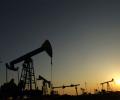
Indian officials will focus on expanding the country's footprint in oil-rich Siberia when they meet their Russian counterparts at the four-day 7th Eastern Economic Forum beginning Monday in Vladivostok. The two sides will discuss the possibility of joint oil exploration in the area and cooperation in running offshore oil and gas fields Western companies are in the process of exiting, officials said in New Delhi. Pavan Kapoor, India's ambassador to Russia, will lead the official-level talks at the summit scheduled September 5-8.
The government has reduced the windfall profit tax levied on domestically-produced crude oil as well as on the export of diesel and ATF, in line with softening international oil prices, according to an official order. The levy on crude oil produced by companies such as Oil and Natural Gas Corporation (ONGC) has been cut to Rs 1,900 per tonne from Rs 2,100 per tonne, the order dated January 16, said. Crude oil pumped out of the ground and from below the seabed is refined and converted into fuel like petrol, diesel and aviation turbine fuel (ATF).
The government on Friday cut the windfall profit tax on locally produced crude oil in line with a fall in international rates, and reduced the levy on export of diesel and jet fuel (ATF). At the fifth fortnightly review, the government reduced tax on domestically-produced crude oil to Rs 10,500 per tonne from Rs 13,300 per tonne. The levy on the export of diesel was reduced to Rs 10 per litre from Rs 13.5. Also, the tax on Aviation Turbine Fuel (ATF) exports was cut to Rs 5 a litre from Rs 9 with effect from September 17, according to a finance ministry notification issued late Friday night.
Old timers in Oil and Natural Gas Corporation (ONGC) still remember how in early 2000 its overseas subsidiary, ONGC Videsh Ltd (OVL), was on the verge of closure. Though OVL was set up in 1965, the only discovery the company had made till then was in Vietnam offshore, with more investment needed to monetise it. In 2001, when OVL started looking for new blocks abroad, the company's previous acquisition was 13 years old.
A preliminary deal for sale of 49 per cent in Essar Oil to Rosneft was signed between the companies in July 2015.
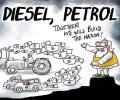
The government on Friday slapped an export tax on petrol, diesel and jet fuel (ATF) while also joining nations like the UK in imposing a windfall tax on crude oil produced locally. A Rs 6 per litre tax on export of petrol and ATF and Rs 13 per litre tax on export of diesel is effective from July 1, finance ministry notifications showed. Additionally, a Rs 23,250 per tonne tax was levied on crude oil produced domestically.

India on Tuesday pitched for a stake in vast oil and gas fields as well as LNG terminals in the frozen Artic of Far East Russia as it looked to import more oil from the former Soviet republic as part of a strategy to diversify its energy basket.
Taking advantage of a Russian offer to sell its crude oil cheap and bear the cost of insurance and transportation, India may import as much as 2 million tonnes (mt), or roughly 15 million barrels of crude, from the sanctioned nation in 2022, Business Standard has learnt. This comes after reports that Indian Oil Corporation (IOC) bought 3 million barrels of Russian Urals from trader Vitol for May delivery. This will be on cost, insurance and freight (CIF) model, where the seller incurs the costs and pays the freight, including insurance charges.
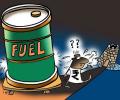
As stringent sanctions imposed by the European Union and US are crippling business and trade, desperate Russian oil companies are offering huge discounts to India, provided a payment mechanism to bypass the SWIFT ban is quickly approved by the government. According to sources familiar with the development, Russian oil firms are offering 25-27 per cent discount to the dated Brent crude prices. State-run Rosneft is one the biggest oil companies that supply crude to India.

The move is expected to bolster India's energy security.

In 2017, a consortium led by Russian state oil company Rosneft agreed to buy Essar Oil for $12.9 billion in India's biggest foreign acquisition of a homegrown company. Rosneft's buyout of Essar's assets was meant to herald a wave of energy investments in India - over six decades after Esso, Caltex and Shell invested in India's refining sector in the 1950s. But the government has tripped up in its efforts to sell Bharat Petroleum Corporation Ltd (BPCL), formerly Burmah Shell, a blue chip public sector company. Bidders include a couple of global funds and resources firm Vedanta.

As much as 8 billion rubles (about Rs 1,000 crore) of dividend income belonging to Indian oil firms is stuck in Russia after the Putin administration clamped down on dollar repatriation, officials said on Friday. Indian state oil firms have invested $5.46 billion in buying stakes in four different assets in Russia. These include a 49.9 per cent stake in Vankorneft oil and gas field and another 29.9 per cent in TAAS-Yuryakh Neftegazodobycha fields.

The Reserve Bank is working with the government to thrash out a payment settlement solution for Indo-Russian trade, which is hit by the economic sanctions imposed on Moscow after it invaded Ukraine, but asserted that any such solution will be 'sensitive' to the prevailing economic blockade, the central bank said. RBI Governor Shaktikanta Das was quick to add that it is a matter that the government has to deal with first, and as far as the central bank is concerned, obviously, we will not do anything which goes against the sanctions. RBI Deputy Governor T Rabi Sankar said since the Ukraine war has disrupted trade and payments, we are discussing with all stakeholders, and at the same time, we are sensitive to the economic sanctions.


The exploration and production assets of Essar Oil will not be part of the Rosneft deal and would continue to remain with the Group.

According to sources, Russian energy giant Rosneft or its affiliates, Saudi Aramco and Reliance Industries are in race for BPCL's three refineries - Mumbai, Kochi in Kerala and Bina in Madhya Pradesh - 16,309 petrol pumps, 6,113 LPG distributor agencies and more than a fifth of 256 aviation fuel stations in the country.
Privatisation of BPCL, which was dubbed India's biggest ever, has been stalled with just one bidder left in the fray after two others walked out over issues such as lack of clarity in fuel pricing, a top source said. The government had planned to sell its entire 52.98 per cent stake in Bharat Petroleum Corporation Ltd (BPCL) and invited Expression of Interest from bidders in March 2020. At least three bids came in by November 2020 but only one remains now after the others withdrew from the race.
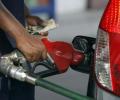
A looming global shortage of diesel in Europe presents India with more than one opportunity to profit from strong margins. A shortage of the fuel, a key contributor to inflation, has been exacerbated by the conflict in Ukraine, and western sanctions on Russian fuel supplies. The slowdown in natural gas supply means the West needs diesel to heat their homes this winter.

'Indian diplomacy in West Asia under the present government has been a success story -- and with Saudi Arabia in particular,' says Ambassador M K Bhadrakumar.

Russian firms expand their footprint in India. And take bigger steps to do business with India's private sector.

Global oil majors may be teaming up with investment funds that are already in the race to acquire Bharat Petroleum Corporation Ltd (BPCL), a document detailing steps needed to complete India's biggest privatisation showed. Billionaire Anil Agarwal's Vedanta group as well as two US funds -- Apollo Global and I Squared Capital - had last year submitted initial bids to buyout the government's entire 52.98 per cent stake in India's third-biggest oil refiner and second-largest fuel retailer. Detailing the 'Next Step', the 'Brief Note on BPCL Disinvestment' said Transaction Advisor and Asset Valuer are to submit an inception report, bidders have to complete due diligence of the company and sale purchase agreement has to be finalised.
China had financed the acquisition of embattled Yukos' core asset Yuganskneftegaz by Russia's state-owned 'Rosneft' oil last month in return of oil supplies till 2010, a senior Russian official said.
