
India's per capita average annual water availability is reducing.

Gandhi took a swipe at the government on Twitter by tagging a chart that showed IMF growth projections for 2020-21 for Bangladesh, Myanmar, Nepal, China, Bhutan, Pakistan, Sri Lanka, Afghanistan and India.
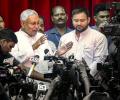
Various indicators make it amply clear that there are grave challenges facing the new government of Chief Minister Nitish Kumar, reports Indivjal Dhasmana.

'Aquaponics can effectively cushion the impact of a calamity like COVID.'
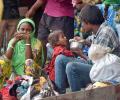
According to a new report by international management consulting firm Arthur D Little, the worst of COVID-19's impact will be felt by India's most vulnerable in terms of job loss, poverty increase and reduced per-capita income, which in turn will result in a steep decline in the Gross Domestic Product (GDP). "Given the continued rise of COVID-19 cases, we believe that a W-shaped recovery is the most likely scenario for India. This implies a GDP contraction of 10.8 per cent in FY 2020-21 and GDP growth of 0.8 per cent in FY 2021-22," the report said.

It is largely due to his vision and efforts that we have almost quadrupled our per capita milk availability in the last 40 years, points out Shailesh Dobhal.

We have our own problems for sure and they are not trivial, but for now, our economy is in not too bad a shape, our politics is as personality-driven and authoritarian as that of most countries in the world. We must make the best of what we have and not be excessively unhappy looking at the grass on the other side of the septic tank which may not be greener after all!, observes Shreekant Sambrani.

The new data comes a day after China and the US signed a long-awaited phase one deal, marking a ceasefire in the 18-month-long trade war which saw the world's two largest economies slap 25 per cent tariffs on about half a trillion-dollar worth of each other's exports. The world's second-largest economy grew by 6.1 per cent last year, its worst performance since 1990, but it remained above the psychologically important mark of six per cent, according to the National Bureau of Statistics (NBS).
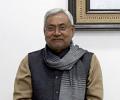
In a letter to Union Finance Minister P Chidambaram, he said the proportional share between the Centre and the state in centrally sponsored schemes should be changed for the least developed states like the one existing for special category states now.

If India is compared to younger nations based on per capita income, you will realise that other countries have prospered far better.
The richest countries are also the cleanest, while the poorest are perceived as the most corrupt.

'For the common man, the economic conditions are not going to get better.'

Making a case for an optimal fiscal stance, the Economic Survey on Friday said growth leads to debt sustainability and not necessarily vice-versa. "This is because debt sustainability depends on the 'Interest Rate Growth Rate Differential' (IRGD) i.e. the difference between the interest rate and the growth rate in an economy. "With the Indian context of potential high growth, the interest rate on debt paid by the Indian government has been less than India's growth rate by norm, not by exception," it said.
Proportion of people living below the poverty line came down from 37.2 per cent in 2004-05 to 21.9 per cent in 2011-12.

'It is building the country's infrastructure, and delivering it very efficiently.'

This will cost the government Rs 3.1 trillion, about 10 per cent of its annual expenditure, and higher than any other spending item in its Budget.

The culture of freebies burdens coming generations with the huge bill for the flagrant abuse of power by preceding governments, points out Virendra Kapoor.

'While consumers have benefited tremendously from rock-bottom telecom tariffs, the telecom sector has been reeling under deep financial stress,' points out Rajan S Mathews, director general, Cellular Operators Association of India.
In the face of sluggish domestic demand and global economic slowdown, Bihar has recorded a staggering growth rate of 11.95 per cent rate annually at constant prices during 11th Five Year Plan, the highest among states.
There are not many countries that have high per capita income.
A study by the Brooking Institution compared per-capita gross domestic product and employment data from 2010 to 2011 in 200 of the world's largest metropolitan areas.

Rajan was speaking in Hyderabad at an interactive session at National Institute of Rural Development and Panchayati Raj.
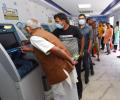
The correlation between withdrawal of deposits and the Covid death rate is stark, reveals Tamal Bandyopadhyay.

China must maintain medium-high growth for the next five years.

But logs in slower rate of growth at 13.7 per cent opposed to 17.1 per cent previous year.
According to a government survey released for 2011-12 on household consumer expenditure, "The poorest 10 per cent of India's rural population had an average monthly per capita expenditure of Rs 503.49 per month."

The hike in the budget is the lowest increment in recent years apparently due to the heavy disruption caused to its economy by the COVID-19, according to the official media.
This year's projected increase in per capita (in dollar terms) is nearly double the average 13 per cent growth between 2003-04 and 2006-07.
India's economic success is powered by these states.

'The Make in India target of getting manufacturing to account for 25% of GDP by 2022 is quite impossible to achieve.' 'As for the role of technology in the average Indian's life, it is still quite basic -- mobile phones and Mars successes notwithstanding,' says T N Ninan.

Though COVID-19 and the subsequent lockdown left a trail of economic devastation on most countries, India can potentially build upon three positive aspects - push in the rural economy, stronger federalism and a huge consumption base, former RBI Governor Duvvuri Subbarao Rao has said. In his foreword on a Telugu book titled "Maandhyam Mungita Desam" (Nation in Recession) authored by Tummala Kishore, he said the challenge for the government in the months and years ahead is clear: to put the economy back on a healthy growth trajectory and ensure that growth is inclusive, with lower income households too enjoying the benefits of rapid growth.

India should focus on how many are living below the poverty line, says Professor of Global Strategy Pankaj Ghemawat.

On the heels of the National Family Health Survey-5 (NFHS-5), which revealed new demographic trajectories including the replacement level of fertility, the government will, on Monday, unveil extensive economic data related to health and the broader economy. New data will relate to per capita spending on health and proportions of the GDP to health spending. Health ministry sources said the NFHS-5 marked some areas for celebration but also some markers that should cause concern.

To propel demand, one should concentrate on indirect taxes and bring down the goods and services tax (GST) rates to a uniform 12 per cent as the Vijay Kelkar panel had recommended, said Ajit Ranade, chief economist at Aditya Birla Group.
The policy lesson from the complex relationship between income growth and well-being is to accelerate growth.

Singapore Grand Prix promoters have ruled out holding their Formula One race without spectators, casting further uncertainty over the likelihood of the September event going ahead. Formula One plans to start its stalled season in July with races behind closed doors in Austria and Britain due to the coronavirus pandemic.
These nations have faced adversities like consequence of poverty, genocide, years of war, lack of natural resources, poor farm management, and limited access to clean water and health care.

As many as nine crore people would be out from the state of abject poverty in next 5 years if India could stop inequality from rising and levy a nominal tax on the super riches to narrow the rich and poor divide, a report said.
'India's output contraction in the previous year was among the worst in the world!'
 © 2026 Rediff.com - Advertise with us - Disclaimer - Privacy Policy - Sitemap - Feedback - About us - Terms of use - Grievances