
Days after completing a $6.5 billion acquisition of Ambuja Cements and ACC, billionaire Gautam Adani said his group has planned to double cement manufacturing capacity and become the most profitable manufacturer in the country. He saw a multifold rise in cement demand in India on the back of record-breaking economic growth and the government's infrastructure creation push, which will give significant margin expansion. In a speech made at an event to mark the completion of the acquisition on September 17, the Adani Group founder and chairman said the ports-to-energy conglomerate has in a single stroke become the second largest cement manufacturer in the country.

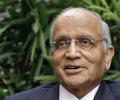
The regulatory burden is the highest on small cars, a key segment of the Indian automobile industry and having a uniform tax structure across all segments of vehicles will not augur well for the sector growth, according to Maruti Suzuki India chairman RC Bhargava. He also said India's economic growth rate could be higher if the manufacturing sector grows fast, which 'unfortunately' has remained a laggard despite the best efforts of the Narendra Modi-led government at the Centre due to implementation gaps at the ground level. "The burden of regulatory changes on the small cars is far higher than the regulatory burden on big cars and that is changing the whole market behaviour.

'The distrust of traditional political parties in Punjab is an advantage for AAP.'
A hotel in 1975, entry into paperboards in 1979, India's dominant cigarette maker, ITC, read the tea - or tobacco - leaves early, leveraged its enterprise strengths and stepped up the diversification agenda to create multiple drivers of growth. Some failed, some faltered, some were transformational, adding steadily to the top line. Now those efforts are making a difference: margins from non-cigarettes - FMCG, hotels, agri, paperboards, paper and packaging - are expanding and profits are kicking in more significantly than ever before.

There's no silver bullet to get rid of poverty, says Alok Sheel.

The only real solution to the jobs crisis, whether in India or abroad, is to direct tech innovation towards job enhancing sectors, and disincentivising job-replacing ones, observes R Jagannathan.

The rising pitch of road shows and long rallies with hectoring pitches seem to have exhausted and numbed the audiences, rather than motivating them to vote for the party, observes Shreekant Sambrani.

Violation of the ban will invite punitive action, including a fine or a jail term or both, detailed under Section 15 of the Environment Protection Act (EPA) and under bylaws of respective municipal corporations, they said. For effective enforcement of the ban, national and state-level control rooms have been set up and special enforcement teams formed to check illegal manufacture, import, stocking, distribution, sale and use of banned SUP items, officials in the ministry said.

'We would like to develop Andhra Pradesh into a logistics hub not only for India, but also for South Asia.'

'From the tiniest to mid-level organisations and even some at the lower end of the large-scale ones would say that computerisation and the extensive documentation and regulatory requirements for GST have made the compliance process worse in many cases.'

By financial year 2024-25, Morgan Stanley expects per capita income to rise 125 per cent to $3,650.

India ranks 83, among 166 countries, in spending on mobile rates

S&P Global Ratings has forecast India's economy to shrink by 5 per cent in the current fiscal. It, however, has projected GDP growth to be 8.5 per cent in 2021-22 and 6.5 per cent in 2022-23.

One third of the world's poor live in India.

Bangladesh might overtake India this year by per capita income in nominal dollars, but it is not yet close to becoming South Asia's economic powerhouse anytime soon, T N Ninan points out.

Recently, The World Bank has come up with the latest figures on the wealthiest countries in the world.

'The digital trust level has drastically gone up due to Covid, not only in tier-I and II cities, but also in tier-III, IV and V geographies,'

While no specific state-oriented sops were rolled out, a strong thread of political wellness ran through the Budget.

Prosus-backed fintech firm PayU is set to acquire India's earliest payment gateway BillDesk in an all-cash transaction of $4.7 billion. This will be the largest acquisition in India's digital payments space. The deal will also give exit to investors General Atlantic, TA Associates, Temasek, Clearstone Ventures, and Visa. The proposed acquisition will help PayU, the payments and fintech business of Prosus which operates in more than 20 markets, become one of the leading online payment providers globally by total payment volume (TPV).
India has been ranked 134th among 189 countries in the World Bank's Doing Business 2014 report.
The poverty ratio was highest in Chhattisgarh at 39.93 per cent.

'Judges have families; they have their future to worry about.' 'In an atmosphere of fear, the judges are constantly under some kind of psychological pressure.' 'I have seen this is happening across the board in the country today.'

The ban on certain single-use plastic (SUP) items kicks in from Friday, with state governments initiating an enforcement campaign to identify and close down units engaging in production, distribution, stocking and sale of such items, officials said. Though several manufacturers have said they are not prepared to implement the ban due to a lack of alternatives, Union Environment Minister Bhupender Yadav had on Tuesday said the government had given enough time to the industry and the general public to prepare for the ban on SUP items and it hopes for everyone's cooperation in implementing it from July 1. Violation of the ban will invite punitive action, including a fine or a jail term or both, detailed under Section 15 of the Environment Protection Act (EPA) and under bylaws of respective municipal corporations, officials in the Union environment ministry said.
Where do Indian workers stand when it comes to per capita income around the world?
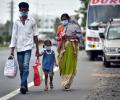
The year 2020 could see the worst global economic fallout since the Great Depression in the 1930s, with over 170 countries likely to experience negative per capita income growth due to the raging coronavirus pandemic, IMF Managing Director Kristalina Georgieva said on Thursday. Georgieva made the remarks during her address on 'Confronting the Crisis: Priorities for the Global Economy' in Washington, DC, ahead of next week's annual spring meeting of the International Monetary Fund and the World Bank.

'China's development is on a different scale from India's. They are very far ahead.' 'I don't think it will be possible in the next 30 years for us to catch them,' says Aakar Patel.

The key risks against a fast recovery would include long delays in business travel resumption, delays in commissioning, etc.

Social changes take a "little time" and sometimes it is easier to bring a law but difficult to persuade society to change with it, the Supreme Court observed on Thursday while deliberating upon the issue relating to the dissolution of marriages.

The European Union's GDP (gross domestic product) at market prices is the highest in the world, with the UK having the second largest share in it.

How should one billion Indians, for whom deprivation has become an inescapable way of life, join us in celebrating 75 years of Independence? And where do we go from here? asks Kalyan Singhal.
High inflation, unemployment, high interest rates and falling GDP per capita are wrecking havoc in economies across the world.

While India is witnessing slowdown, many countries have not yet been able to come off the last decade's financial crisis.

Observing that India's worsening COVID-19 situation and the strict measures to contain it have hit the economy hard, the rating agency said productive capacity has been severely disrupted since the start of the pandemic.

Money allocated for rural India has increased, but expenditure of panchayats is not adequate and inconsistent

Human Development -- a measure of a nation's health, education, and average income -- has declined for two years in a row.

The Raghuram Rajan committee report for evolving a composite development index of states, submitted to the finance ministry today, has a note of dissent from member Shaibal Gupta.
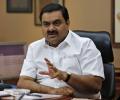
Billionaire Gautam Adani on Monday said his infrastructure conglomerate will invest between $50-70 billion in organic and inorganic growth opportunities across the entire energy value chain over the next decade. Speaking at an industry event, he said the port-to-energy group will invest over $20 billion in renewable energy generation alone. "Over the next decade, we will invest over $20 billion in renewable energy generation.

The Planning Commission in May 2012 had constituted the expert group under the then Prime Minister's Economic Advisory Council Chairman C Rangarajan to review the Tendulkar Committee methodology for estimating poverty, following an uproar over the number of poor in the country.

Consumption of gold is the highest among middle-income households - those with annual income between Rs 2 lakh and Rs 10 lakh - who account for an average of 56 per cent of gold sales over the last five years, according to a nationwide survey conducted by India Gold Policy Centre (IGPC) at the Indian Institute of Management, Ahmedabad (IIM-A). "Per capita consumption is highest among the rich, but total volume still rests with the middle-income group. "With increasing income, there is an increasing propensity to consume gold, although the share of gold in the portfolio does not increase with the same proportion of income," the survey report says.
 © 2026 Rediff.com - Advertise with us - Disclaimer - Privacy Policy - Sitemap - Feedback - About us - Terms of use - Grievances