
Indian stock markets are set to be influenced by developments in US-Iran negotiations, crude oil prices, and foreign investor activity in the upcoming holiday-shortened week, according to market analysts.

An easy, cheesy recipe you must try this monsoon.

It is plain to see that the US senate bill's real objective is to derail India's time-tested strategic partnership with Russia, points out Ambassador M K Bhadrakumar.

One of Odisha's oldest and most cherished sweets is Arisa Pitha.

Indian benchmark indices Sensex and Nifty ended flat on Tuesday, with the Sensex dipping nearly 70 points, as investor sentiment turned cautious ahead of crucial global central bank policy meetings and a significant sell-off in Asian markets.

Analysts predict that the ongoing US-Iran conflict, fluctuations in crude oil prices, and foreign institutional investor (FII) flows will be the primary factors influencing Dalal Street this week, with inflation concerns adding to investor anxiety.

Prime Minister Narendra Modi on Thursday discussed with a group of senior ministers the prevailing global security situation and how to maintain supply chain uninterrupted despite conflicts in different zones, including the Strait of Hormuz, the Black Sea, the Red Sea, and the Gulf of Aden.

'It is not because of the war in West Asia, which began on February 28.' 'Petroleum product prices are already going through the roof. They are bound to have a serious inflationary impact.' 'A country's leadership is tested in trying times. It is here that the current leadership is failing.'

'...as we believe with the adoption of AI, our IT services companies' revenue models will have to undergo a reset, which may in turn impact their potential for earnings growth.'

Heerekayi ennegai is a stuffed curry from Karnataka made with ridge gourd cooked in a masala of peanuts, coconut, jaggery, tamarind and spices.

The Indian Navy successfully recovered and safely disposed of an unexploded missile warhead from the MT Olympic Life crude oil tanker, which had reported an explosion off the coast of Oman and was en route to Kochi. The operation showcased the Navy's expertise in explosive ordnance disposal and its commitment to maritime safety in the Indian Ocean Region.

Indian equity benchmark indices Sensex and Nifty experienced a significant tumble in early trade, with the Sensex tanking nearly 700 points, driven by uncertainty surrounding US-Iran negotiations, a fresh spike in crude oil prices, and persistent foreign fund outflows.

Getting hold of a recipe requires a skill even James Bond cannot master.

A bold cuisine known for its flavours and robust spices, Memoni food comes from the Memon community with roots in Sindh and Kutch.

With Sawan just around the corner, many households are planning meals without onion and garlic. If you're looking to refresh your festive menu, we've got you covered.
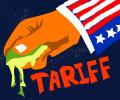
A bipartisan group of US senators has introduced a comprehensive bill imposing extensive sanctions on Russia, with India identified as one of five countries that could incur tariffs for its continued purchase of Russian oil.

Indian benchmark indices Sensex and Nifty experienced a significant slump in early trade, mirroring weak global trends, as escalating tensions in West Asia, particularly a drone attack on the UAE's Barakah nuclear facility, pushed crude oil prices higher. Track Sensex, Nifty50 movement and key market drivers for May 18, 2026.

Indian benchmark equity indices, Sensex and Nifty, opened higher, tracking positive global trends and easing crude oil prices, fueled by hopes of a swift resolution to the West Asia conflict. Track Nifty 50 and BSE Sensex performance and key global triggers.

The Maharashtra government has imposed a one-year ban on the manufacture and sale of "analogue" or non-dairy paneer due to public health concerns and widespread food safety violations. Offenders could face severe penalties, including life imprisonment and hefty fines, for misleading consumers with this lower-nutritional-value substitute.

'Rather than deploying all their money at once, investors should invest gradually.' 'A staggered approach is the better strategy because volatility is likely to persist.'

Indian benchmark indices Sensex and Nifty ended a four-day rally, closing lower on Tuesday following the introduction of a new Closing Auction Session (CAS) for F&O stocks, which has added a layer of volatility and led to an early adjustment in market structure.

This recipe for Basale Marwai Gassi offers a taste of coastal Karnataka by combining fresh clams and Malabar spinach in a spicy, coconut-based curry.

Reliance Industries (RIL) delivered a better-than-expected operational performance in Q1FY27, driven by a recovery in its oil-to-chemicals (O2C) business and robust gains in the telecom (Jio) segment, though its retail arm missed estimates. Analysts highlight the upcoming Jio Platforms IPO and execution in new energy and consumer businesses as key triggers for the stock's future growth.

While choosing a cooking oil, go for a variety with under 4 gm saturated fat in each tablespoon, is free from trans fats and is not a hydrogenated oil, says the American Heart Association.

India's nine core infrastructure sectors recorded a five-month high production growth of 5 per cent in June, primarily boosted by significant increases in the output of cement, electricity, and the newly added iron ore, despite declines in crude oil, natural gas, refinery products, and fertiliser.

Spicy, crunchy, this nutty snack complements both the rainy season and the ongoing sporting carnivals.

TasteAtlas has released its 2025 list of the world's 100 best cuisines, with Italy taking the top spot, followed by Greece and Peru, while India secured the 13th position globally.

A recent SBI Economic Research report indicates that the significant gap between credit and deposit growth, currently over 530 basis points, is likely to persist if geopolitical risks and external supply shocks continue. However, an improvement in deposit growth is anticipated with inflows into foreign currency non-resident (bank) deposits.

Reliance Industries Ltd reported a 22 per cent year-on-year decline in consolidated net profit for the June quarter, primarily because the previous year's earnings were inflated by a one-time gain from the sale of its stake in Asian Paints.

AAP chief Arvind Kejriwal is leading a march to the Prime Minister's residence to submit a petition with two lakh signatures against E20 petrol. He is demanding consumer choice, lower E20 prices, and transparency regarding studies supporting the fuel. The government defends the E20 programme, citing energy security and no evidence of vehicle harm.

The US Central Command announced a new wave of strikes against Iranian military infrastructure, aiming to degrade Tehran's ability to threaten civilian mariners and commercial vessels. This comes as US President Donald Trump described the situation as a 'skirmish' and suggested Iran wants to 'make a deal,' while Iran's Foreign Minister warned of a 'decisive response' to any aggression.

The Reserve Bank of India (RBI) maintained its key policy rates for the fourth consecutive time, keeping the repo rate at 5.25 per cent, while the benchmark BSE Sensex closed 152 points higher in a volatile session, recovering from an intraday dip.
Analysts predict that the US-Iran geopolitical conflict, upcoming quarterly earnings announcements, and fluctuations in crude oil prices will be the primary drivers of investor sentiment in the Indian equity markets.

Indian benchmark equity indices, Sensex and Nifty, surged over 1 per cent, driven by a significant correction in crude oil prices and a global market rally, fueled by improving sentiment surrounding potential US-Iran negotiations.

It, however, conceded that 20 per cent blending of ethanol with petrol leads to 3-5 per cent lower mileage in vehicles than conventional petrol, but said the blend offers a significantly higher octane rating, superior anti-knock properties, faster combustion, better pickup, smoother acceleration, and cleaner engine operation.

Gold and silver are expected to remain volatile with a corrective bias as investors assess the latest flare-up in the US-Iran conflict, movements in crude oil prices, and inflation data, which could reshape expectations for global interest rates, according to analysts.

The harsh truth is that the US is no longer a reliable partner, cautions Ramesh Menon.

'Every year we import approximately $70 billion worth of gold -- closer to $72 billion in 2025-2026, an all-time record.' 'There is no parallel for this anywhere in the world. And this love for gold will not disappear overnight.'
Reliance Industries Ltd reported a 22 per cent year-on-year decline in consolidated net profit for the June quarter, primarily because the previous year's earnings were inflated by a one-time gain from the sale of its stake in Asian Paints.

These yummy shallow fried tikkis, made of soya nuggets and seaweed, are so easy and simple to prepare. They are irresistible as starter or party snacks.
