
In a historic meeting on non-communicable diseases, the international community called on the food and beverages industry as well as the tobacco and pharmaceutical industry to be held accountable for putting profit ahead of public health.
The top court was hearing a PIL of public charitable trust 3S and Our Health Society seeking directions to the Centre, states and Union territories to implement mandatory front-of-package warning labels (FOPL) on packaged foods.

The Maharashtra Public Health Department has issued a directive making healthy foods and beverages mandatory in all government canteens and official events. The order aims to reduce the consumption of ultra-processed foods and combat the rising incidence of non-communicable diseases by promoting a menu designed with ICMR-NIN and FSSAI guidelines.

Young adults show alarming NCD trends, with high rates of obesity, prediabetes, and abnormal cholesterol levels.

The CEO of the National Health Authority, Sunil Kumar Barnwal, highlighted BRICS nations' shared aspiration for connected, patient-centric, and resilient healthcare systems through digital health infrastructure and responsible AI. Discussions at the 16th BRICS Health Ministers' meeting focused on overcoming challenges like limited interoperability and workforce constraints, with countries like Brazil and Indonesia sharing successful digital health initiatives.

Early and premature menopause can heighten risks of cardiovascular disease, osteoporosis, metabolic disorders, cognitive decline, depression and early death and are major public health concerns. The conditions also seriously affect a woman's quality of life.
Union Health Secretary Punya Salila Srivastava highlighted the strong health cooperation within BRICS, emphasising the critical role of digital health and artificial intelligence in ensuring continuity of care. Speaking at the 16th BRICS Health Ministers' meeting, she noted shared challenges among member nations and showcased India's advancements in digital health infrastructure and AI strategy.

The Malankara Orthodox Church opposes the Kerala government's decision to extend bar timings, fearing it will negatively impact the youth. The government defends the decision as a tourism-boosting measure already in place in tourist areas.
India's domestic pharmaceutical market recorded its highest value growth in five quarters during Q4 FY26, driven primarily by pricing and an early indication of volume recovery, with a significant structural shift towards chronic and sub-chronic therapies.

PMK leader Anbumani Ramadoss has urged Prime Minister Narendra Modi to implement a legislative ban on the sale of cigarettes to individuals born on or after January 1, 2009, aiming to create a smoke-free generation in India.

Over the past year, the sale of injectable GLP-1 agonists (used to treat type 2 diabetes and obesity) such as Mounjaro, Wegovy and Ozempic have surged a whopping 218 per cent.

The Budget reframes healthcare as a strategic national capability, backing biopharma innovation, workforce expansion and technology-led governance to power India's next growth phase.

It advises about display of boards in various workplaces such as lobbies, canteens, cafeterias, meeting rooms etc., to raise awareness on harmful consumption of hidden fats and excess sugar in various food items.
The Union health ministry is urging all ministries and departments to display 'oil and sugar boards' in common areas to raise awareness about hidden fats and sugars in everyday foods and promote healthier lifestyles.

Experts said that earmarking of funds for public health at par with national security indicates a key policy shift.

University College London has recorded a 19 per cent and 26 per cent rise in undergraduate and postgraduate students from India for the 2026 term, indicating a preference for the UK over the US at a time when Indian students are facing visa uncertainties in US-based institutions.

The government on Sunday gave a strong push to upgradation and expansion of healthcare infrastructure, medical education and pharma sector with the Union Budget 2026-27 announcing a slew of steps, including those aimed at making India a global hub for allied healthcare professionals and biopharma manufacturing.

Biocon aims to become the world's leading insulin company, capitalising on larger pharmaceutical rivals' strategic shift towards newer, high-margin GLP-1 diabetes therapies. The company plans to expand its insulin presence across 80 markets, focusing on value maximisation and addressing the indispensable need for insulin, particularly for Type-1 and late-stage Type-2 diabetics.
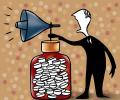
For decades, multinational pharmaceutical companies and Indian drugmakers worked in ways that supported each other: MNCs brought innovation and brands, while Indian companies built scale through generics and cost efficiency. There was an important overlap - generic drugs - but this is shrinking fast. And the consequences are reshaping India's gigantic pharmaceutical market.

The Indian Ministry of Health has banned all forms of tobacco and alcohol promotions, including surrogate advertisements, during the IPL.

Even by conservative assumptions that 5 to 10 per cent of infected individuals develop long Covid, India today may be home to 50 to 100 million infected individuals -- many silently coping with breathlessness, fatigue, palpitations, brain fog, or unexplained clotting tendencies.

Parliament introduces a new 'Health Menu' featuring millet-based dishes, salads, and lean protein options to promote healthier eating habits among lawmakers, officials, and visitors.

Of these 212 million Indians, 133 million have untreated diabetes. Undiagnosed diabetes has been linked with complications such as diabetic retinopathy which can cause vision loss and blindness.
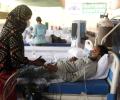
The Indian Council of Medical Research is conducting three different studies to ascertain the facts regarding rising cases of cardiac arrest after the pandemic, Mandaviya said in response to a question in the Lok Sabha.

'10 million Indians are currently living with dementia, and the number is expected to double by 2036.'

On average, at least one in three Indians today were pre-diabetic, two in three were pre-hypertensive and one in 10 were depressed, the 4th edition of Apollo Hospitals' flagship Health of Nation Report on World Health Day 2024, said.

Enhertu currently costs around Rs 1.6 lakh per 100-milligram injection.
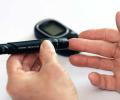
India on average lost 44.85 years of a lifetime due to Type 1 diabetes in 2021.
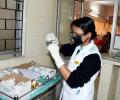
Amazon India has launched Amazon Diagnostics, an at-home healthcare service that allows customers to book lab tests, schedule appointments and receive digital reports directly via the Amazon app. Initially available in six cities-Bengaluru, Delhi, Gurgaon, Noida, Mumbai and Hyderabad-the service covers more than 450 PIN codes and offers access to over 800 diagnostic tests.

The Hyderabad-based National Institute of Nutrition under the apex health research body on Wednesday released revised 'Dietary Guidelines for Indians' to meet the requirements of essential nutrients and prevent non-communicable diseases.

The revised Dietary Guidelines for Indians released by the National Institute of Nutrition explains how prolonged intake of large amounts of protein powders or consumption of high protein concentrate can damage the body.
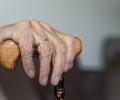
Around 7.4 per cent of Indians aged 60 and above are affected by dementia. This number is expected to rise from the current 8.8 million to 17 million by 2036, marking a 97 per cent increase.

The move to expand the health insurance scheme's coverage comes at a time when several hospitals have complained of delays in reimbursement related to the procedures performed under the scheme.

An increase in government spending on the healthcare sector - from the current 1 per cent to 2.5-3 per cent of GDP - as envisaged in the National Health Policy 2017 could reduce out-of-pocket expenditures, as per the Economic Survey 2020-21. The rise in public spending can lead to a reduction in expenditures from 65 per cent to 30 per cent of overall healthcare spend, it noted. The Economic Survey said that for the country to effectively respond to future pandemics, the country's health infrastructure needs to be agile. Given its potential to provide healthcare access in remote areas, telemedicine needs to be harnessed to the fullest by especially investing in internet connectivity and health infrastructure, it added.
Physical inactivity causes about six to 10 per cent of major non-communicable diseases, including coronary heart disease and type 2 diabetes, and kills around 5.3 million people a year, a new study has claimed.
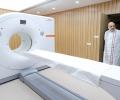
Do we have enough trained oncologists and medical professionals in India to man these over 4,500 beds in the public sector?

Life expectancy at birth improved from 59.7 years in 1990 to 70.3 years in 2016 for women.
The dichotomy between richer and poorer states is largely in consonance with the diversity in state level disease burden in the country.

The preventive aspect of cancer is strengthened under comprehensive primary healthcare through the Ayushman Bharat Health and Wellness Centre scheme by the promotion of wellness activities and targeted communication at the community level.

'iNCOVACC' is priced at Rs 800 for private markets and at Rs 325 for supplies to the government of India and state governments.
