
The 2008 Mumbai terror attack in Mumbai exposed the lack of coordination among law enforcement agencies despite there being intelligence of an attack.

A BSF constable was arrested for robbing a Delhi jewellery store with a toy gun after allegedly being inspired by crime shows and incurring losses in online gambling.

The government has allowed the Enforcement Directorate to share information about economic offenders with 15 more agencies, including SFIO, CCI and NIA, a move that will expedite nailing of law-breakers. The finance ministry notified changes to the Prevention of Money Laundering Act (PMLA), 2002, on November 22. Through the notification, the Enforcement Directorate (ED), which deals primarily with cases of money laundering and violations of foreign exchange laws, would be able to share data with a total of 25 agencies, including the 10 specified earlier.

"Had corona (COVID-19) not been there, the prime minister would have dedicated NATGRID to the country. I am hopeful that the prime minister will dedicate NATGRID to the country in some time," Union home minister Amit Shah said during the 51st Foundation Day event of the Bureau of Police Research and Development (BPRD) here on September 4.

According to an order issued by the Central Board of Direct Taxes, the department will share 'bulk information', starting from Permanent Account Number (PAN) to the taxpayer's name and all the individual data that it captures like father's name, gender, date of birth, photograph and signature or thumb impression.

The Right to Information Act, 2005 has been amended to include NIA, Natgrid and CBI in its second schedule which exempts "intelligence and security organisation established by the central government" out of the purview of the Act.
The National Intelligence Grid, a dream project of Home Minister P Chidambaram for an effective anti-terror system, appears to be materialising 18 months after he conceptualised it with the Cabinet Committee on Security, headed by Prime Minister Manmohan Singh, on Monday gave it an "in-principle" approval.
There has been a dire need for a full-fledged terror database in India, and going by the Cabinet Committee on Security meeting on Monday, which was chaired by the prime minister, it appears that the much awaited National Intelligence Grid or NATGRID is finally underway.

Intelligence sharing is fine, but India needs to protect personal privacy.
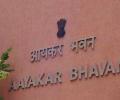
The income tax department will share PAN and bank account details of any entity with 10 investigative and intelligence agencies, including the CBI and NIA, under the integrated counter-terrorism platform NATGRID, according to an official order.
The three terror incidents that took place in Patna, Bangalore and Bodh Gaya this year have been solved, Union Home Minister Sushilkumar Shinde said on Thursday as he made it clear that government will deal with terrorism with an "iron fist".

Sources within the Home Ministry say the NATGRID, an intelligence database, might undergo a complete overhaul so as to ensure better coordination between the security agencies, reports Vicky Nanjappa.

Shah said the BJP-led government had only brought an amendment to the law which was enacted by thr Congress and whose provisions were later made stringent.

'The government must covertly eliminate the leaders of terrorist organisations abroad so as to eliminate the problem at its roots,' recommends Brigadier Gurmeet Kanwal (retd).

Private detectives forge relations with policemen and unsuspecting people in telecom companies, as they have access to call data, says Sahil Makkar

Vicky Nanjappa on the challenges that the new Home minister faces

There are unprecedented political implications of identification based on 'biological attributes of an individual', such as employed by Aadhaar, warns Gopal Krishna.

India does not have a stringent privacy or data protection Act.

Isn't National Intelligence Grid and UIDAI engineered by vested interests, asks Gopal Krishna.

India's snooping programme is officially underway and multiple agencies will use internet surveillance system Netra and National Cyber Coordination Centre to keep a tab on suspicious activities on the internet, says Vicky Nanjappa.
 © 2026 Rediff.com - Advertise with us - Disclaimer - Privacy Policy - Sitemap - Feedback - About us - Terms of use - Grievances