Might discuss Ordinance route tomorrow, note circulated among ministers listing discussion topics.

When KV Thomas took over as minister of state for food and consumer affairs (independent charge) on January 19, 2011, he was tasked with taking forward one single, important objective: expedite the implementation of the National Food Security Bill.

Implementing the Food Ordinance is the bigger challenge and there are many provisions of the National Food Security Bill which need to be expanded and strengthened.

The socio-economic and caste census 2011 painted a grim picture of rural India, indicating that one out of three families living in villages is landless and depends on manual labour for livelihood.

According to government's estimates, there are around 110 million APL families in the country, who get 11-25 kg of foodgrain a month.
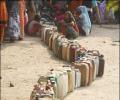
The research found that 50% of the people were receiving either nothing or less cash than they were entitled in lieu of the subsidised grains that were stopped under the pilots starting from September 2015 till May 2016.
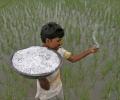
Chhattisgarh, popularly known as the rice bowl of central India, is witnessing politics over the foodgrain with ruling the Bharatiya Janata Party and main opposition the Congress trying to attract voters through it.

Flagging the challenge of raising foodgrain production, Prime Minister Manmohan Singh on Friday promised all assistance to states for improving agricultural growth.


In a strong message to Pakistan, Prime Minister Manmohan Singh on Thursday said anti-India activities emanating from there will have to stop for relations to improve and asserted that all steps will be taken to prevent "dastardly" acts like the recent killing of jawans on the LoC.

PDS: Smart ration cards need to be smarter

Prime Minister Narendra Modi has managed to pull off what was unimaginable a year back -- adopting a much-needed centre-left approach, says Devanik Saha.

Worried about the adverse impact that price rise could cause to Congress' prospects in Lok Sabha polls, Rahul Gandhi unveiled quick fix policy prescriptions for 12 party-ruled states including reform in PDS and giving farmers a wider choice to sell vegetables and fruits.

The stock and foreign exchange markets have had a negative reaction to the government's biggest social security programme, the National Food Security Bill. Food minister K V Thomas questions the rationale behind such a response

A programme that endeavours to graduate the poorest people could have seminal implications for Prime Minister Narendra Modi's government.

Experts say the Bill should include higher-value food items than just cereals
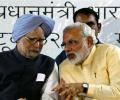
NDA under Mr Modi is as focused on the rural poor with doles and hand-outs as the UPA under Dr Singh was.

According to the final draft of the negotiating text circulated by WTO Director-General Roberto Azevedo among trade ministers of the 159 member countries on Wednesday night, on public stockholding for food security purposes, a developing country like India can provide subsidies for farm support even if those exceed the permissible 10 per cent cap.

Attacking Prime Minister Manmohan Singh over the proposed Food Security Bill, Gujarat Chief Minister Narendra Modi said the bill, in its current form, will push the country toward "malnutrition".
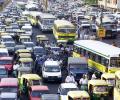
The Supreme Court imposed a green tax on trucks destined for other states but wanting to take a shorter route through Delhi.

The savings would be better spent and might actually reach the poor, says Rahul Khullar.
The amendment Act provides for the elimination of the exemption as it relates to compensation and resettlement and rehabilitation of families.

'These people are living on the edge of starvation and governments need to show much greater compassion towards them.'

The obvious temptation for Mr Jaitley would be to achieve a better fiscal deficit figure than what he had promised in July.

PM extended some old schemes and finally said yes to one that was legally mandated for past 2 years.

There is no foodgrain shortage in the country as our total storage capacity is more than 81 million tonnes, while the public distribution system requirement is 61 million tonnes, says Ram Vilas Paswan.

A large chunk of the Rs 8.8 lakh crore of investments the Patnaik government had attracted is in uncertain territory.

Abhishek Singhania left a career at PwC to work in a food security project as a research fellow.
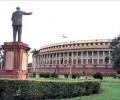
From 1952 to 1967, each of the three Lok Sabhas sat for an average of 600 days and more than 3,700 hours. In comparison, the 15th Lok Sabha -- from 2009 till 2013 -- has met for just 345 days and 1,331 hours, says Shreya Singh

'Any new technology, either before or soon after its release, will face severe criticism by one or the other segment of society. It is only after seeing the benefits of new technology for themselves that our farmers accept it.' 'The arable land in India is not increasing and currently hovers at around 140, 145 million hectares.' 'Today, Indian agriculture has to work towards achieving nutritional security.'

The Manmohan Singh government's rush to pass the Food Security Bill reflects extreme paucity of logic and action, says Neeta Kolhatkar
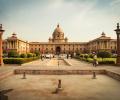
New Delhi bureaucrats, accustomed to leisurely lunches, golf in the afternoon and long weekends, have been shaken out of their somnolence, say authors. Fear and suspicion hang heavy over the red-sands.

Only three percent of Indians pay income tax; our tax-GDP ratio is among the lowest in the world. This must change. Our elites must realise that India's poverty has damaging consequences for them, and that they can help decrease it. The food security bill, with all its limitations, will hopefully contribute to generating such awareness, says Praful Bidwai.
Who are the men the prime minister relies on to execute his impressive agenda?
 © 2026 Rediff.com - Advertise with us - Disclaimer - Privacy Policy - Sitemap - Feedback - About us - Terms of use - Grievances