
Micro, small and medium enterprises (MSMEs) have expressed significant concerns regarding the labour ministry's recent clarifications on labour codes, citing ambiguity in wage calculation and implementation, which they argue creates interpretational and operational challenges for employers.

Several non-banking financial companies (NBFCs) are observing an increase in early-stage delinquencies within their micro, small and medium enterprises (MSME) loan portfolios, primarily driven by supply chain disruptions and escalating raw material costs exacerbated by the ongoing conflict in West Asia.
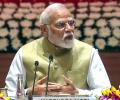
Prime Minister Narendra Modi, in his 'Mann Ki Baat' broadcast, highlighted India's recent achievements in self-reliance, including the maiden flight of the made-in-India C-295 aircraft and the induction of indigenous naval ships. He also lauded the global participation in International Yoga Day and India's success at the World Yoga Asana Championship, alongside Nalanda University's revival of the 'Shastrarth' tradition.

'You have seen the retrenchments by big corporates in the IT industry because they are not getting enough offers.' 'MSMEs in the manufacturing sector are really struggling. They do not know what to do. They are not able to predict what will happen tomorrow.'

For MSMEs the transition could mean higher wage bills and tougher compliance -- unless strong handholding follows reports Auhona Mukherjee.
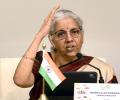
Union Finance Minister Nirmala Sitharaman has urged an increased focus on '3Fs'-fuel, fertiliser, and forex-to maintain India's economic resilience amidst the West Asia crisis, while also criticising those who spread pessimism.

Prime Minister Narendra Modi announced that the India-UK Comprehensive Economic and Trade Agreement (CETA) will come into effect on July 15, 2026, anticipating a significant boost to bilateral trade and investment.
As India marks a decade of the Goods and Services Tax (GST), the focus is shifting towards enhancing efficiency through artificial intelligence, data sharing, and process simplification. The reform, which unified India's indirect tax system, has significantly broadened the tax base and boosted revenues, with future plans including a streamlined two-tier rate structure and continued technological integration to reduce compliance costs and combat evasion.

Lending is no longer just about what you've done. It is about how you manage money over time, says Mohit Jain, Co-founder, Finfinity.

Prime Minister Narendra Modi on Sunday used two major public engagements in Kolkata to outline a broader vision for India's future -- one rooted in inner balance and collective well-being through yoga, and the other in national self-reliance and maritime strength.
The India-Oman free trade agreement, operationalised on June 1, is set to create significant export opportunities for India's labour-intensive and value-added sectors, including textiles, gems and jewellery, and marine products, while also strengthening energy security.

Retail giant Walmart has announced that India has become one of its fastest-growing sourcing hubs globally, with the company having procured over $40 billion worth of goods from the country. This initiative aims to expand supplier capabilities, improve compliance standards, and help Indian manufacturers scale exports worldwide.
Commerce and Industry Minister Piyush Goyal announced that a US team is expected to visit India next month for trade talks, following an earlier Indian delegation's visit to Washington, DC, in April to finalise an interim pact and advance negotiations for a broader bilateral trade agreement.

Uttar Pradesh Chief Minister Yogi Adityanath announced that the state has secured investment proposals worth approximately Rs 50 trillion over the past nine years, attributing this economic revival to the enforcement of the rule of law and strategic policy changes. He affirmed UP's trajectory towards becoming a $1 trillion economy by 2029-30.

Prime Minister Narendra Modi has urged states to balance the opportunities presented by artificial intelligence with the need to safeguard against social challenges like cyber fraud and drug abuse. He also warned of the risks posed by El Nino conditions, calling for stronger water conservation measures and emphasising the collective resolve towards a 'Viksit Bharat'.

'Unfortunately, today most ministers are busy with either election duty or praising duty. They are not interested in serving duty.' 'Ministers have become relaxed like retired people still holding onto jobs.' 'Look at how the NEET paper leaked. But there is no accountability.' 'After 12 years, they have become saturated. They are short of ideas.'

State Bank of India Chairman C S Setty has expressed support for a 'pause' in policy rates by the Reserve Bank of India's monetary policy committee, believing it will help stabilise conditions and support economic growth. He also urged investors to look beyond short-term equity market movements and focus on India's structural transformation, driven by reforms and digital infrastructure.

Union Finance Minister Nirmala Sitharaman has warned that the ongoing West Asia crisis is not merely a geopolitical issue but will directly lead to higher fuel costs for common people and businesses, impacting shipping, input availability, and export orders.
Loans to micro, small and medium enterprises (MSMEs) in India saw moderated growth in April 2026, with early signs of stress emerging among micro borrowers and manufacturers, according to a report by credit bureau CRIF High Mark. The slowdown is attributed to potential impacts of global uncertainty.

The proposed facility seeks to simplify and speed up PF withdrawals by allowing Employees' Provident Fund Organisation (EPFO) subscribers to access up to 75 per cent of their balance through ATMs and UPI-based systems, while retaining at least 25 per cent in their accounts.

'...the enormous responsibility and faith the youth has put on his shoulders, that he is going to solve their problems.'

Adoption of Artificial Intelligence (AI) in India's 64 million Micro, Small and Medium Enterprises (MSMEs) alone could unlock over $500 billion in economic value, but the country must pivot from an "adopt-first" to an "invent-first" mindset to realise this potential, according to a new report.

'The situation globally is quite challenging, but we have the confidence and courage of conviction that we will come out winners even in this challenging time.'

The Confederation of Indian Industry (CII) has proposed a 20-point policy agenda to the finance ministry, including a conflict-linked emergency credit line guarantee scheme and tax rationalisation on energy inputs, to support MSMEs, exporters, and energy-intensive industries affected by the ongoing West Asia war.

'More than becoming a unicorn, what truly satisfies us is seeing small businesses grow from Rs 10,000 a month to Rs 20 lakh after joining our platform.'

India and New Zealand have signed a comprehensive Free Trade Agreement (FTA) aimed at significantly boosting bilateral commerce and investments, providing duty-free access for 100 per cent of India's exports to New Zealand and securing duty-free inputs for India's manufacturing sector.
A government mandate requiring central public sector enterprises to use the Trade Receivables Discounting System (TReDS) for settling small business invoices is expected to significantly increase volumes on these platforms.

The Confederation of Indian Industry (CII) has urged the Indian government to gradually restore the Rs 10-per-litre cut in special additional excise duty on petrol and diesel over six to nine months. This move aims to relieve pressure on government finances as crude oil prices stabilise, without significantly impacting consumer sentiment.

West Bengal Governor RN Ravi has called for collective efforts to restore the state's past glory, highlighting concerns over economic and educational indicators. His remarks coincided with Chief Minister Mamata Banerjee criticising him for allegedly 'abusing' her instead of extending New Year greetings.

Vice President C P Radhakrishnan has championed the use of artificial intelligence for good governance, highlighting its potential to improve government services and build an inclusive and efficient India.

The gems and jewellery industry anticipates challenging times following the government's decision to increase gold import duty to 15 per cent, a move that exporters warn could fuel the grey market and heighten smuggling risks.
India's micro, small and medium enterprises (MSMEs) - which contribute over 45 per cent to outbound shipments - are facing a major disruption following the United States (US) decision to impose 50 per cent additional tariffs on the country's exports. MSME industry bodies have raised an alarm over the deep impact, seeking immediate government intervention.
The Comptroller and Auditor General of India (CAG) has launched an integrated audit across 32 states and Union Territories to assess the ease of doing business for the micro, small and medium enterprise (MSME) sector.

The Central Board of Indirect Taxes and Customs (CBIC) has eliminated the Rs 10 lakh value cap per consignment for courier-based commercial exports, effective April 1, aiming to significantly boost e-commerce shipments, particularly for MSMEs and artisans.

The Indian government is planning to develop an unmanned combat search and rescue aircraft for the Indian Air Force, designed to operate autonomously and in challenging terrains.

The Jan Vishwas (Amendment of Provisions) Bill, 2026, has been passed by the Indian Parliament, decriminalising minor offences across 79 central laws to improve the business environment and reduce harassment. Ministers highlight the bill's role in promoting trust-based governance and ease of doing business.

Haryana Chief Minister Nayab Singh Saini criticises the AAP-led Punjab government for political instability and lack of industrial development, while promoting Haryana's investor-friendly policies and industrial growth initiatives.

Under the TMC, Bengal has seen expansion of welfare, but not big-ticket private investment.

The Bangalore Chamber of Industry and Commerce (BCIC) has welcomed the Karnataka Budget 2026-27, highlighting its focus on economic growth, support for MSMEs, and infrastructure development. Industry leaders have expressed optimism about the budget's potential to boost manufacturing, create jobs, and drive innovation in the state.

'Workers are the people who create all the wealth in this country. How can you call them anti-national?'
