
The UN human rights office expressed concern over mass detentions during protests in Delhi on Saturday, urging India to respect peaceful assembly rights and release detainees. India rejected these concerns as "misplaced" and "unwarranted interference." The protests, organised by the Gen Z-led Cockroach Janta Party (CJP), demanded electoral reforms and the resignation of CEC Gyanesh Kumar over alleged voter list manipulation, which the Election Commission and BJP deny.

The Supreme Court on Sunday issued a notice to the Centre and passed several directions regarding metro and train services, internet access, and peaceful assembly in Delhi, following a plea for contempt proceedings over alleged violations during the CJP protest. The court emphasised the protection of fundamental rights and the need for lawful conduct during protests.

India firmly dismissed the concerns raised by the United Nations human rights body on Sunday regarding the security measures implemented ahead of the proposed Cockroach Janta Party demonstration in Delhi, branding the remarks as "unwarranted" and an "unacceptable interference" in domestic matters.

Protesters associated with the Cockroach Janta Party (CJP) in Delhi, many of whom participated in a July demonstration, adapted their strategies for a recent protest on Saturday. They used digital artwork, prepared for potential police action like lathi charges, and advised newcomers on safety measures such as carrying multiple masks and goggles. The protest, called to demand the resignation of Chief Election Commissioner Gyanesh Kumar over alleged voter-list manipulation, faced heavy security deployment, barricades, and mass detentions, preventing a large-scale gathering at Jantar Mantar.

The Supreme Court on Sunday directed that people gathering peacefully should not be illegally detained and issued a notice to the Centre regarding alleged violations of its earlier order during a CJP protest in Delhi. The court also asked the Solicitor General to ensure normal metro services and no internet disruption, while addressing concerns about widespread detentions and transport closures.

A 19-year-old man, Alexandros Paporakis, was arrested in Illinois for allegedly plotting a mass shooting targeting a Hindu place of worship. Authorities recovered a manifesto with white supremacist ideologies and references to violence against people of Indian descent, along with weapons and tactical gear. The plot was uncovered after Paporakis shared concerning electronic communications, leading to swift action by law enforcement.

India has strongly asserted that human rights should not be weaponised for political pressure or selective targeting of nations, pushing back against attempts to negatively characterise the world's largest democracy based on unverified allegations and incomplete statistics.

Nearly 200 protesters, including prominent activists, were detained at Jantar Mantar during demonstrations demanding the resignation of Chief Election Commissioner Gyanesh Kumar. Delhi Police registered cases under the new Bharatiya Nyaya Sanhita for disobedience and obstruction, following prohibitory orders in the New Delhi district. The protests stem from alleged irregularities in electoral roll revisions, prompting significant police deployment and ongoing legal actions.

The Supreme Court has intervened in the ongoing protests against the Chief Election Commissioner, seeking responses from the Centre and other parties while emphasizing that protest sites cannot be occupied indefinitely, impacting local businesses.

India has expressed deep concern over reports of an alleged plot to carry out a mass shooting at a Hindu temple in Illinois, US. A teenager was arrested on October 11 in connection with the plot, which reportedly involved white supremacist ideology and threats against people of Indian origin. India has urged US authorities to investigate thoroughly and take measures to prevent such hate-motivated violence.

Delhi Police launched a massive crackdown, detaining Cockroach Janata Party (CJP) leader Abhijeet Dipke, YouTuber Dhruv Rathee, and nearly 500 protesters who attempted to reach Jantar Mantar for a demonstration against Chief Election Commissioner Gyanesh Kumar. The Opposition, including AAP and Congress, denounced the situation as 'worse than the Emergency'.

Cockroach Janta Party (CJP) leader Abhijeet Dipke and AISA chief Neha Bora were preventively detained by Delhi Police on Friday, preventing their participation in the 'Lehra Do Tiranga' protests amidst heightened security in the national capital.

AISA national president Neha Bora was released at the Narela Industrial Area police station after being picked up during the organisation's protest march towards Jantar Mantar, with AISA members alleging procedural violations during her detention.

The Cockroach Janata Party (CJP), which on Monday attempted to march to Parliament to register its protest on the NEET exam leak, said that its founder Abhijeet Dipke had been "picked up" by Delhi Police as protests intensified.

The Supreme Court has clarified that 'criminal antecedents' for NEET paper leak protesters refer only to grave and heinous offences, allowing state governments to withdraw FIRs against students not involved in such serious crimes. This comes after the Centre's commitment to not pursue cases against most protesting students.

'Let the world know that India's Gen Z has now moved out of their social media world and is ready to face the lathis, the tear gas shells or the spiked-dandas of cops.'

A Sri Lankan court has imposed an overseas travel ban on former president Gotabaya Rajapaksa and two former military officers in connection with ongoing investigations into the 2019 Easter Sunday attacks. The ban was issued after the Criminal Investigation Department (CID) raised concerns that their flight could hamper the probe into the coordinated suicide bombings that killed 270 people. The current government reopened the investigation in late 2024, alleging political influence led to an earlier cover-up.

Sri Lanka commemorated the 7th anniversary of the Easter blasts, with Archbishop of Colombo Malcolm Cardinal Ranjith urging authorities to investigate individuals directly or indirectly involved in the deadly attacks, irrespective of their status.

Iran is set to witness more brutality as the administration has decided to execute its first protester on Wednesday amid mass arrests of anti-regime protesters, New York Post reported, citing human rights groups.

Addressing a massive Martyrs' Day rally in Kolkata, Banerjee gave a clarion call to defeat the Bharatiya Janata Party in the 2026 assembly elections and eventually oust it from power at the Centre, declaring, "If this linguistic profiling doesn't stop, our resistance movement will reach New Delhi."
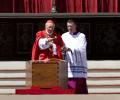
The funeral mass of Pope Francis, who passed away on Monday, concluded at St Peter's Square on Saturday with the bells of St Peter's Basilica tolling to signal the end of the 2 hours and 10 minutes long service.

Outlining each visa adjudication as a 'national security decision', the United States has asked applicants to share their social media usernames or handles of each platform they have used in the last five years.
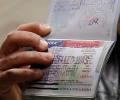
Outlining each visa adjudication as a "national security decision", the US has asked applicants to share their social media usernames or handles of each platform they have used in the last five years.

"I am not participating in this matter," Justice Shantanagoudar said at the outset without citing any specific reason for his recusal. The bench said the plea would be heard on Thursday.

The UN report stated that the allegations of sexual and gender-based violence, including of rape, "appear credible and would in themselves amount to acts of torture or other forms of ill-treatment."
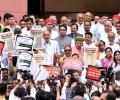
While India today is vastly different from the India of 1975, the need for vigilance against authoritarianism remains the same, asserts Utkarsh Mishra.

Iltija, daughter of the former CM, had filed a habeas corpus (bring the person) petition in the apex court challenging the government's order issued on February 5 for invoking the Public Safety Act provision against Mehbooba Mufti to keep her in detention.
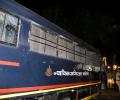
The United States has extradited Pakistani-Canadian Tahawwur Hussain Rana to India to face charges for his alleged involvement in the 2008 Mumbai terrorist attacks. Rana, 64, was convicted in the US in 2011 for providing material support to Lashkar-e-Taiba, the Pakistani militant group responsible for the Mumbai attacks. The US Department of State said it has long supported India's efforts to bring those responsible for the attacks to justice and that the extradition is a critical step towards seeking justice for the victims. Rana's extradition comes after the US Supreme Court denied his last-ditch attempt to evade extradition. He will now face justice in India for his role in the attacks which killed 166 people, including six Americans.
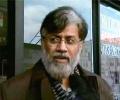
The hugely significant development comes just days after Rana's last-resort attempt to evade extradition to India failed after the US Supreme Court justices denied his application, moving him closer to being handed over to Indian authorities to face justice in the dastardly attacks.
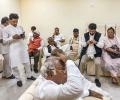
As Congress president Sonia Gandhi appeared before the Enforcement Directorate (ED), party MPs and Congress Working Committee (CWC) members 'courted mass arrest' outside the All India Congress Committee headquarters in New Delhi on Thursday in a show of collective solidarity with her.

A bench of the Bangladesh High Court ordered the release on bail of Hindu leader Chinmoy Krishna Das, who was arrested in November on charges of defaming the country's national flag. The two-judge bench granted the bail after a final hearing on their previous rule asking authorities why he should not be granted bail. Das, a former ISKCON leader, was arrested at Dhaka's Hazrat Shahjalal International Airport on November 25.
Tahawwur Rana, accused in the 2008 Mumbai terror attacks, has been extradited to India after the US Supreme Court denied his last-ditch effort to avoid being sent back. Rana, a close associate of David Coleman Headley, another key conspirator in the attacks, was expected to be extradited "shortly" after his legal appeals failed. This decision comes after a multi-agency team from India traveled to the US to complete all necessary paperwork and legalities with the US authorities. Rana's extradition marks a significant development in the pursuit of justice for the victims of the Mumbai attacks.

Amid this unrest came the verdict of the Allahabad high court on June 12, 1975 that found Gandhi guilty over discrepancies in the electoral campaign, which led to the Emergency on the night of June 25.

In her plea, Sara Abdullah Pilot has said that exercise of powers by authorities under the CrPC to detain individuals, including political leaders, was 'clearly mala fide to ensure that the opposition to the abrogation of Article 370 of the Constitution is silenced'.
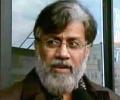
Tahawwur Rana, accused in the 2008 Mumbai terror attacks, has renewed his plea for a stay on his extradition to India, citing health concerns and alleging potential torture. He argues that his extradition would violate US law and the UN Convention Against Torture. Rana's lawyers claim he is at risk of being subjected to torture in Indian detention facilities due to his Pakistani origin, Muslim religion, and medical conditions. The US Supreme Court had previously denied his emergency bid for a stay, but he has now appealed to Chief Justice John Roberts. The US government has declined to provide information on any commitment from India regarding Rana's treatment, further fueling his concerns.
Mumbai terror attack accused Tahawwur Rana has moved an 'emergency application' with the United States Supreme Court against his extradition to India, claiming that he will be tortured there since he is a Muslim of Pakistani origin.
Sara Abdullah Pilot had on Monday approached the top court challenging her brother's detention under the Public Safety Act, saying the detention order was "manifestly illegal" and there was no question of him being a "threat to the maintenance of public order".
Tahawwur Rana, accused in the 2008 Mumbai terror attacks, has renewed his application to the US Supreme Court seeking a stay of his extradition to India. The Supreme Court will hear the application next month. Rana, currently detained in Los Angeles, claims his extradition would violate US law and expose him to torture in India due to his health and Muslim background. The US government has denied these claims and authorized his surrender to India, citing the Extradition Treaty between the two countries. The Supreme Court's decision will determine if Rana will face justice in India or remain in the United States.
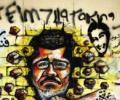
Ousted Egyptian President Mohammed Morsi's detention was extended by 15 days by a court in Cairo on charges that the Islamist leader conspired with Palestinian militant group Hamas during the country's 2011 uprising.
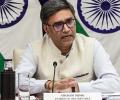
The United States has approved the extradition of Tahawwur Rana, accused of involvement in the 2008 Mumbai terror attacks, to India. The decision was announced by President Donald Trump during a joint press conference with Prime Minister Narendra Modi in the White House. India is currently working on the logistics of Rana's surrender and extradition, with several final steps to be completed before he is sent back to India. The joint statement issued by India and the US during Prime Minister Modi's visit reaffirmed their commitment to fighting terrorism and eliminating terrorist safe havens. The leaders also called on Pakistan to bring to justice the perpetrators of the 26/11 Mumbai and Pathankot attacks. Rana, a Canadian national of Pakistani origin, is currently lodged at a metropolitan detention center in Los Angeles. He is associated with Pakistani-American terrorist David Coleman Headley, one of the main conspirators of the 26/11 attacks.
