
Kharge condemned the use of the "abodh balak" term for Gandhi and alleged that BJP MPs can't even speak their mind.

The Centre's move on Chandigarh has raised the hackles of various parties in Punjab, with Aam Aadmi Party national convener Arvind Kejriwal terming it as a "direct attack" on Punjab's identity and constitutional rights.

The National Democratic Alliance's vice presidential candidate C P Radhakrishnan was felicitated at a meeting of the ruling bloc's MPs in the presence of Prime Minister Narendra Modi and other Union ministers. He is expected to file his nomination soon.

The present strength of the electoral college is 781 as six seats are vacant in the Rajya Sabha and one in the Lok Sabha. This puts the majority mark at 391. The NDA has 425 MPs, while the opposition camp has the backing of 324.

Parliamentary Affairs Minister Kiren Rijiju defends Parliament's inability to discuss the Election Commission's functioning, citing a former speaker's ruling. The Opposition's demand to discuss the Special Intensive Revision of electoral rolls continues to disrupt the Monsoon session.

Parliamentary Affairs Minister Kiren Rijiju defended security measures in Rajya Sabha, stating that marshals intervened to prevent disruption by MPs. This follows objections from the opposition regarding the presence of security personnel in the House.
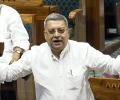
Senior Trinamool Congress MP Kalyan Banerjee resigned as the party's chief whip in the Lok Sabha, citing unfair blame for lack of coordination among MPs and internal party conflicts.

The ruling NDA is expected to win the upcoming election for the post of Vice President of India, following the resignation of Jagdeep Dhankhar.
Parliament is expected to discuss the Pahalgam terror attack and Operation Sindoor next week, with both Lok Sabha and Rajya Sabha planning debates.

The INDIA bloc is set to field a joint candidate for the upcoming vice presidential elections. Congress President Mallikarjun Kharge is engaging with opposition parties to identify potential candidates and build consensus. The decision reflects a unified front among opposition parties aiming to send a strong political message.

The President will address both the Houses of Parliament assembled together in the Lok Sabha chamber on Friday and Finance Minister Nirmala Sitharaman will present the General Budget on Saturday.

As the National Sports Governance Bill is set to become a law, the country's national federations and Indian Olympic Association (IOA) President P T Usha on Tuesday welcomed the landmark policy, calling it a step in the right direction as India gears up to bid for the 2036 Olympics.

The Election Commission of India has initiated the process to hold the vice presidential election following Jagdeep Dhankhar's resignation. The electoral college is being constituted, and the election schedule will be announced soon.
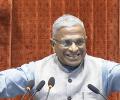
'When Harivansh sits in the chair, you feel your voice will be heard.'

Parts of Rahul Gandhi's speech during the Operation Sindoor discussion in the Lok Sabha were expunged from the record after he criticised the government for trying to protect Prime Minister Narendra Modi's image.

In multilateral contests, it would go by the Olympic Charter, which prohibits any discrimination based on political issues, which is why the government has stated that it would not stop Pakistan from coming to India for international events.

The National Democratic Alliance (NDA) has nominated Maharashta Governor Chandrapuram Ponnusamy Radhakrishnan as their candidate for Vice-President of India. The announcement was made by BJP President J P Nadda, highlighting Radhakrishnan's extensive public service and cross-party respect.
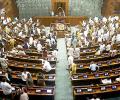
The Monsoon session of Parliament concluded after facing disruptions and protests over the revision of electoral rolls in Bihar. Despite the disruptions, the government managed to pass key legislations.
What piques the narrative is that Prime Minister Narendra Modi and Union Home Minister Amit Shah decide on crucial matters, they play it close to their chest, and revel in springing a surprise.

Several leaders of the BJP and its allies are of the view that the NDA this time is unlikely to follow the instincts that made it pick Dhankhar and will be more conventional in its search for his successor.

Rijiju also hit out at Congress leader Rahul Gandhi, saying that his own party MPs "get uncomfortable" when he speaks in Parliament and are apprehensive that he will do "anap-shanap baatein" and the party will have to bear the consequences.

Malik had served as the 18th governor of Goa between November 3, 2019, and August 18, 2020.
'This type of comprehensive legislation has never been introduced before in Parliament's history.' 'A bill that simultaneously affects ministers, chief ministers, and the prime minister represents completely uncharted Constitutional territory.' 'Throughout our nation's legislative history, the established policy has consistently held that public office holders should face punishment only after receiving conviction from a competent court of law. Without this safeguard, we risk systematic destabilisation, and our federal structure would face complete collapse.' 'Any central government could potentially deploy this legislation against state governments they oppose politically. This represents the most frightening prospect and dangerous possibility that these bills create.'
BJP MP and actor Ravi Kishan has been awarded the Sansad Ratna for his outstanding performance in the Lok Sabha, becoming the first actor-turned-politician to receive the honour.

Bhimrao Ramji Ambedkar, the architect of the Indian Constitution, is also credited with the creation of the Election Commission of India. An amendment he brought to the Constituent Assembly led to the establishment of the Election Commission as an independent body responsible for conducting elections. Ambedkar's amendment consolidated election authority into a centralized body, headed by a chief election commissioner appointed by the President, rather than separate commissions for the Centre and states. This article delves into the historical context and the importance of Ambedkar's contribution in establishing the Election Commission of India.
Parliament's approval of the Waqf (Amendment) Bill, a contentious piece of legislation aimed at reforming Waqf bodies, has sparked strong reactions from the opposition, who allege that the bill was "bulldozed" through Parliament. The bill, considered the government's most consequential legislation in its third term, was passed with comfortable majorities in both the Lok Sabha and Rajya Sabha despite opposition claims of a lack of consultation and an intrusion into religious affairs. Other notable bills approved during the session included the Finance Bill, Appropriation Bill, Immigration and Foreigners Bill, and Tribhuvan Sahkari University Bill. The session, which saw high productivity, also witnessed debates on issues such as economic distress, delimitation, and the three-language policy. While the government touted its achievements, the opposition criticized the government's approach and vowed to challenge the Waqf bill in court.

The high court also instructed both the Mamata government and the Centre to submit detailed reports on the situation. The matter is scheduled for further hearing on April 17.
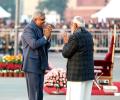
The BJP had no option but to get Jagdeep Dhankhar out of its way for the sake of the Modi government's stability, reveals Sheela Bhatt, the legendary political journalist.
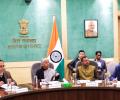
Parliament's Budget Session will be held from January 31 to April 4, with Finance Minister Nirmala Sitharaman set to table her eighth straight budget on February 1. The session will begin with President Droupadi Murmu's address to a joint sitting of the Lok Sabha and Rajya Sabha on January 31, followed by the tabling of the economic survey. The first part of the Budget Session will have nine sittings from January 31 to February 13, after which Parliament will break for recess to examine the budget proposals. The session will reconvene on March 10 to discuss the demands for grants of various ministries and complete the budgetary process, concluding on April 4.

Several opposition MPs have made a similar demand to the government in the wake of the dastardly attack in which 26 people, mostly tourists, were killed last week, leaving the nation grief-stricken and outraged.

Leaders of various INDIA bloc parties have written to Lok Sabha Speaker Om Birla, urging him to allow leaders of the opposition in both Houses of Parliament to speak during the Constitution Day function to be held on Tuesday. The function will be addressed by President Droupadi Murmu, Vice President Jagdeep Dhankhar, and Lok Sabha Speaker Om Birla. The letter, signed by leaders of various opposition parties, states that they believe in the best traditions and interests of Parliamentary democracy, the Leaders of Opposition (LoPs) in both Houses should also be given an opportunity to speak on this historic occasion. Parliamenary Affairs Minister Kiren Rijiju, however, said that Prime Minister Narendra Modi will not be addressing the event and accused "some of the Opposition parties " of giving reactions without knowing the actual arrangement. He added that sitting arrangements have been made for the Leaders of Opposition of both Lok Sabha and Rajya Sabha on the dais.
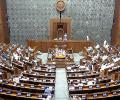
The Parliament session is set to start today, with various issues slated to be discussed, including the Waqf Act (Amendment) Bill.
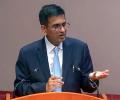
Former chief justice of India D Y Chandrachud on Friday said media reports of him being considered for the National Human Rights Commission chairperson's post were 'untrue'.
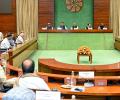
Opposition parties have called for a discussion in Parliament on the Maha Kumbh tragedy and the UP government's alleged focus on VIPs rather than the common pilgrims. Union minister Kiren Rijiju has stated that the Business Advisory Committee will decide on the agenda of the Budget Session, which will start from January 31. The Session will commence with President Droupadi Murmu addressing the joint sitting of Lok Sabha and Rajya Sabha. The Union Budget will be presented on February 1.
Introducing the bill, Rijiju said the consultation process of the Joint Parliamentary Committee (JPC) was the largest ever exercise carried out by a parliamentary panel in India's democratic history.
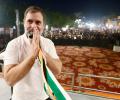
Congress leader Rahul Gandhi launched a scathing attack on Prime Minister Narendra Modi and former Delhi Chief Minister Arvind Kejriwal, accusing them of neglecting the welfare of backward sections, Dalits, tribals, and minorities. Gandhi promised a caste census in Delhi if the Congress forms the government, echoing his national call for removing the 50 percent cap on reservations. He also criticized Kejriwal's governance, drawing parallels with Modi's alleged reliance on propaganda and false promises. The Congress and AAP are part of the INDIA bloc, but are contesting the upcoming Delhi assembly polls separately. Gandhi's speech highlights the growing political tension ahead of the polls, where the Congress aims to regain its foothold in Delhi.
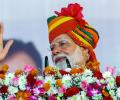
Prime Minister Narendra Modi on Wednesday vehemently defended Home Minister Amit Shah against the Congress' accusation that he insulted B.R. Ambedkar in a Rajya Sabha speech. Modi asserted that Shah had actually exposed the Congress' "dark history of insulting" the architect of the Indian Constitution. The prime minister went on to detail a litany of actions by the Congress party that he claimed demonstrated their disrespect for Ambedkar, including denying him a Bharat Ratna and preventing his portrait from being displayed in Parliament's Central Hall. He also criticized the Congress for failing to address the plight of marginalized communities during their time in power. Modi highlighted the efforts of his government in implementing Ambedkar's vision and honoring his legacy.

The government and opposition parties on Monday reached an agreement to break the impasse in Parliament with dates announced for discussions on the Constitution in the Lok Sabha and the Rajya Sabha.

BJP MP Bansuri Swaraj said there are many leaders in the Opposition parties who are "capable" of handling the work of the Leader of Opposition but it is up to them to take a decision as it is their "internal matter".

The first session will commence in the third week of June with the oath-taking by the newly elected candidates as members of the House, the sources said, adding the oath-taking is likely to continue for two days, following which a new Speaker will be elected.
 © 2026 Rediff.com - Investor Information - Advertise with us - Disclaimer - Privacy Policy - Sitemap - Feedback - About us - Terms of use - Grievances