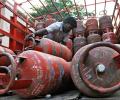
The District Supply Department in Nanded conducted a raid on a residence, uncovering an illegal stockpile of LPG cylinders and initiating legal action against the individual involved.

According to sources, the Indian Navy warships are on standby to provide assistance or help required by merchant vessels.
Mumbai police are investigating the theft of 27 LPG cylinders from a delivery vehicle in Charkop, Kandivali (West), amid concerns about gas supply due to the conflict in West Asia.
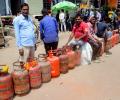
The Indian government has implemented several measures to mitigate external risks, support the balance of payments, and maintain macroeconomic stability amidst the ongoing West Asia crisis, according to Minister of State for Finance Pankaj Chaudhary.
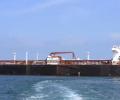
Despite ongoing tensions in West Asia, the successful arrival of the LPG carrier 'Nanda Devi' in Gujarat ensures a steady supply of liquefied petroleum gas to India, highlighting the country's efforts to secure its energy needs.

18 Indian-flagged vessels with 485 Indian seafarers still remain in the western Persian Gulf region

Elevated global crude oil and natural gas prices, driven by geopolitical developments in West Asia, could significantly influence the Government of India's fiscal position for 2026-27, according to a report by ratings agency Icra.
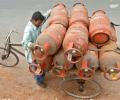
Argentina has significantly increased its LPG exports to India to help mitigate shortages caused by the ongoing conflict in West Asia. This partnership is becoming increasingly important for India's energy security.

Amidst rising Middle East tensions, External Affairs Minister S Jaishankar highlights India's strategic dialogue with Iran to safeguard maritime traffic through the Strait of Hormuz, ensuring India's energy security and continued oil trade.

Analysts warn that global markets are significantly underpricing the risk of an oil price shock, with Brent crude potentially soaring to $150 per barrel if the West Asia conflict escalates or damages critical oil and gas infrastructure. This could lead to severe inflation and economic repercussions, particularly for import-dependent nations like India.
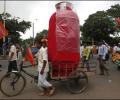
An FIR has been filed against a gas agency in Lucknow for allegedly illegally storing domestic LPG cylinders and attempting to sell them on the black market.

Around one full month of supply is firmly arranged with additional procurement being continuously finalised, and oil companies are successfully delivering over 5 million cylinders every day.
The International Energy Agency (IEA) has proposed immediate demand-side measures, including remote work, lower speed limits, and reduced air travel, to mitigate the impact of a global oil supply shock caused by Middle East disruptions.
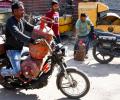
The government has introduced a mandatory 25-day gap between LPG cylinder bookings due to supply concerns arising from global disruptions and tensions in the Strait of Hormuz. This measure aims to prevent hoarding and prioritise essential non-domestic sectors, while domestic LPG production is being increased to mitigate shortages.

India's plans to ration the consumption of liquefied natural gas (LNG) and liquefied petroleum gas (LPG) - in response to reduction in their import owing to war in West Asia - may fall short of what is needed to meet domestic needs.

'Statutory power must be exercised in a manner that is fair, proportionate, and not excessive.' 'The authority must demonstrate a rational nexus between the property frozen and the alleged offence.'
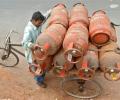
Researchers at CSIR-NCL have developed a technology for producing dimethyl ether (DME) as an alternative to liquefied petroleum gas (LPG), potentially reducing India's reliance on imports and enhancing energy security.
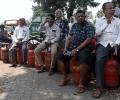
India restricts subsidised LPG connections for households with piped natural gas (PNG) to ensure equitable distribution and address global energy supply concerns, pushing for faster PNG adoption.

Delhi should keep all its options open in what is essentially a transitional period in the geopolitics of energy rather than remain a gatekeeper serving Trump's 'America First', suggests Ambasssador M K Bhadrakumar.

We cannot simply have a 60-65 per cent import dependency in LPG, the bulk of which comes from just one volatile region -- West Asia, points out R Jagannathan.

India is well-stocked with inventories of crude oil and key petroleum products, including petrol, diesel, and aviation turbine fuel (ATF), to deal with short-term disruptions as the war intensifies in West Asia, Union Minister of Petroleum and Natural Gas Hardeep Singh Puri said on Tuesday.

The Indian government has directed oil refineries to increase LPG production to ensure a stable supply of domestic cooking gas, amidst concerns over potential disruptions from the escalating Middle East conflict and its impact on imports.

If the conflict continues for a prolonged period, State-run oil companies may have to review retail fuel prices accordingly.

24 Indian-flagged vessels with 677 Indian seafarers were currently located west of the Strait of Hormuz, and four vessels with 101 Indian seafarers were stationed east of the strategic waterway.

In a first, Indian oil public sector undertakings (PSUs) finalised a one-year contract to import around 2.2 million tonnes (mt) of liquefied petroleum gas (LPG) from the US. The LPG import deal comes at a time when negotiations for an India-US bilateral trade agreement (BTA) are gathering steam. Earlier in the month, US President Donald Trump had said Washington and New Delhi were "pretty close" to reaching a fair trade deal.

India's decision to import LPG from the US helps it to diversify sources as it reduces almost full reliance on West Asian countries for supply of the country's primary cooking fuel.

The Andhra Pradesh government has prepared an action plan for relief and essential supplies in pre-cyclone preparedness for Cyclone Montha, expected to cross the coast on October 28.
Saudi Arabia's steep cut in LPG benchmark prices has pushed India's household LPG underrecoveries to their lowest level in over two years, slashing oil companies' losses from Rs 200-250 per cylinder last year to about Rs 20-40 now.
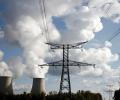
India's brittle energy security is inextricably linked to two opposing paradigms - fossil fuels, and the transition to green energy. The first powers the present; the second paves the way for Viksit Bharat in 2047.
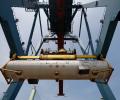
Chinese import tariffs have unwittingly come to India's assistance to help boost imports of US liquefied petroleum gas (LPG) at rates cheaper than what it pays for supplies from West Asia, according to industry sources and shipping data.

'Geopolitically and diplomatically it's a very difficult situation for India.'
India's purchase of US crude oil has picked up in 2025 and could easily double their previous levels, government officials said on Wednesday. The surge comes in the wake of the then-incoming Donald Trump administration's announcement that it would consider hiking tariffs on a reciprocal basis, and pushed some countries, especially those with large trade surpluses with the US, to buy more of its energy.

India may have to lean more on West Asian nations for supplies of liquefied petroleum gas (LPG), a cooking fuel, in the coming years after Indian state-run refiners drew up big plans to diversify into producing more profitable petrochemicals. This shift leads to reduced LPG output, Indian refining executives said. The mantra for state-run oil companies, from Indian Oil Corporation (IndianOil) to liquefied natural gas (LNG) importer Petronet LNG, which are looking to diversify their businesses from lower-margin fuels, has been value-added petrochemicals.
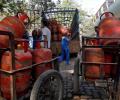
The scheme will cost the state exchequer altogether Rs 1,650 crore.

'To sustain our growth trajectory, we must continue to explore and capitalise on growth opportunities.'

Stocks of the country's bigger tile and ceramic makers were major gainers over the past week. The leaders in this space -- Kajaria Ceramics and Cera Sanitaryware -- were up 7 per cent each. In the past three months, Kajaria Ceramics and Somany Ceramics were up 29-32 per cent, while Cera Sanitaryware gained 22 per cent.

The BJP lost 15 of the 80 Lok Sabha seats in 2019. Union ministers have been deployed in all 15, tasked with turning the result around.

Could the MPCE survey results be used as a basis of reconstructing the Consumer Price Index with new weights, asks Madan Sabnavis.

The rising goods and services tax (GST) and personal income-tax collections may bolster the Narendra Modi government's ability to announce new schemes or enhance existing ones.

The scarcity of resources is particularly evident in the case of Rajasthan compared to many other states.
 © 2026 Rediff.com - Advertise with us - Disclaimer - Privacy Policy - Sitemap - Feedback - About us - Terms of use - Grievances