
If the effort of bidding and conducting Olympics is to showcase China's rise to the world, popular indictments at the global and Tibetan levels have unnerved Beijing. For so long Tibet is considered to be the minimalist foreign policy position for China, while the Olympics indicated its bidding for global legitimacy for its policies.

"Indian yatra to Kailash and Manasrovar is an important part of China-India people-to-people and cultural exchanges... The two sides agreed that a total of 350 yatris in seven batches would take part in yatras to Xizang through Nathula Pass this year," the spokesperson of Chinese embassy in India said.
"Although we saw hope in all our previous endeavours, I feel this time something positive is bound to come out. It is very unfortunate that so many of our men have lost their lives during the struggle," says Nawang Sithar, adding, "Let me assure you that no Tibetan will ever instigate violence."
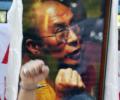
Should New Delhi sacrifice Tibet at the altar of its ties with Beijing or should it adopt a more pro-active stance on the issue?
"The door of dialogue still opens to Dalai, so long as he gives up the position for Tibet Independence, so long as he recognises Tibet and Taiwan as inalienable parts of the Chinese territory," Chinese Premier Wen Jiabao said on Tuesday at his maiden press conference after being elected to a second five-year term. "Since the peaceful liberation and especially the democratic reform, Tibet has moved forward and become more developed," Wen said.
For decades, the Chinese 'minorities', particularly the Tibetans, have been wanting to express their deep-rooted resentment against a regime which slowly but surely is annihilating them.

The much awaited Sino-Indian border trade through Nathula in Sikkim, scheduled to begin on July 6, will initially be a localised and low-key affair.

'Neither will China -- at least for now -- because its troops are deployed in equal strength.' 'We are negotiating at equal terms right now and it's a game of patience.'
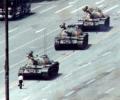
Why omit the Tiananmen massacre from the history of China's Communist party, asks Claude Arpi.

India and China have agreed to trade in 44 items through the Nathu La pass which re-opens on Thursday after 44 years since it was closed in 1962 in the wake of Sino-Indian conflict.
India and China have reached a historic agreement to resume border trade through the strategic Nathu-La Pass from July 6 after 44 years of its closure.
The unmanned automatic weather information station will be built at an altitude of 5,300 metres on the peak of Mt Everest.\n\n
The prison stored the tools for savage punishments, including the gouging out of eyes, cutting off of ears, hands and feet, pulling out of tendons and the skinning of people.
China Telecom, the country's leading telecom carrier, has invested US $17 million to set telephone networks
Before 1951, slave owners made up only five per cent of the total population of Tibet but controlled 95 per cent of its wealth. But today there is no dearth of millionaires in rural Tibet.

China has chosen to keep New Delhi guessing, while retaining for itself the option of constantly changing facts on the ground and shifting the LAC westwards -- the strategy called 'salami slicing', notes Ajai Shukla.

He also said that the India-China standoff at Doklam is "not a very serious" issue
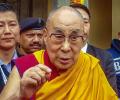
'The logical step is to challenge the very legitimacy of the Chinese claim over Tibet,' recommends Inspector General Gurdip Singh Uban (retd).

The Dalai Lama is 84 years old now and the issue of his successor has gained prominence in the last couple of years in the wake of his health issues.
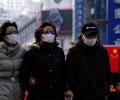
Eighty-six deaths were reported in mainland China with 3,399 fresh cases from 31 provincial-level regions, the country's National Health Commission said on Saturday.

Claude Arpi gives a fascinating firsthand account of the Dalai Lama's arrival in Tawang in March 1959 and explains why he will once again receive a grand welcome, whether Beijing likes it or not.

'We keep saying that we have a very close historical, cultural, linguistic and religious affinity with Nepal. Then why be so insensitive that we cannot find time to talk to them for more than 5-6 months'

China has ordered all Buddhist monasteries in Tibet to display China's national flag as part of its efforts to maintain social stability in the restive Himalayan province, which experienced self-immolation protests against the Communist party rule.

Major General Sujan Singh Uban, a legendary veteran of the Second World War, was a natural choice to raise, train and command the Special Frontier Force and mould them into a well oiled fighting machine, recalls his son Inspector General Gurdip Singh Uban (retd), who led SFF troops during the Kargil War.

The world must hang its head in shame for being a mute spectator to the 'cultural holocaust' in Tibet, says Major General Mrinal Suman (retd).

'Isn't it in India's long-term interests that Tibet-related issues do not remain a point of discord in Sino-Indian relations?' asks Ambassador M K Bhadrakumar.

'The answer is no, the entire country's is.' 'So why such obsession with Delhi?' 'But the most powerful people in India live here: The prime minister, civil servants, Supreme Court judges, MPs, diplomats, dadas of the media...' 'If they can't deal with their own problem, what chance does the rest of the country have, with its foul air, dying rivers, frothing lakes, and crumbling mountains?' says Shekhar Gupta.

'The impression I get is bread and butter matters more than freedom and choice. And China is providing bread and butter in plenty.' Saisuresh Sivaswamy/Rediff.com takes the road less travelled -- to Tibet.
The Chinese Communist party has not closed its door of contacts and negotiation with the Dalai Lama, a senior Communist leader wrote recently. Former RA&W officer and China expert Jayadeva Ranade explains what the thinking on Tibet is likely in Beijing.
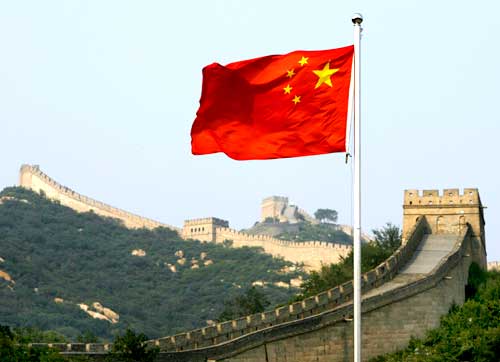
The Chinese envoy recommends an early harvest on the border issue while maintaining peace and tranquillity in the border areas, reports Ajai Shukla.
Beijing is clearly rattled by the Dalai Lama's visit. Unlike the 2009 visit, which was a four-day religious tour, the current visit is a high-decibel, 10-day affair, without the fig leaf of a "religious event", reports Ajai Shukla.
You cannot just swing by to say hello to the Dalai Lama when you're in Mcleodganj but there's plenty to experience discovers Hitesh Harisinghani/Rediff.com.

General Zhao Zongqi is well known in India for having commanded the Chinese troops during the Dokalam episode. Zhao knows every inch and corner of the Indian border, at least the Eastern and Central sectors, including the Naku La area which witnessed fist-fights between Indian and Chinese troops in April/May. Claude Arpi introduces us to the PLA generals masterminding the Chinese aggression in Ladakh.
'It is certainly time for New Delhi to open up. Not only should it go ahead at full steam with the roads to the LAC, but the government must also allow tourists to visit these stunningly beautiful areas of Indian territory.'
Public interest centres on whether the two leaders might make headway in resolving the Sino-Indian boundary dispute.
 © 2026 Rediff.com - Advertise with us - Disclaimer - Privacy Policy - Sitemap - Feedback - About us - Terms of use - Grievances