
The Research and Analysis Wing has access to information that indicates a link between the Lashkar-e-Tayiba and Tsarnaev brothers who carried out the Boston bombing.Investigations have revealed that the Tsarnaev brothers were trained at Chechnya by LeT militants.

As the debate rages on whether Ishrat Jahan and her accomplices were operatives of the Lashkar-e-Tayiba or not, there is increasing proof to show that she indeed had links with the outfit. Although the extent of her links is still unknown, she was considered to be a suicide bomber in the investigating and intelligence circles.

Continuing its efforts to expose the role of state actors in Pakistan and the Lashkar-e-Tayiba chief in 26/11 attacks, India has again sent a fresh Letters Rogatory to Morocco for questioning of Faiza Outalha, Pakistani- American terrorist David Headley's estranged wife, after its earlier request was returned due to technical reasons.
"Forensic experts would be called soon to conduct Jundal's voice measurement through audio spectrometer. Besides his interrogation, his voice sample collection is one of our top priorities during the custody period," a Crime Branch official said.
Home Minister Sushilkumar Shinde recently claimed that 26/11 terror strike mastermind and Lashkar-e-Tayiba founder Hafiz Saeed had visited border areas in Pakistan-occupied Kashmir a few days before the killing of two Indian soldiers by Pakistani troops.
The Anti-Terrorism Squad of the Maharashtra police on Wednesday told the special Maharashtra Control of Organised Crime Act court in Mumbai that the Lashkar-e-Tayiba operative and a key 26/11 handler Sayed Zabiuddin Ansari alias Abu Jundal was involved in terror activities since as far back as 1996.

Special Director of the Intelligence Bureau, Rajinder Kumar, has denied any involvement in the Ishrat Jahan encounter case.
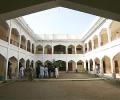
The government of Pakistan's Punjab province has allocated millions of rupees in its budget for the largest centre of the Jamaat-ud-Dawah, which is a front for banned terror outfit Lashkar-e-Tayiba. Besides a grant-in-aid of over Rs 61 million for the JuD centre -- known as 'Markaz-e-Taiba' -- the provincial government has allocated Rs 350 million for setting up a 'Knowledge Park' at the centre and other development initiatives.
The government has given its sanction to charge sheet nine people including Pakistani-American terrorist David Headley, Lashkar-e-Tayiba founder Hafiz Saeed and two Inter Services Intelligence officers for plotting terror attacks in India including the 26/11 strikes.
Two terrorists belonging to terrorist group Lashkar-e-Tayiba and a policeman were killed in a fierce gun battle in Kulgam town in south Kashmir on Monday evening.
Jihadi outfits like Lashkar-e-Tayiba are planning attacks in Odisha and Maharashtra besides making fresh recruitment efforts in the Northeast, Assam DGP Jayanta Narayan Choudhury said.
Possibility of yet another Mumbai-style attack in India cannot be ruled out and such a threat will arise if the Taliban or Haqqani network succeed in seizing large parts of Southern Afghanistan, a veteran Indian diplomat has said.
Five militants of the Lashkar-e-Tayiba outfit were killed in a day-long encounter near apple-rich north Kashmir's Sopore town on Tuesday.
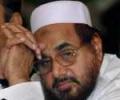
Indian investigators say that for Pakistan's Inter-Services Intelligence the 26/11 mastermind is a friend who furthers their policy against India. Vicky Nanjappa reports
India has provided "insufficient information" against Lashkar-e-Tayiba founder Hafiz Mohammed Saeed and Pakistan could take action only on the basis of evidence that stands the test of courts, Interior Minister Rehman Malik claimed on Sunday.
Army troops gunned down one terrorist of Lashkar-e-Tayiba outfit in a fierce gunfight in the forest area of Cherhar near north Kashmir Sopore town on Thursday afternoon.
While the Union home ministry issues statements time to time that it is hopeful about Headley's extradition, many within the establishment know for a fact that it is beyond impossible for this to happen thanks to the plea bargain secured by the Lashkar operative
Lashkar-e-Tayiba operative Zabiuddin Ansari, alias Abu Jundal, an accused in the 26/11 Mumbai terror attacks and several other cases, today orally retracted his confession, claiming before a MCOCA court here that he has been falsely implicated and his signature obtained under duress.
In the backdrop of increasing violations along the Line of Control, Intelligence Bureau officials have said out that Pakistan's most notorious jihadi and Lashkar-e-Tayiba founder Hafiz Saeed has ordered an all-out war on India. Vicky Nanjappa reports
India has relaxed its tourist visa rules by lifting restrictions imposed on foreign visitors who want to visit India within a period of 60 days of their earlier visit.Citizens of Pakistan, China, Iran, Iraq, Bangladesh, Afghanistan, Sudan, people of Pakistani and Bangladeshi origin and "stateless persons" will continue to come under the 60-day rule.
The probe into the alleged plot to target politicians including members of Parliament, members of Legislative Assembly and also some journalists by 15 terror suspects belonging to Lashkar-e-Tayiba and Harkat-ul-Jihad al-Islami who were nabbed by city police, has been handed over to the National Investigative Agency, a top police official said.

Lashkar-e-Tayiba founder Hafiz Saeed has criticised Pakistan Foreign Minister Hina Rabbani Khar for promising to take action against him if India provides evidence, saying the government had been unable to resolve outstanding issues like the Kashmir issue.
He was the mastermind of the deadly 26/11 terror strike and the United States administration has already declared a bounty of $10 million for him.But the Pakistan government has, time and again, expressed its reluctance to prosecute Jamaat-ud-Dawa chief and Lashkar-e-Tayiba founder Hafiz Saeed.

The sentencing of American-born Lashkar-e-Tayiba terrorist David Headley, accused of involvement in 26/11 Mumbai attacks, has been fixed for January 17 next year while that of his accomplice Tahawwur Rana has been rescheduled for January 15 from December four.
Mumbai terror attack conspirator David Headley, who had surveyed most of the 26/11 targets, had also conducted a recce of Bal Thackeray's heavily-guarded residence `Matoshree' in suburban Bandra in 2008, and found that Shiv Sena chief was a 'sitting duck'.
Pakistan-based Jamaat-ud-Dawa has realised that mobile Internet is the future and that by foraying into it they would have a larger reach. Vicky Nanjappa reports why Indian agencies are visibly upset by the development
The Jammu and Kashmir police on Monday arrested a Lashkar-e-Tayiba operative in Budgam district of central Kashmir, a police spokesman said.
Lashkar founder Mohammad Sayeed and 26/11 attacks accused Zaki-ur Rehman Lakhvi must be neutralised one by one if Pakistan does not act against them, says Brigadier Gurmeet Kanwal (retd).
India on Thursday said it has provided additional evidence against Lashkar-e-Tayiba founder Hafiz Saeed and other perpetrators of the Mumbai terror attacks to be used by Pakistani authorities to prosecute them, while expressing concern at the tardy pace of proceedings in the case.
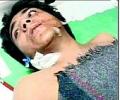
Deputy Police Commissioner Tanaji Ghadge, who questioned 26/11 gunman Mohammed Ajmal Kasab at a civic-run hospital here hours after he was nabbed, on Wednesday said the attacker had confessed to being a Pakistani national and a member of terror outfit LeT during the first interrogation itself.
Prior to his execution, Kasab had said that he had no relatives and did not wish to contact anyone in Pakistan.
The Mumbai attack perpetrated by Pakistan-based Lashkar-e-Tayiba was an example of how terror outfits use latest available IT tools for their decisive motives, a top US commander has said, highlighting the role of cyber space in such events.

Indian officials say that the recent disclosures in Pakistan go on to show the intensity of the programme prior to 26/11 terror attacks, reports Vicky Nanjappa.
Pakistan has rejected as "unfounded" a terror alert in India that linked three men from Lahore to Lashkar-e-Tayiba, even as the trio sought protection from authorities after reports about them appeared in Indian media.

A Pakistani anti-terrorism court on Saturday had to put off the cross-examination of a key witness in the Mumbai attacks case as the lawyer of the main accused, Lashkar-e-Tayiba commander Zakiur Rehman Lakhvi, did not attend the hearing.
Lashkar-e-Tayiba commander Zakiur Rehman Lakhvi, the main accused in the 26/11 Mumbai terror attacks case, has been clandestinely communicating from prison with members of his group, according to intercepts by Western intelligence agencies.
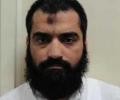
Abu Jundal, an alleged operative of terrorist outfit Lashkar-e-Tayiba and a key handler during the 26/11 terror attacks, has approached the Bombay high court seeking that he should not be kept in solitary confinement in the same cell where Pakistani terrorist Ajmal Kasab once stayed.

A top commander of Pakistan-based Lashkar-e-Tayiba was on Thursday arrested and his close aide was killed in an encounter with security forces in Sopore township of north Kashmir, police said.
India is likely to get access to Lashkar-e-Tayiba terrorist David Headley's United States-based wife Shazia, his two girlfriends and accomplice in Mumbai terror attack, Tahawuur Hussain Rana soon.
The custodial interrogation of Abu Jundal, a 26/11 key handler and a Lashkar-e-Tayiba terrorist, has been completed, the National Investigation Agency told a Delhi court on Saturday.
