
The Board, which also comprise the state government nominees, told a five-judge Constitution Bench headed by Chief Justice Ranjan Gogoi that it is high time that a particular class not be discriminated on the ground of 'biological attributes'.

The apex court said banning entry of women to Kerala's Sabrimala temple is gender discrimination and the practice violates rights of Hindu women.

The petitioners seeking reconsideration by a larger bench, the observations made by it in a 1994 verdict that a mosque was not integral to Islam.

The former Supreme Court employee dubbed on Tuesday as "very frightening" the atmosphere of the in-house inquiry committee and "walked out" raising various objections including denial of her lawyer's presence.

The state govt said that celibate status of deity cannot be a ground for barring entry of women.

"All the review petitions along with all pending applications will be heard in open court on 22nd January, 2019, before the appropriate Bench. We make it clear that there is no stay of the judgment and order of this Court dated 28th September, 2018 passed in Writ Petition (Civil) No.373 of 2006 (Indian Young Lawyers Association & Ors. vs. The State of Kerala & Ors)," the order said.

This was also part of the right to privacy of the deity, the lawyer said.
The apex court struck down Section 497 of the Indian Penal Code dealing with the offence stating it was archaic and violative of right to equality.

The SC in its judgment said that discrimination on the basis of sexual orientation is a violation of Freedom of Expression. "Sexual orientation of an individual is natural and discrimination on the basis of sexual orientation is a violation of Freedom of Expression, Supreme Court," the court said.

A five judge Constitution bench headed by Chief Justice Dipak Misra was apparently not in agreement with the argument of the Travancore Devaswom Board running the over 800-year-old Lord Ayyappa temple that the "practice and belief" that have continued uninterrupted cannot be tested on the ground of "modern ethos".

The bench also said it would examine the Fundamental Right to life and sexual freedom.
Sisodia said several meetings, attended by IAS officers, were held during the day.
The apex court said that there was a need for a law to prevent persons with serious criminal cases pending against them from entering the legislature and be a part of lawmaking.

However, a bench headed by Chief Justice Dipak Misra refrained from handing over the probe to the CBI and directed that the trial be fast-tracked to ensure there was no delay.

The government's decision of not approving Joseph's name has evoked sharp reactions.

Justice Chelameswar said the reasons were too obvious and he would not like to deal with the matter.

'What the Sabarimala majority verdict has done is to elevate the principle of equality over all others, including the right to worship, and declared that this will be the litmus test of all practices, and re-emphasise that practices that are ultra vires will be junked,' says Saisuresh Sivaswamy.

'Societal acceptance is the surround-sound of the socio-economic political compass that we live in. This is the first step.'
The government had declined to appoint Justice Joseph's to the top court and asked it to reconsider his name.
The court held that the states were not required to 'collect quantifiable data' reflecting the backwardness among these communities.

'Hindu unity is possible without any external forces playing any role if their faith is questioned.'
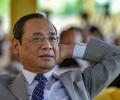
'These things are not forgotten, it will haunt the Supreme Court for a long time.'
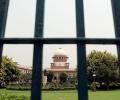
The Supreme Court is scheduled to pronounce on Thursday its verdicts on a batch of petitions seeking re-examination of its decision to allow entry of women of all age group in Kerala's Sabarimala Temple and a review of its judgment giving a clean chit to the Modi government in the Rafale fighter jet deal with French firm Dassault Aviation.

Justice Ranjan Gogoi, who will demit office as the Chief Justice of India in a week's time, has etched his name in the annals of history by giving finality to one of the most politically and religiously sensitive cases, the Ayodhya land dispute, which dates back to even before the Supreme Court came into existence in 1950.
The bench said the law in question was only 'targetting' married women and not the men who can have relationships with unmarried women, widow and married women with the consent of their husbands.
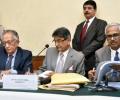
The Supreme Court has urged the Board of Control for Cricket in India to follow the recommendations of the Justice R M Lodha Committee and "save trouble".
 © 2026 Rediff.com - Investor Information - Advertise with us - Disclaimer - Privacy Policy - Sitemap - Feedback - About us - Terms of use - Grievances