
Interference from politicians in terror cases creates added confusion, giving operatives enough time to give investigators the slip. Vicky Nanjappa reports
.jpg)
Justice Gautam Patel was hearing a petition filed by Indian Hotels and Restaurant Association challenging the police directive setting 1.30 am as the cut-off citing concerns of law and order, security and women safety.

Security agencies have alerted the home ministry about a new outfit called the Tehreek-e-Taliban Hindustan. This outfit has been floated on social networking sites using the slogan Ghazwa e Hind (destruction of India) something that was coined by al Qaeda commander, Ilyas Kashmiri.

A female agent working for the Pakistani intelligence from Mangalore oversees hawala transactions that help pump money to terror outfits. Vicky Nanjappa reports

A day after nine live bombs were found at a lodge in Hindpiri, Ranchi, security agencies are apprehensive about finding more bombs at the site.

The National Investigation Agency has seized Rs 1.4 crore, believed to be terror money, in Bangalore. The agency sources told Rediff.com that the money was sourced through modules in North East and was sent to Bangalore.

Five more bombs were found on Tuesday during searches at the sprawling Gandhi Maidan in Patna, where another political rally is scheduled for Wednesday, after Sunday's multiple blasts at a BJP meeting in which six persons were killed and 82 injured.

There have been no major blasts in the state, but most terror operatives are trained in camps in the state. Extremely volatile, Kerala has been declared a Red Zone by the NIA.

As he basks in glory after a string of arrests of several wanted terrorists during his tenure, Home Minister Sushilkumar Shinde said underworld don and India's most wanted fugitive Dawood Ibrahim will be also brought back to India to face justice.

The government has identified 65 terror groups active in the country, out of which a maximum of 34 are in Manipur, the Lok Sabha was informed on Tuesday.

The Bombay high court on Thursday quashed the death penalty awarded to lone convict Himayat Baig in the 2010 German Bakery blast in Pune due to lack of evidence, but confirmed the life sentence imposed on him for possession of explosives.
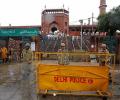
Foreigners wearing mini skirts and entering Jama Masjid prompted Indian Mujahideen co-founder Yasin Bhaktal and his aides to commit a terror strike at the historic mosque in September 2010, the Delhi police told a court.

How did Mansoor Peerbhoy, an academically bright, suave and soft-spoken young man, who never exhibited any jihadist tendencies, go on to head the Indian Mujahideen's media cell?

A recent study on Naxalism in India has concluded that Naxal fighters spend roughly Rs 140 crore annually to wage war against the Indian State.

National Investigation Agency sleuths, who are probing the serial blasts at Bodh Gaya, have failed to get any helpful leads from the footage recorded by the CCTV cameras at the spot.

How Lashkar-e-Tayiba's bomb maker Abdul Karim 'Tunda' was arrested after being on the run for 30 years.

Expelled Janata Dal-United leader Sabir Ali on Sunday stepped up attack on Mukhtar Abbas Naqvi, daring the BJP leader to prove allegations that he had links with Indian Mujahideen co-founder Yasin Bhatkal or apologise.

This is for the first time that the US has slammed sanctions against an ISIS leader in India.

Indian Mujahideen co-founder Riyaz Bhatkal not only used to send funds for terror acts across the country but also regularly provided money to families of the jailed and absconding operatives of the banned outfit, the NIA has told a special court in New Delhi.

"We should make it clear to Pakistan that any LeT attack upon our homeland, they will bear responsibility for that because of their close relationship between ISI and LeT," Congressman Peter King said during a Congressional hearing on Wednesday.

The lone alleged Indian Mujahideen militant facing trial in the 2008 Batla House encounter case in New Delhi has pleaded innocent before a Delhi court while refuting police's claim that he had confessed to his role.
Security agencies are apprehensive that the Jalpaiguri blast is merely an indicator of the unrest triggered by fundamentalist outfit Jamaat-e-Islami along the India-Bangladesh border, says Vicky Nanjappa

The last couple of months have been eventful ones for India's law-enforcement agencies, with three high-profile suspects escaping from custody in the last 40 days.
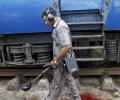
More than a month on, investigators are yet to make a breakthrough in the Chennai train blasts case. The latest probe angle surrounding SIMI's Haider Ali isn't very definitive as well, reports Vicky Nanjappa.

Bureaucratic delays have cost the two security agencies precious time in nabbing terrorists. The new arrangement will see the two security agency work together and share information in real time. Vicky Nanjappa reports

The hour-long meeting, also attended by National Security Advisor Ajit Doval and senior home ministry officials, apprised the Muslim clerics about activities of the West Asian terrorist group and its efforts to attract Indian youth to its fold.

Arrested terrorist Yasin Bhatkal is reported to have told his interrogators he was living in Nepal for the past six months and had readied around 100 hardcore associates who could do anything at his bidding.

IB sources say the arrests of top Indian Mujahideen operatives and trouble brewing within the terror group has led to the re-emergence of SIMI, who is planning a fiery attack. Vicky Nanjappa reports on this new terror threat.

If the words of Lashkar-e-Tayiba operative Abdul Karim Tunda are to be believed, then Bharatiya Janata Party's assessment of Kerala, the God's own country, turning into a nursery for terrorism may well be true.

Kerala remains a safe haven for members of the IM and the SIMI alike, says Vicky Nanjappa
He, however, did not name these 'influential and wealthy people'.
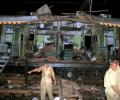
Seven years after the Mumbai serial train blasts in which nearly 200 people were killed and over 700 injured, the trial in the case is still going on with the special Maharashtra Control of Organised Crime Act court recording the statements of the accused. "The court is now recording the statement of the accused who wanted to depose as a defence witness in the case," said advocate Sherif Sheikh, appearing for some of the accused in the case
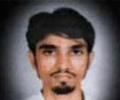
Indian Mujahideen's bomb-maker Abdul Subhan's is a case which would make authorities think twice about releasing deadly terrorists on the basis of good nature. Arrested in 2000 for supplying RDX and AK-47 rifles, he was sentenced to 10 years imprisonment by a court. However, because of his good conduct in jail he was released in 2010.

The National Investigation Agency special court on Tuesday framed charges against 11 accused, all suspected to be members of banned Indian Mujahideen and Students Islamic Movement of India, for the serial blasts at Prime Minister (then Gujarat chief minister) Narendra Modi's 'Hunkar Rally' at Gandhi Maidan in Patna on October 27, 2013.
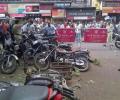
Thursday's low-intensity blast in Pune should not be taken lightly for several reasons, Intelligence Bureau sources tell Vicky Nanjappa
A low-intensity blast set off by an IED planted in a motorcycle parked in front of a police station in Pune on Thursday left three injured, including a constable, even as police did not rule out the possibility of involvement of a terror group in the incident.

BJP Vice President Mukhtar Abbas Naqvi was on Wednesday granted bail by a Delhi court in connection with a criminal defamation complaint filed against him by former JD-U leader Sabir Ali for allegedly linking him with arrested Indian Mujahideen co-founder Yasin Bhatkal.

In its attempt to link a hawala transaction with the October 27 Patna blasts, the Bihar police had carried out several arrests of both Hindu and Muslim operatives. But the case linking the hawala deal to the Patna blasts is on the verge of closure as the National Investigation Agency says there is no evidence.

The accused persons had hatched a criminal conspiracy to propagate the ideology, recruit persons, raise funds and facilitate the travel of those recruited to Syria to join the IS and further its activities.
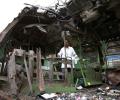
A Special MCOCA court has convicted 12 of the 13 accused in the July 11, 2006 Mumbai suburban train bombings in which 188 people were killed.
