
The Supreme Court has granted bail to two alleged Indian Mujahideen operatives, Mohd Saquib Ansari and Waqar Azhar, who have been in custody since 2014, citing a "grossly violative" right to liberty due to the extremely slow trial progress and no prospect of an early conclusion.

Delhi Police have significantly ramped up security measures across the national capital ahead of Independence Day. This includes deploying advanced technology like facial recognition systems and the Abhigyan app, installing thousands of CCTV cameras, and putting up posters of 19 wanted terrorists. Multi-layered security is in place, especially around the Red Fort, with a large deployment of personnel and anti-drone systems to prevent any security breaches.

A division bench of justices AY Kogje and Samir Dave, in its July 7 judgment cited the "humongous" conspiracy, the intention to spread widespread terror and the large number of casualties as key reasons for affirming the punishment.
The Gujarat High Court has upheld the death sentences for 38 Indian Mujahideen operatives and life imprisonment for 11 others involved in the 2008 Ahmedabad serial blasts, which killed 56 people. The court also directed the state government to pay significant compensation to victims' families and those grievously injured.

The Gujarat high court has characterised the 2008 Ahmedabad serial bomb blasts as a direct assault on India's sovereignty and democratic governance.

The Telangana High Court upheld a trial court's verdict handing out death penalty to five senior operatives of banned terror outfit, Indian Mujahideen, involved in a bomb blast that left 18 people killed in 2013. The court dismissed the criminal revision appeal filed by the IM operatives while upholding the NIA court's judgment. The five members, including IM co-founder Mohd Ahmed Sidibapa alias Yasin Bhatkal, Pakistani national Zia-ur-Rahman alias Waqas, Asadullah Akhtar alias Haddi, Tahaseen Akhtar alias Monu and Ajaz Shaikh, were convicted in 2016. The special court for NIA cases here awarded capital punishment to five convicts treating it as a rarest of the rare case. The high court, after conducting a detailed hearing in the appeals filed by the convicts, confirmed the death sentence of the five IM operatives.

The high court, however, directed the trial court concerned to conclude its trial in the case by taking up hearing at least twice a week, noting that the accused have been behind bars since 2008.

Investigation reveals Al Falah University's potential links to terror operatives, including a former student involved in multiple blasts and doctors arrested in connection with a recent terror plot.
The Special Cell of the Delhi Police has uncovered a fresh lead in the Red Fort car blast investigation, linking it to fugitive Indian Mujahideen operative Mirza Shadab Baig, an ex-student of Al-Falah University.
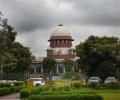
The Supreme Court has stayed the execution of an alleged Indian Mujahideen operative sentenced to death in connection with the 2013 Dilsukhnagar blasts.

Indrani Mukerjea, in pure white, sporting dancing pearl jhumkas, bobbed about the accused box, occasionally floating up front to whisper urgent suggestions to her lawyer Ranjeet Sangle as retired cop and prosecution witness Dinesh Kadam gave her a long look. Vaihayasi Pande Daniel returns to cover the Sheena Bora murder trial after 18 months.

Security agencies are investigating how a terror module acquired and stored a large quantity of Ammonium Nitrate, suspected to be used in a recent deadly blast. The investigation focuses on the logistics and procurement network of the busted inter-state terror cell and highlights the ease with which restricted chemicals can be weaponized.

Former Rajya Sabha MP Sabir Ali, who was expelled from the JD-U 11 years ago for praising Prime Minister Narendra Modi, was on Saturday named the party's candidate from Amour assembly seat in Bihar.

Investigators told rediff.com that more than two people within the Indian Mujahideen provided logistical support to David Headley and his accomplice Tahawwur Rana to survey the targets that were attacked during 26/11.
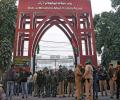
Jamia Millia Islamia (JMI) has issued a show cause notice to a PhD scholar, accusing him of "repeated unlawful acts" and inciting students on religious lines during a Batla House encounter protest march on September 19. The scholar denies the allegations.
Records stretching back to 1947 suggest a consistent strategy by Pakistan's military and intelligence apparatus, the Inter Services Intelligence (ISI), of using terrorism as a state policy against India.
Investigators are still cautious about naming any particular organisation behind the July 13, 2011, Mumbai serial blasts. But behind the scenes, the direction of the investigation is fast moving towards the possible involvement of the recently declared terrorist organisation, Indian Mujahideen. Toral Varia takes you through some of the faces behind this terror outfit

Modi was severe in his criticism of the opposition amid the continuing logjam in Parliament and also sounded confident of the ruling dispensation retaining power at the Centre for a third term after the 2024 Lok Sabha polls.

It'll be nothing short of a recipe of disaster when dreaded Indian Mujahideen gets linked up with international terror outfits like Palestine-based Hizbut Tahrir, reports Vicky Nanjappa.
The recent arrest of Indian Mujahideen operatives in Bihar has confirmed the suspicions of the Indian intelligence agencies that the dreaded terror outfit was trying to set up a base in the state.
'They will wait and watch for some time before making any new move. There have been too many arrests in the past couple of months and the organisation has been shaken up, but only temporarily.... We planned to hit tourist spots in Rajasthan, blow up a train... We had planned on carrying out an attack at the Taj Mahal.' Rediff.com's Vicky Nanjappa accesses Indian Mujahideen bomb-maker Tehseen Akhtar's confession.
The UK has banned Indian Mujahideen, citing the "indiscriminate mass casualty attacks" carried out by the Lashkar-e-Tayiba-linked terror group in India and the threat it posed to British nationals there.
Google's social networking site Orkut on Thursday banned a community named as Indian Mujahideen following the serial blasts in the national capital on September 13.
Investigations, which have been conducted on the basis of various confessional statements of Indian Mujahideen operatives, have revealed that the dreaded outfit -- an offshoot of the Students Islamic Movement of India and the Asif Raza Commando Force -- had undertaken blasts at Varanasi, Bangalore, Ahmedabad, Delhi and Surat.
Initial investigations into the Bodh Gaya blasts of Sunday are pointing the finger of suspicion on the Indian Mujahideen
Sources in the Intelligence Bureau told rediff.com that the Indian Mujahideen is a creation of the Bangladesh-based Harkat-ul-Jihadi and the rejuvenated banned outfit SIMI. The Indian Mujahideen had in an email claimed responsibility for the UP blasts. Though investigating agencies probed into the antecedents of this new outfit, finally they came to the conclusion that the blasts were undertaken by HuJI.
The NIA had been hunting for him since it began studying the operations of the Indian Mujahideen under home ministry's instructions.
Who calls the shots in the Indian Mujahideen after the arrest of its key operative Yasin Bhatkal? Vicky Nanjappa finds out
Indian Mujahideen, the home-grown and dreaded terror outfit, may have provided a disturbing and dangerous ideology for several young men across India, fear security agencies. While the IM recruits nearly 300 men every year, not all of them are actively involved in carrying out terror strikes. Some of them help in propagating the ideology of the outfit.

An Indian Mujahideen terrorist, suspected to be involved in the German Bakery blast of Pune in 2010, has been arrested from Kolkata, the police said.
Vicky Nanjappa analyses the latest dossier on the Indian Mujahideen which chalks out the exact manner in which the notorious home-grown terror outfit is operating.
The Indian Mujahideen is active, but weaker, and its remnants, which have so far escaped detection and arrest by the police, probably have a reduced capability. That is the conclusion possible on the basis of the details available so far, regarding the explosion in Varanasi, on Tuesday, says B Raman
There is much talk about the re-grouping of the Indian Mujahideen which continued its tradition of sending out an email after a blast. A similar letter was also sent out after a shootout outside the Jama Masjid in Old Delhi a couple of days before the Commonwealth Games.
Indian Mujahideen terrorist Salman, an accused in the Delhi serial blasts case who was trained in handling weapons and explosives in Pakistan, has been arrested by the Uttar Pradesh Anti-Terrorism Squad from Siddharth Nagar district, the police said in Lucknow on Saturday."Salman alias Chottu, an active member of Indian Mujahideen who was wanted by the Delhi police in the serial blasts case, was arrested from Badhni area along the Indo-Nepal border on Friday evening," he said
A few days after serial blasts rocked Mumbai on July 13 last year, Intelligence Bureau officials had suggested that the blasts could have been the result of a turf war between the Indian Mujahideen and the underworld. But going by the mammoth chargesheet in the case, filed on Friday, it appears as though some members of the underworld had helped the Indian Mujahideen execute this attack.
The Indian Mujahideen is without doubt India's deadliest outfits today

On the request of investigators, micro-blogging site Twitter has suspended an account claiming to be that of the terror group Indian Mujahideen, which is suspected to have orchestrated the Bodh Gaya serial blasts.
Riyaz Bhatkal had reportedly fled with a large amount of money from the IM's coffers. Riyaz, who hails from the coastal town of Bhatkal, was in possession of Rs 38 lakh that was collected through hawala transactions and donations. The money was supposed to be used for terror operations in and around Karnataka.But the blasts near Chinnaswamy Stadium in Bangalore in April, 2010, were not a costly affair at all.
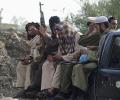
The Indian Mujhaideen does not want to be an India centric outfit anymore and is keen on joining forces with the Taliban and Al Qaeda. Vicky Najappa/Rediff.com reports

Sonam Wangchuk is under tight surveillance within the three-tiered prison, with CCTV cameras monitored around the clock.
