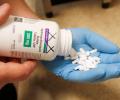
Once touted as a 'wonder drug', HCQ has been battling global controversies around its safety and efficacy as a prophylactic against the new coronavirus SARS-CoV-2.
A senior official at the health ministry told ANI: "For HCQ, we have placed orders for about 11.45 crore tablets to two Indian firms -- IPCA laboratories and Zydus Cadila. So far, we have received 6.64 crore HCQ drugs and remaining will arrive by May 16."
'WHO has been under a lot of attack, so when they saw the Lancet study, they stopped the clinical trials of HCQ.' 'They should not have stopped the clinical trials.'

The global heath body had earlier suspended the hydroxychloroquine arm of the clinical trials of experimental COVID-19 drugs over safety concerns.
'Several concerns were raised with respect to the veracity of the data and analyses conducted by Surgisphere Corporation and its founder'
Researchers at Northwell Health in New York are testing the effects on Famotidine (used in high intravenous doses) on Covid-19 patients as a potential treatment. After the hospital announced its clinical trials, it led to a drug shortage in the US. Back home, however, there has not been any surge in the demand for Famotidine yet.
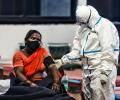
In addition, 22,533 'Make in India' ventilators have been delivered to various states, Union territories and central institutions, the ministry said, adding that the Centre is also ensuring the installation and commissioning of the machines.
This is because while the emergency authorisation for treating Covid was a recent move, the drug has been used since years for rheumatoid arthritis and autoimmune lupus.
As the pandemic spreads and the urgency for effective treatment of COVID-19 mounts, several countries, including the US, have started relying heavily on HCQ, majorly used in the treatment of malaria and rheumatoid-arthritis.
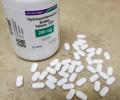
Indian Council of Medical Research had also recommended the use of hydroxychloroquine for treating healthcare workers handling suspected or confirmed coronavirus cases and also the asymptomatic household contacts of the lab-confirmed cases.
The Food and Drug Administration said its decision is based on new information, including clinical trial data results, that have led it to conclude that the drugs may not be effective to treat COVID-19 and that its potential benefits for such use do not outweigh its known and potential risks.
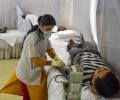
In the study, the scientists assessed the effects of the drug in two types of animal hearts, and found that it altered the timing of electrical waves that control heartbeat.
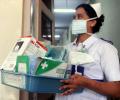
Joint Secretary in the Ministry of Health Lav Agarwal said that India has a stock of 3.28 crore tablets of hydroxychloroquine, which is three time more than the projected requirement of one crore tablets in the country for the coming week and that tie-ups have been made for additional supply of 2 to 3 crore tablets for the future need.
The health ministry on Saturday recommended the use of antiviral drug remdesivir in moderate stage of COVID-19 while backtracking from its earlier stance on hydroxychloroquine, saying the anti-malarial drug should be used in the early course of the disease and not on critically ill patients.
Three new categories -- all asymptomatic healthcare workers working in non-COVID hospitals/areas of COVID hospitals/blocks, asymptomatic frontline workers such as surveillance workers deployed in containment zones and paramilitary/police personnel involved in COVID-19 related activities -- have now been included.
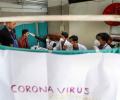
The ICMR's statement came against the backdrop of the World Health Organization (WHO) suspending the testing of the drug in COVID-19 patients temporarily in its global study following safety concerns.

A leading exporter said, there is enough stock of paracetamol in the country. At present, the US, which has become the epicentre of the COVID-19 outbreak, needs paracetamol. He further said India would lose its credibility as the "pharmacy of the world" if it adopts protectionist policies during such a crisis.
There is no evidence that the drug can fight the virus, and regulators warn it may cause heart problems.

Perched in the hills of Darjeeling, the factory was set up in 1874, but has remained shut since 2001. Efforts to reopen the colonial era establishment are now on a war footing.
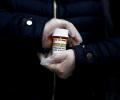
Fabiflu sales have grown by 62 per cent in July. It was launched in June. This drug is being used by doctors for mild-to-moderate Covid patients even if they are in home isolation.
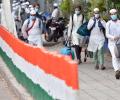
Addressing a daily media briefing to give updates on the COVID-19 situation in the country, Joint Secretary in the Health Ministry Lav Agarwal said most of the Markaz event-related cases have been found in states with high burden of the disease, such as Tamil Nadu (84 per cent), Telengana (79 per cent), Delhi (63 per cent), Uttar Pradesh (59 per cent) and Andhra Pradesh (61 per cent).
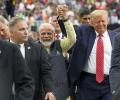
"India shall do everything possible to help humanity's fight against COVID-19," the prime minister said.
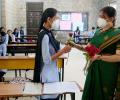
The endemic stage is when a population learns to live with a virus.
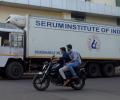
Giving the background on the decision to export vaccines, SII said, "In January 2021, we had a large stockpile of vaccine doses. Our vaccination drive had started successfully and the number of daily cases being recorded were at an all-time low."
India lost its competitive advantage as China gave fiscal benefits to its local manufacturers. Besides, recent policy flip-flops have, however, dented India's image as the 'pharmacy of the world'.

US President Donald Trump thanked PM Modi for lifting curbs on the export of hydroxychloroquine.

'The most important pillars of disease prevention remain masking, hand/cough etiquette and physical distancing.'
India on Tuesday temporarily licensed the export of paracetamol and anti-malarial drug Hydroxychloroquine in appropriate quantities to some countries, which have been particularly badly affected by the coronavirus pandemic.
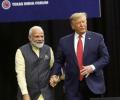
'I want to thank Prime Minister Modi of India for allowing us to have what we requested for the problem arose and he was terrific. We will remember it'

'India is a pharma dada. We can manufacture enough for our people and for the world.'

'The worst case scenario is a rebound of the virus.' 'Life is not going to be what it was.' 'Life as we know it has changed forever.' 'The new normal therefore is test, trace and treat.'
'"The end" depends on two things.' 'Either you develop a vaccine which is effective or if you have a drug, you can terminate this infection very quickly.' 'Otherwise, you have to depend on herd immunity.' 'I think it should happen earlier. Far earlier, than we can imagine or achieve 'herd immunity'.'

No religion or God says that you have to visit pandals and temples and mosques to pray, Vardhan underlined.

Chairing the 19th meeting of the Group of Ministers (GoM) on COVID-19 through video-conference on Friday, Vardhan said India has achieved the milestone of more than 10 lakh recoveries, a recovery rate to 64.54 per cent.

Stating that dentists, auxiliaries as well as the patients undergoing dental procedures are at high risk of cross-infection as most dental procedures require a close contact with the patients' oral cavity, saliva, blood and respiratory tract secretions, the ministry has advised that all patients must be treated with due precautions.

Not to say that India couldn't have handled the situation better, but on average, it didn't do anywhere near as badly as the naysayers make it out argues Rajeev Srinivasan.
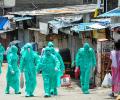
When BJP leaders, including Mr Modi's number two, Amit Shah, use the pandemic to launch an assault on state governments run by opposition parties, or to topple them, they are exploiting a grave crisis in cynical political self-interest, notes Shekhar Gupta.
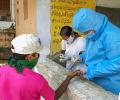
'Don't panic. Believe in yourself.' 'This is a preventable illness. Only you can prevent it.'
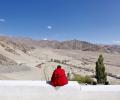
We should have anticipated it on August 5 last year, when we made the big changes in J&K. Amit Shah left nothing to chance when he told Parliament that 'we will bring back Aksai Chin even at the cost of our lives'. 'Then, there were the new maps, objections to the CPEC going through Indian territory, the weather reports.' A broad territorial status quo had existed in Ladakh-Aksai Chin since 1962. India made its intention to change this public, notes Shekhar Gupta.

'This pandemic has given him a new platform to perform,' says a member of the government. 'He should feel lucky that he has got an opportunity now to demonstrate to the world his original talent.' 'He needs a visionary script to perform.' Sheela Bhatt reports on the politics of the pandemic.
 © 2026 Rediff.com - Investor Information - Advertise with us - Disclaimer - Privacy Policy - Sitemap - Feedback - About us - Terms of use - Grievances