
China on Friday said the collapse of a high-altitude glacier in Nepal may have triggered the massive flash flood disaster that engulfed the Tibet-Nepal border, killing hundreds and causing widespread damage.

Chinese officials warn that glaciers on the Tibetan Plateau are becoming increasingly unstable, leading to a higher risk of flash floods and other disasters, as evidenced by a recent deadly ice-rock avalanche near the Nepal-Tibet border. The region has seen a significant reduction in glacier area, and scientists are calling for advanced monitoring systems to predict these complex events.

'When a glacier collapse or a major flood event does occur, the water will simply reclaim its original path, and anything built in that path will be swept away.'

'It appears to be a combination: A glacier breaking away, and a dam-like formation downstream reaching capacity and releasing water suddenly.'

The US Geological Survey (USGS) has confirmed that the recent deadly flash floods in Nepal were caused by a glacial collapse and subsequent debris flow, not an earthquake as initially reported. The event, which originated in Tibet, led to 162 deaths and 750 missing persons, including 133 Indian nationals, in Nepal's Rasuwa and Dhading districts. The seismic event's magnitude was also upgraded to 5.2.

This might lead to a further outburst, flooding downstream if left unchecked.

Nepal's former Forest and Environment Minister Madhav Prasad Chaulagain has expressed concern over the lack of timely information exchange with China ahead of the devastating floods, stating that the disaster's scale could lead to an 'unbelievable' rise in the death toll.


'This is no longer a single-hazard problem; it is a cascading, multi-hazard problem. A landslide never occurs in isolation. This entire chain is the cascading effect of what looks, at first, like a single disaster.'

Over 900 workers and employees are missing from various hydropower project sites in Nepal following massive flash floods triggered by an ice and rock collapse near the Nepal-Tibet border. Rescue teams, assisted by experts from India and China, are intensifying efforts to locate and extract hundreds believed to be trapped inside tunnels, with 279 already rescued amidst ongoing challenges.

'There needs to be a monitoring of glaciers in high altitude areas and one needs to check regularly how geological changes are taking place.' 'We can mitigate that by regular monitoring but unfortunately, hardly any monitoring is happening.' 'And without monitoring those higher altitudes of Himalayas, people are suffering.'
'The valley is around 16 km from the Nepal border, and it took just 8-10 minutes for the ice and rocks to reach the Nepal border. You can imagine how fast it must have travelled!'

China on Monday dismissed claims linking its massive hydropower projects in Tibet to the August 26 flash flood disaster in Nepal, calling them "malicious speculation".

Following devastating flash floods in Nepal, experts are calling for systematic scientific assessments of glaciers to understand and mitigate hazards, alongside the development of a robust land use policy for the Himalayan region. The floods, which killed over 460 people and left thousands missing, are believed to be linked to climate change impacts on glaciers and permafrost.

The death toll from flash floods in central Nepal has surged to 734, with nearly 2,500 people still missing. India has intensified its rescue and relief efforts, sending additional aid, technical teams, and forensic experts, while also working to locate and rescue over 275 missing Indian nationals.

Sikkim has identified 40 high-hazard glacial lakes, with 16 at the highest risk of catastrophic outbursts. Following a devastating GLOF in 2023, the state is developing India's first dedicated GLOF Risk Mitigation Protocol, using advanced monitoring and interdisciplinary approaches to protect downstream settlements and serve as a model for other Himalayan regions.

Devastating flash floods in Nepal's Bhote Koshi River, triggered by a glacier or ice rock collapse, have resulted in 175 recovered bodies and hundreds missing, including tourists. India has promptly responded by providing 10 tons of humanitarian aid and medical supplies, with Prime Minister Narendra Modi conveying condolences and assuring full support to Nepal.

Scientists are examining how a possible glacial collapse and ice-rock avalanche may have triggered the devastating flash floods along Nepal's Bhote Koshi River, with preliminary assessments indicating that debris may have temporarily blocked the Lhende River and created a landslide dam that subsequently gave way.

The death toll in the massive flash floods in Nepal on Thursday rose to 270, as authorities in Nepal race against time to find thousands of missing people, including 288 Indian tourists, in one of the country's worst disasters in recent years.

A team of scientists has identified a 'potentially dangerous' proglacial lake at 16,500 feet in Arunachal Pradesh's Mago Chu basin, a critical headwaters region of the Brahmaputra, warning of a possible Glacial Lake Outburst Flood (GLOF) due to rapid glacier transformation.

June-July 1999 saw some of the most bitterly fought battles in the Kargil War. Colonel Gaurav Chaturvedi looks back on those days -- and the extraordinary saga of the men he fought alongside.
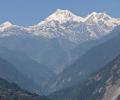
Melting of Himalayan glaciers has doubled since the start of the 21st century due to rising temperatures, losing over a vertical foot and half of ice each year and potentially threatening water supply for hundreds of millions of people in countries, including India, according to a study published in 2019.
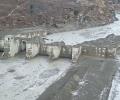
'Unlike in the Kedarnath floods of 2013, which happened due to heavy rains, no such thing happened in Chamoli.' 'The damage was done only because of the hot sun.'
'What we are witnessing is not a freak incidence or a freak occurrence, but a new climate reality where warming oceans, monsoon variability and local geography are combining to produce extreme events.'

India should encourage the second coming of SAARC with climate change as an urgent agenda and keeping Indian security concerns in mind as the subtext, suggest Lieutenant General Ashok Joshi (retd) and Colonel Anil Athale (retd).

'We need an early warning system in India.'
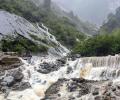
Flooding in Jummagad river flowing near Jumma village on the Joshimath-Niti highway, about 45 km from Joshimath, continued till late night on Monday evening, during which the bridge collapsed.

'The Weather Channel argues that India faces the gravest challenge: Climate change-induced health vulnerability.' 'This is an issue often neglected, alerts Claude Arpi: "Prolonged summers, unpredictable rains, floods, droughts, and rising sea levels are the harsh realities of climate change in the country. These factors increase the frequency and severity of illnesses, pushing people into poverty, and forcing migration".'
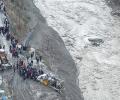
Originating from Vasudhara Tal, perhaps the largest glacial lake in Uttarakhand, the Dhauli Ganga flows in a meandering course, which takes it through the Nanda Devi National Park.

The teams carried out a helicopter survey of the area on Tuesday to find clues as to what led to the massive flash floods that swept everything on the way.

Using drones and remote-sensing equipment, rescue teams intensified efforts on Wednesday to reach the 25-35 men trapped in a sludge-choked tunnel since the Uttarakhand glacier disaster three days ago and more than 170 remained missing, hopes of finding them alive fading with every passing hour.

'Above 2,000 metres the gradient of the Himalayas is very steep and if you build any infrastructure (roads, dams, hydro power projects) in these regions, it will not be able to sustain these events (the onslaught of debris that comes down with great speeds).'

The massive flood in the Dhauli Ganga river triggered by a glacial burst in Uttarakhand's Chamoli district on Sunday came as a grim reminder of the Kedarnath deluge of 2013 which led to widespread devastation in the ecologically fragile Himalayan region.

A portion of the Nanda Devi glacier broke off in Uttarakhand's Chamoli district on Sunday, triggering an avalanche and a deluge in the Alaknanda river system that washed away hydroelectric stations, leaving at least seven people dead and 125 missing who are feared dead.

And why YOU should worry about it.

The story of Iceland is the story of life, notes Payal Singh Mohanka after a recent journey to that fascinating land.

'Half of China, India, Pakistan, Bangladesh Nepal, Bhutan, Myanmar, which are among the most populous countries in the world, are dependent on the rivers and glaciers of the Himalayas for sustenance.'
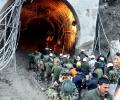
'The 100-metre stretch from the opening of this tunnel is completely flooded with debris; the oxygen supply (through the pipes) too had gotten over and the chances of any survivors inside this tunnel are very bleak. Nobody has been able to talk to the people trapped inside'

Asserting that the agitation against the Centre's farm laws is a people's movement that will not fail, Bharatiya Kisan Union leader Rakesh Tikait on Sunday said there will be no 'ghar wapsi' till protesting farmers' demands are met.
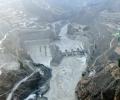
'Geological processes occur at time scales that are beyond human imagination, but we need to understand these events.'
