
The Economic Survey released before next year's Budget could become a single volume, reverting to the practice followed till FY14. "There is so much to write about the Indian economy's performance in the past year. "Most of the exciting themes will be covered in what used to be considered Part II," said a senior government official who is part of the preparations for the Survey.

Comments awaited on top exits, management rejig, products business demerger, apart from FY14 revenue forecast
With revenues of $13.4 billion for FY14, Tata Consultancy Services (TCS) has managed to deliver consistent growth for both the fourth quarter and the full year.
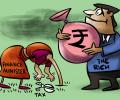
'Quite a few notices have been issued in both black money and benami transactions.'

The year 2014 is likely to be a "slow recovery year" for India, with economic growth rising, inflation easing and currency and rates largely stable, Citigroup said.

Puri earned a salary of Rs 7.39 crore in FY15, up 21.74% from last year
Ratings agency Crisil on Monday cut its FY14 growth forecast for India to six per cent from the earlier 6.4 per cent citing a variety of reasons, including the high lending rates, weaker pick-up in consumption and issues around mining and project clearances.

On Tuesday, Nasscom announced at its 21st Leadership Summit that it expected the sector to grow 12-14 per cent in FY14, better than the 10.9 per cent growth it would report for FY13.

The consolidated revenue increased 20 per cent to Rs 8,422 cr

The analysis covers BSE 200 Index's 171 companies for which data on the compensation to the boards of directors for FY14 and FY13 are available.
However, the American brokerage said it continues to expect the Reserve Bank to cut policy rates by 25 bps on January 29.

The investment banking major has hiked its FY'14 CAD forecast to 4.3 per cent of GDP from 3.8 per cent with slowing global recovery likely to delay export turnaround.

The NSE and BSE made Rs 965.5 crore (Rs 9.65 billion) and Rs 135.2 crore (Rs 1.35 billion), respectively, in profits for FY14.
HCL Technologies and Infosys should benefit more than TCS and Wipro

The rating agency also expects merchandise exports to grow by 8-10 per cent in the next fiscal year.

Fitch Ratings says in a report published on Thursday that the spillover effects of a weaker rupee have not significantly hurt India's creditworthiness, and hence would not trigger any rating action as this point.

The 13th Finance Commission had last year set a capital expenditure-to-GDP target of 4.5 per cent by FY15.

The Budget kept away from mood dampeners such as an increase in taxes (capital gain taxes) and even the much-feared introduction of Covid cess and wealth taxes, says Nimesh Kampani, chairman, JM Financial.
Revenues of Indian companies, excluding those engaged in banking and oil, are expected to grow marginally at 5-6 per cent in the first quarter of this fiscal.
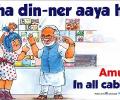
The co-operative does not disclose bottom line figures.

The government allocated Rs 650 billion for petroleum subsidies in FY14, of which Rs 450 billion was used to pay oil marketing companies for the subsidy gap incurred in the previous financial year.

India is likely to clock a GDP growth of 5.5 per cent during the current financial year provided there is normal monsoon and stable government at the centre, says a D&B report.
IT companies account for a third of the entire dividend pot this year

Gross non-performing assets in system have grown to 4.1 per cent in FY14 from 3.4 per cent a year ago
The average assets of an MP are now 345.8 times that of an annual income of a tax-filing individual, reports Sachin P Mampatta.

Mutual funds (MFs) are set to be net sellers of Indian equities for the first time in the past seven financial years, having sold stocks worth about Rs 1.27 trillion so far in 2020-21 (FY21), making it the highest net sales on record in a financial year. MFs had been net buyers in the previous six financial years, including purchases of over Rs 1.41 trillion in FY18, Rs 88,152 crore in FY19, and Rs 91,814 crore in FY20. The last time they offloaded Indian equities was in FY14, when they net sold stocks worth Rs 21,159 crore. In contrast, foreign portfolio investors (FPIs) have ramped up buying in FY21, purchasing more than Rs 2.6 trillion worth of shares.
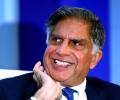
Ratan Tata has invested his own money into 3 high-growth online retail firms, which are yet to make a profit.

From the beginning of 2021 Wipro has moved on to a new organisational structure. Analyst tracking the company are now wondering if CEO Thierry Delaporte's attempt to bolster Wipro's presence in the BFSI (banking, financial services and insurance) space by acquiring Capco for $1.45 billion is a step taken too early. Though many agree that Capco as a target may be good, but Wipro, which has been the most aggressive player in acquiring firms compared to its Indian players, does not have much to show in terms of performance as it continues to lag peers.

Aditya Birla Retail set up seven years earlier, posted a 20% growth in sales over a year earlier for 2013-14.

This was the companies' highest loss in two years.

Bihar, Odisha and Chattisgarh had grown the most industrially in FY14.

Only Hindustan Unilever and Nestl bucked the trend.
Paid Rs 15,474 cr against CIL's Rs 13,075 cr in FY15

Nearly 57 per cent of total income of five national parties during financial year 2013-14 was from sale of coupons (smaller donations), a leading election watchdog NGO has said.

The company reported sales of 3.75 million square feet in FY14.

The exchange has always seen huge volumes in gold trading. But due to a fall in prices, volumes took a hit.

Shares of Tata Consultancy Services on Wednesday plunged almost 4 per cent, wiping out about Rs 16,000 crore (Rs 160 billion) in investor wealth, after the IT major indicated to analysts that weak India business and lower working days could drag down March quarter growth rate.

Many are now cheaper after stock splits. But look at key parameters
The strong correlation between its sales (revenue or turnover) and crude oil prices (average for the financial year) suggests that Ambani may be proved right.

The key beneficiary of this expansion in the motorcycle market happens to be Bajaj Auto.
