
Fintech and enterprise technology firm Paramotor Digital Technology Ltd has confidentially filed draft papers with markets regulator Sebi for an initial public offering (IPO). The company submitted its draft papers under Sebi's pre-filing route, which allows issuers to keep details related to the issue size and other key information confidential until a later stage.

The Enforcement Directorate has arrested two former IDFC First Bank employees in connection with a money laundering case involving the alleged embezzlement of Rs 590 crore in Haryana government funds.

Fintech company Pine Labs has acquired Shopflo, an online checkout optimisation platform, for Rs 88 crore in an all-cash deal aimed at providing a unified commerce platform for merchants.

Paytm (One 97 Communications Ltd) has stated that the Reserve Bank of India's action on Paytm Payments Bank Ltd (PPBL) has no financial or business impact on the company. The fintech firm clarified it has no material business arrangements or exposure with the banking entity, which operates independently.

In modern investing, transparency is more valuable than zero fees and not all investing app score big on this front, says Ramalingam Kalirajan.

One 97 Communications Ltd, operating under the Paytm brand, has transitioned to a majority Indian-owned and controlled company, reflecting increased domestic investor confidence and improved financial performance.

Reliance Industries Ltd reported a 12.5 per cent fall in its March quarter net profit, primarily impacted by the global energy crisis affecting its oil and chemicals business, while its consumer-facing Jio Platforms unit saw a 13 per cent increase in profit after tax.
Paytm, operated by One97 Communications, is not actively seeking a non-banking financial company (NBFC) licence, preferring partnership models for lending operations, according to its Group CFO.
Fintech giant One97 Communications, which operates Paytm, has decided against applying for a Non-Banking Financial Company (NBFC) licence, favouring its existing partnership model.

NIT Rourkela has announced the launch of four new academic programmes for the 2026-27 session, focusing on emerging technologies such as semiconductors, artificial intelligence, and quantum technologies.

The Fintech Association for Consumer Empowerment (FACE), the only self-regulatory organisation for financial technology/fintech (SRO-FT) companies, is aiming to secure membership from at least 75 per cent of players across all key fintech categories within the next three years, according to a senior executive. The total number of members in the organisation has increased to 110, up from around 60 when it received approval from the Reserve Bank of India (RBI) to operate as an SRO-FT in August.

Prime Minister Narendra Modi has offered India's support to bring peace to West Asia during talks with UAE President Sheikh Mohamed bin Zayed Al Nahyan. Both countries signed agreements to strengthen strategic collaborations in energy and defence.

Infosys co-founder Kris Gopalakrishnan urges Indian startups to focus on deep technology and advanced manufacturing to ensure strategic autonomy.
Bernstein brokerage firm maintains 'Outperform' rating for Paytm, stating the PPBL licence cancellation will not impact Paytm's business and may open new regulatory opportunities.

Unified Payments Interface (UPI) transaction value and volume saw a slight month-on-month dip in April after record highs in March, but daily transaction volumes increased, indicating sustained growth in digital payments across India.

The Reserve Bank of India (RBI) has cancelled the banking licence of Paytm Payments Bank, citing that the bank's affairs were conducted in a manner detrimental to the interests of the bank and its depositors, and its management was prejudicial to public interest.

Infrastructure major Larsen & Toubro (L&T) reported a 3 per cent year-on-year decline in consolidated net profit for Q4 FY26, reaching 5,325.60 crore, primarily due to exceptional gains in the previous year. Despite this, the company's consolidated order book surged by 28 per cent to 7.4 trillion, with international orders accounting for 52 per cent.

Non-banking entities such as fintech firms will have to tap into use cases beyond peer-to-peer (P2P) and peer-to-merchant (P2M) transactions to scale up the presence of the retail version of the central bank digital currency (CBDC), which is also known as the e, said industry players. These use cases will enable programmable transactions across domains, including the government's direct benefit transfer (DBT) schemes, with subsidies restricted to specific purposes such as food coupons, hospital bills, fertilisers, pesticides, and cross-border remittances.

Finance Minister Nirmala Sitharaman met with bank heads to discuss the risks associated with Artificial Intelligence (AI) following global concerns about Anthropic's Mythos model and its potential threat to financial systems' data security.

This would imply a 29 per cent year-on-year rise, significantly lower than growth rates seen in recent years.
A BofA Global Research report indicates that Paytm is leading in monetisation compared to its competitors due to its diversified mix of merchant lending and financial services, which enhances profitability and strengthens its position in the Indian fintech market.

Despite geopolitical tensions and FII outflows, Indian small and midcap stocks have not only recovered losses but are also outperforming largecap indices, driven by attractive valuations, domestic institutional support, and a rebound in earnings.
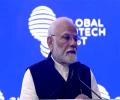
He said the transformation brought about by the fintech sector in India is not just limited to technology, but its social impact is far-reaching. He also stressed that fintech has dented the parallel economy and is bridging the gap between villages and cities on the financial services front. The prime minister also said that in the last 10 years, the fintech space has attracted investments of more than $31 billion and fintech startups have grown by 500 per cent.

A jeweller has been arrested in Haryana in connection with a Rs 590 crore fraud at IDFC First Bank. The investigation revealed that over Rs 250 crore was routed to the jeweller's firm from companies linked to the accused.
The Reserve Bank of India (RBI) has recognised the Fintech Association for Consumer Empowerment (FACE) as a self-regulatory organisation (SRO) in the fintech sector, the central bank announced on Wednesday. The banking regulator received three applications for fintech SRO. Of the remaining two applications, one has been returned by the RBI with a provision for resubmission after meeting specific requirements, while the third application is still under examination, said Governor Shaktikanta Das at the Global Fintech Fest in Mumbai.

'FPIs are unlikely to return unless there is equilibrium between valuation premium and earnings growth.'

Hiring demand strongest in ecommerce, tech startups, healthcare, and energy sectors, with Bengaluru, Hyderabad, and Pune leading.
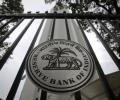
The Reserve Bank of India (RBI) has proposed several measures to develop a more conducive framework for the long-term growth of Prepaid Payment Instruments (PPIs), including enhanced transaction security and clearer rules on refunds and grievance redressal.

Global brokerage Bernstein has issued a cautionary note, stating that India risks 'under-delivering on its potential' unless it addresses key policy bottlenecks and structural risks, including employment challenges from AI, limited manufacturing gains, and rising welfare spending.

Info Edge (India) shares fell 2.9 per cent after the company reported muted growth in recruitment billings for Q4 FY26, leading brokerages to expect impacted operating performance and potential margin contraction.

Two chartered accountants have been arrested by the Enforcement Directorate in connection with a money laundering case linked to a cyber fraud involving Rs 641 crore.

The CBI has registered an FIR to investigate the alleged embezzlement of 550 crore from Haryana government accounts held with IDFC First Bank, following a referral from the state government.

Rediff.com India Ltd, a subsidiary of AvenuesAI Ltd, has filed draft red herring prospectus (DRHP) with SEBI through the confidential pre-filing route, marking an important step towards a potential public listing after its acquisition and strategic shift to an AI-led digital platform.

As India's biggest Unified Payments Interface (UPI) app PhonePe prepares to list, the updated draft red herring prospectus (DRHP) shows the impact of regulations on the business, and concentration of payments-linked revenue even as UPI lacks MDR (merchant discount rate).

Over the past three years, the appointments of 20 candidates selected through the Institute of Banking Personnel Selection were cancelled or offers were withdrawn due to poor credit history.

Domestic institutional investors, on the other hand, made a net investment of Rs 1.13 trillion during this period.

Homegrown e-commerce giant Flipkart is experiencing a significant trend of senior leaders rejoining the company, driven by its people-first culture, opportunities for growth with ownership, and the chance to solve problems at an India scale.

Why are financial-technology (fintech) players moving back to India, or doing the reverse-flipping?

Fino Payments Bank asserts its compliance with GST regulations following the arrest of its MD and CEO, Rishi Gupta, by the Directorate General of GST Intelligence (DGGI). The bank clarifies that the investigation pertains to program managers associated with multiple banks and not the bank's own GST compliance.

'So, we would work with our members to ensure that we as an SRO create some sort of due diligence for fintechs.'
