
Despite facing financial constraints, Kerala has been able to invest in welfare schemes and targeted programmes.

Moody's Ratings on Wednesday said US tariffs will weaken credit conditions and raise defaults risks especially for low-rated and speculative grade corporates. It said that an unpredictable US trade policy will lead to a deterioration in global credit conditions and macroeconomic impact will slow growth with a growing possibility of recession.

The ordinance will be tabled in the next session of the legislature, it said, adding that 27 posts were approved for the commission.

Net household savings declined sharply by Rs 9 lakh crore to Rs 14.16 lakh crore in three years to 2022-23, according to the latest National Account Statistics 2024 of the Ministry of Statistics and Programme Implementation. The net household savings peaked at Rs 23.29 lakh crore in 2020-21.

India no longer needs big ticket reforms but small and basic ones to drive the growth forward, Chief Economic Advisor V Anantha Nageswaran said on Monday. Addressing the media after the Economic Survey 2023-24 presented in Parliament, Nageswaran said there is a need to pursue all possible approaches without any ideological orientation. "In terms of the kind of reforms that we need to do, it is no longer big-ticket reforms that dominate your front pages but more about grunt works.
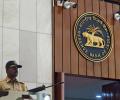
In view of the rising number of mobile and internet banking users, the Reserve Bank of India (RBI) has proposed to tighten norms related to the liquidity coverage ratio (LCR) by increasing the run-off factor for retail deposits. "Banking has undergone rapid transformation in recent years. "While increased usage of technology has facilitated the ability to make instantaneous bank transfers and withdrawals, it has also led to a concomitant increase in risks, requiring proactive management," the RBI said in the draft guidelines released on Thursday.

India's external debt rose marginally to $629.1 billion at June-end 2023, although the debt-GDP ratio declined, according to a Reserve Bank data released on Thursday. The debt rose by about $4.7 billion from $624.3 billion at March-end. "The external debt to GDP ratio declined to 18.6 per cent at end-June 2023 from 18.8 per cent at end-March 2023," RBI said.

'For the first time ever it has come below 1 per cent, at 0.97 per cent.'
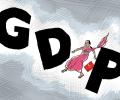
India's economic growth slowed down to 4.4 per cent in the third quarter of 2022-23 mainly due to poor performance of the manufacturing sector. In October-December 2021, the economy grew by 11.2 per cent and by 6.3 per cent in the July-September 2022 quarter, according to data released by the National Statistical Office (NSO) on Tuesday.

In August, the Reserve Bank of India Governor Shaktikanta Das held a meeting with chief executive officers/ managing directors (CEOs/ MDs) of large non-banking financial corporations (NBFCs). The discussions included diversifying borrowing sources for NBFCs and housing finance companies (HFCs) to contain increasing reliance on bank borrowing, risks associated with high credit growth in retail segment in unsecured loans, prioritising IT upgrades and cyber-security, improving provisioning, monitoring of stressed exposures and slippages, ensuring robust liquidity and asset-liability management, ensuring transparency in pricing, creating robust grievance redress mechanisms.

India appears poised to sustain its growth in a more durable way than before with the economy carrying the momentum from FY23 into the current fiscal year, the Annual Economic Review for 2022-23 released by the finance ministry on Thursday said. However, the report cautioned that escalation of geopolitical stress, enhanced volatility in global financial systems, sharp price correction in global stock markets, a high magnitude of El-Nino impact, and modest trade activity and FDI inflows, are factors that could constrain the pace of growth. "Should these developments deepen and dampen growth in the subsequent quarters, the external sector may challenge India's growth outlook for FY24," the finance ministry said.

The SIT headed by Monika Bhardwaj submitted the charge sheet on Friday.

Soon after the verdict, a team of policemen reached a private resort where Narain is staying and took him to the Police Line amid heavy security.

The police arrested Rishi on Monday after he reached Port Blair from Chennai.

The Andaman and Nicobar police have arrested a Port Blair-based businessman, carrying a reward of Rs 1 lakh, from Haryana in connection with a gang rape case, an officer said on Monday.

The same declaration of Rs one lakh bounty was made by the police authorities also for a businessman identified as Sandeep Singh alias Rinku.
The three accused were taken to the Police Line by the special investigation team headed by IPS officer Monika Bhardwaj for a joint interrogation.
The Supreme Court of India directed a former chief secretary of the Andaman and Nicobar Islands on Monday to move the trial court for anticipatory bail in a gangrape case filed by a 21-year-old woman against him and others.

Clawing the economy back to an 8 per cent growth path will require bringing savings and investment rates closer to 35 per cent on a sustained basis, which were 30.2 and 29.6 per cent, respectively, in FY22, according to a report. As per India Ratings, a large part of investments will have to be in infrastructure, which can help revive private investments by easing supply constraints and offset the weakening of external demand due to global headwinds. Higher investments will have to be accompanied by higher domestic savings to keep the savings-investments gap under check.
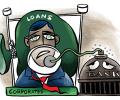
Zombies a.k.a perpetually loss-making firms in India seem to have dampened the effectiveness of monetary policy at the margin as they use borrowed resources more for their survival than for undertaking new investment, according to a RBI study. The monetary policy does not hinder the creative destruction process by misallocating credit flows to zombies during periods of economic slowdown, showed a study by officers of Reserve Bank of India. It has been published in RBI's bulletin for February 2022. In India, zombie firms are estimated to account for about 10 per cent of total debt of the non-financial corporate sector.

The woman alleged that she was lured to the chief secretary's home with the promise of a government job, and then raped there on April 14 and May 1.
The police on Thursday arrested former Andaman and Nicobar chief secretary Jitendra Narain in a gang rape case filed by a 21-year-old woman against him and others.

Former chief secretary of Andaman and Nicobar Islands Jitendra Narain on Friday appeared before a Special Investigation Team (SIT) for questioning over the gangrape charges against him.
The police registered a case earlier this month after the chief judicial magistrate of Port Blair ordered its filing based on a petition by the young woman.

The sector seems set for a rally that may be somewhat temporary.
As per the allegation of the woman, she was gang-raped by two officials, including the former chief secretary, in Andaman and Nicobar Islands at his official residence.

India Inc resorted to salary cuts to protect their profits in the June quarter, as revenues came under pressure due to the second pandemic wave that affected nearly the entire country, a report said on Wednesday. The "weak" wage growth will prove to be a drag on the overall economic recovery in the medium term as it will affect household consumption, the report by India Ratings and Research said. An environment of pandemic-led uncertainty and elevated inflation could impact the level of spending and hence the overall demand, it said.

Fitch Ratings has upgraded Reliance Industries Ltd's (RIL) rating to 'BBB', one notch above India's sovereign rating, as the company benefits from cash flow generation across diversified business segments and continuation of deleveraging. In a statement, Fitch said it has upgraded RIL's long-term foreign-currency issuer default rating (IDR) to 'BBB', from 'BBB-', with a negative outlook. At the same time, the agency has affirmed RIL's long-term local-currency IDR at 'BBB+' with a stable outlook.
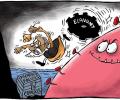
India's economy is estimated to contract by 9.6 per cent in the fiscal year 2020-21, reflecting a sharp drop in household spending and private investment, and the growth is expected to recover to 5.4 per cent in 2021, the World Bank said on Tuesday. In its Global Economic Prospects report, the World Bank said that the informal sector, which accounts for four-fifths of employment, has been subject to severe income losses during the COVID-19 pandemic.

Moody's said domestic growth will offset global headwinds.

The measures announced by the Treasury Department were also aimed at 17 senior Russian government officials. The state-owned Russian weapons trading company, Rosoboronexport, which has long-standing ties to Syria and its subsidiary, Russian Financial Corporation Bank were also targeted under new sanctions.

High loan-to-value and high-yield buckets have reported higher delinquencies

The finance ministry has proposed to decriminalise a host of minor offences, including those relating to cheque bounce and repayment of loans, in as many as 19 legislations to help businesses tide over the crisis caused by the coronavirus outbreak. The 19 legislations include Negotiable Instruments Act (cheque bounce), SARFAESI Act (repayment of bank loans), LIC Act, PFRDA Act, RBI Act, NHB Act, Banking Regulation Act and Chit Funds Act.

A bench headed by Justice S B Sinha while dismissing the Centre's petition said a secured debt like outstanding loans will have priority over any other dues like excise and taxes, which are unsecured debts. The decision came on a petition filed by the Centre against state financial corporation SICOM. The Centre contended that the state had the first right to recover tax dues, as without funds it would not be able to discharge its functions efficiently.

Seed and early-stage start-ups are high-risk businesses, rarely have collateral and only 1 in 10 of them makes it to becoming a viable company.
"India's gross domestic product growth to remain weak at 5.5 per cent in the fiscal year ending March 2015, as elections in mid-2014 will delay reforms needed to revive the economy," Moody's Investors Service said in a report.
Sahara group has been engaged in a long-running regulatory and legal battle with Sebi.

Independent directors were supposed to safeguard the interest of all stakeholders.

A lack of adequate disclosures raises the financing costs of corporate firms, especially sub-investment grade ones, and keeps the capital markets small, believes RBI deputy governor Viral Acharya.
 © 2026 Rediff.com - Investor Information - Advertise with us - Disclaimer - Privacy Policy - Sitemap - Feedback - About us - Terms of use - Grievances