
60 years ago, on January 24, 1966, Dr Homi J Bhabha, the father of India's nuclear programme, died in an air crash on Mont Blanc. The official inquiry said the plane went off course in bad weather, but coincidences, missing evidence, and later unproven claims have kept conspiracy theories alive. A fascinating excerpt from Bakhtiar Dadabhoy's book, Homi J Bhabha: A Life.

'Winning gold for India was a dream I lived on that rink.'

Film stars from Hindi cinema as well as the south came together on a common platform, where they were honoured for their work.

'I hope more shows highlight the unsung heroes of our rich history.' 'As for bringing the trophy home, a man can hope, but truly I am just excited to be there.'

A nuclear scientist and a chemical engineer, Dr Sethna was pioneer in establishing India's first reprocessing plant in 1959. India's first nuclear test was possible because of the Plutonium from this plant when the country was under tremendous pressure to sign the nuclear non-proliferation treaty by the United States.

Although the credit for acquiring the technological skill must be given to India's outstanding nuclear scientists, the decision to go nuclear was a political one that entailed clarity of vision, courage and resolve, points out Rup Narayan Das.

National Chemical Laboratory, Pune, invites applications for admission to its PhD (Junior Research Fellow) Programme in chemical and related sciences.
National Chemical Laboratory, Pune, invites applications for admission to its PhD (Junior Research Fellow) Programme in chemical and related sciences.
When a country of the size of India begins to grow at the rate of 9% per annum, with the prospect of even higher rates of growth, energy becomes a critical issue
Ramanna, who died early on Friday, had led a Bhabha Atomic Research Centre team to conduct the country's first nucear test at Pokhran, Rajasthan, in 1974.

The intelligently conceptualized show does more for nationalistic pride than a dozen jingoistic series, applauds Deepa Gahlot.

Scientists, sci-fi, stand-up, suspense, take your pick of OTT this week. Sukanya Verma makes her recommendations:
Take the Rediff Biz Quiz and find out how much you know about India and its space satellites.

Who rocked the sari style best in the British Raj? Sukanya Verma asks you to take a poll.

'What I love about Parsis is that we never take anything seriously.' 'Everyone's making fun of everyone.' 'So, they were like, 'Don't f*** it up, ch****!'.'

'When a Project Director is appointed, the whole organization -- including the Chairman ISRO -- works for his success. It is a lesson that has been of abiding value all through the other projects I have worked on,' recalls the late President, one of the earliest pioneers at ISRO.

Dr Bhabha and Dr Sarabhai didn't feel guilty for their ambitions; it was for those 'mad scientists' that India is a powerhouse -- both at the atomic level and in the vastness of space, observes Kumar Abishek.

Even after five decades of use, the telescope at Ooty that Dr Govind Swarup designed and built continues to be the largest single frequency radio telescope in the world.

The Indian Institute of Science topped the HRD ministry's 2017 national rankings. In 2016, the IISc was ranked among the world's top 15 universities in the Times Higher Education University Rankings. In his book The Creation of Wealth: The Tatas from the 19th to the 21st Century, R M Lala recounted how Jamsetji Tata's grand vision and immense personal contribution laid the edifice of arguably India's finest educational institution.
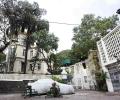
Every blade of grass and grain of sand in Mehrangir has a story to tell: The story of how one of the greatest sons of India lived here, planned and executed from here a technological and scientific enterprise which became the envy of the world. The government must save Mehrangir for future generations, says Dr K S Parthasarathy.
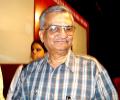
Dr Kakodkar's strategic stubbornness ultimately got India what it wanted though the negotiations with the US went to the wire, notes Shivanand Kanavi.

'ISRO facilities are very expensive and any damage caused by these start-ups can create havoc to our space programme.'

'The unique achievements have been made by engineers from small towns who have had a non elite upbringing and who have grown with the programme,' says R Aravamudan, one of the pioneers of the Indian space programme.

"The poor will not suffer disproportionately due to bouts of sharp inflation, and the middle class will not see its savings eroded," Raghuram Rajan said.
 © 2026 Rediff.com - Investor Information - Advertise with us - Disclaimer - Privacy Policy - Sitemap - Feedback - About us - Terms of use - Grievances